Refresh loader

Archive : Software Scaling

Home > Posts tagged Software Scaling

How vCTOs Help With Version 1.1 Planning: Full Guide

Launching version one of your product feels like a huge win. However, many founders stop planning right after launch. This mistake often leads to serious problems down the road.

Version 1.1, 1.2, and beyond require just as much thought as the original release. Without a roadmap, teams end up firefighting instead of building. This reactive pattern slows growth and frustrates users.

This guide explains what happens when startups skip version planning. We will also explore how a virtual CTO, or vCTO, can help prevent these problems. Let us start with why early planning matters so much.

The Hidden Risks of Skipping Version Planning

Many startups treat version one as the finish line. In reality, it is just the beginning. Skipping future planning creates risks that often surface at the worst possible time.

Technical Debt Piles Up Quickly

Without a clear roadmap, developers often make quick fixes instead of proper solutions. These shortcuts pile up over time. Eventually, the codebase becomes difficult to maintain or extend.

Technical debt slows down every future feature. What should take one week can suddenly take a month. This slowdown frustrates both the engineering team and business stakeholders.

Features Get Bolted On, Not Designed In

When there is no plan for future versions, new features often get added haphazardly. This approach creates inconsistent user experiences. Customers notice when a product feels disjointed or confusing.

Poor architecture decisions in version one can block entire feature categories later. For example, a database designed only for small data volumes may fail when the user base grows. Fixing this later requires expensive rework.

Teams Lose Direction

Engineers and product managers need a shared vision of where the product is heading. Without version planning, teams often disagree on priorities. This disagreement leads to wasted time and internal conflict.

Momentum also suffers. Teams that only react to problems rarely feel a sense of progress. Over time, this can hurt morale and increase employee turnover.

How vCTOs Help With Version 1.1 Planning: Full Guide

Real Consequences for Growing Businesses

The risks above are not just theoretical. They create real business consequences that can slow or even stop growth entirely.

Customer trust erodes when products feel unstable. Users expect steady improvement over time. If updates feel random or bugs keep appearing, customers may switch to a competitor.

Development costs also increase. Fixing a poorly planned feature later costs far more than building it correctly the first time. Studies on software development consistently show that late fixes are more expensive than early ones.

Additionally, missed market opportunities become common. Competitors that plan their roadmap carefully can release valuable features faster. Meanwhile, an unplanned team may still be cleaning up version one issues.

Finally, fundraising can become harder. Investors often ask about product roadmaps during due diligence. A founder without a clear plan for version 1.1 and beyond may struggle to inspire confidence.

How a vCTO Helps Solve These Problems

A virtual CTO, or vCTO, is an experienced technology leader who works with startups on a part-time or contract basis. Many early-stage companies cannot afford a full-time CTO, but they still need expert technical guidance.

Strategic Roadmap Planning

A vCTO helps build a clear technology roadmap that extends beyond version one. This roadmap outlines upcoming features, technical priorities, and scaling milestones. As a result, teams know what to expect and can plan resources accordingly.

Preventing Technical Debt Early

Experienced vCTOs recognize early warning signs of technical debt. They guide engineering teams toward sustainable solutions instead of quick fixes. This guidance saves significant time and money later.

Aligning Business and Technical Goals

Founders often understand their market well but may lack deep technical expertise. A vCTO bridges this gap. They translate business goals into realistic technical plans, ensuring both sides stay aligned.

Cost-Effective Leadership

Hiring a full-time CTO can be expensive for early-stage startups. A vCTO offers similar expertise at a fraction of the cost. This arrangement allows startups to access senior guidance without a long-term financial commitment.

Building a Sustainable Version Planning Process

Startups do not need a perfect five-year plan. However, they do need a simple, sustainable process for planning future versions.

Start by documenting your product vision clearly. This vision should guide decisions for version 1.1, 1.2, and beyond. Without this foundation, teams tend to make inconsistent choices.

Next, gather user feedback continuously. Real user input often reveals which features matter most for upcoming versions. This feedback should directly shape your roadmap priorities.

Also, schedule regular roadmap reviews. Markets change, and your plan should adapt with them. Reviewing your roadmap every quarter keeps it relevant and useful.

Finally, consider bringing in outside expertise if your team lacks technical leadership. A vCTO can guide this process, especially during critical growth stages. Their experience often prevents costly mistakes that internal teams might miss.

Warning Signs Your Startup Needs a Better Plan

Some signals suggest your product roadmap needs immediate attention. Recognizing these signs early can save your team significant time and stress.

If every release feels rushed, that is a warning sign. Teams should feel confident about what they are shipping, not anxious about hidden bugs. Constant last-minute scrambling usually points to a lack of planning.

Similarly, if customer support tickets keep mentioning the same issues, your roadmap may be ignoring core problems. Repeated complaints often reveal gaps between what users need and what the team is building.

Another sign is engineering burnout. When developers constantly firefight instead of building thoughtfully, morale drops quickly. This burnout often traces back to poor planning rather than a lack of skill.

Finally, if your leadership team cannot clearly explain what version 1.2 will include, that uncertainty is a red flag. Clear roadmaps should be easy to summarize in a few sentences.

Case Example: A Common Startup Story

Consider a typical early-stage software company. The founders launch version one quickly to capture early customers. Excitement is high, and initial feedback looks promising.

However, no one plans beyond this first release. As new customer requests arrive, the team adds features quickly without a clear structure. Within months, the codebase becomes harder to manage.

Eventually, a critical bug appears that takes days to fix because of tangled, rushed code. Customers grow frustrated, and some churn. The founders realize they need expert help but are unsure where to start.

This is often when startups bring in a vCTO. The vCTO reviews the existing codebase, identifies priority fixes, and builds a realistic roadmap for versions 1.1 and 1.2. Within a few months, development speed improves, and customer satisfaction rises again.

This story repeats often across the startup world. Fortunately, it is preventable with the right planning and guidance from the very beginning.

Skipping version planning creates hidden risks that surface later, often at the worst possible time. Technical debt, inconsistent features, and lost team direction can all slow your growth significantly.

A vCTO offers a practical solution for startups that need expert guidance without a full-time hire. They help build sustainable roadmaps, prevent technical debt, and align business goals with technical execution.

Planning for version 1.1 and beyond, starting today, protects your product and your business for the long run.

Frequently Asked Questions

1. What is a vCTO?

A vCTO, or virtual CTO, is an experienced technology leader who provides part-time or contract-based guidance to startups and growing businesses.

2. Why is version planning important after launch?

Version planning ensures your product can grow sustainably. Without it, teams often face technical debt, inconsistent features, and unclear priorities.

3. How does a vCTO differ from a full-time CTO?

A vCTO offers similar strategic expertise at a lower cost, making it ideal for startups that are not yet ready for a full-time hire.

4. What happens if a startup ignores technical debt?

Ignoring technical debt slows down future development, increases costs, and can eventually require expensive rework of core systems.

5. When should a startup consider hiring a vCTO?

Startups should consider a vCTO when they lack in-house technical leadership but need guidance on scaling, roadmap planning, or architecture decisions.

Also Read:

Complete Guide to How a vCTO Future-Proofs Business

How vCTO Build Roadmaps for Business Growth

How Virtual CTO Navigate Technical Debt for New Founders?

For a non-technical founder, building a software product can feel like navigating a maze without a map. Consequently, a Virtual CTO acts as your primary navigator, turning a vague business idea into a functional and scalable digital asset. Furthermore, they protect your capital by ensuring you do not overspend on unnecessary features or the wrong developers. Therefore, this guide explores how these leaders help founders overcome the specific hurdles of launching a tech venture.

Defining a Minimum Viable Product (MVP) Without Waste

First, you should realize that most non-technical founders try to build too much too soon. Because of this common mistake, a Virtual CTO focuses your energy on defining a Minimum Viable Product that solves a core problem for your users. For instance, they identify which features are essential for a launch and which can wait for future updates. Additionally, they help you choose a technology stack that is cost-effective today but powerful enough for tomorrow. As a result, you avoid wasting your initial budget on “bloatware” that users might not even want.

Choosing to work with a Virtual CTO also means you have someone to manage the technical talent you hire. Moreover, they act as a high-level interviewer to ensure you are not fooled by developers who talk a big game but lack actual skill. For example, they can conduct deep technical reviews of a freelancer’s past work or an agency’s portfolio. Thus, you gain the peace of mind that your product is being built by qualified hands. In addition, they establish clear coding standards so that any new developer can step in and understand the work immediately.

How Virtual CTO Navigate Technical Debt for New Founders?


Protecting Your Intellectual Property and Data

Next, you must consider the security and legal aspects of building a digital product. Specifically, a Virtual CTO ensures that your company actually owns the code your developers write. Because many founders forget to sign the right IP transfer agreements, they often run into legal trouble when they try to raise money later. Furthermore, they implement security best practices from day one to protect user data from potential breaches. For example, they might set up encrypted databases or multi-factor authentication for your staff. Similarly, they ensure your infrastructure complies with global standards like GDPR or SOC2.

Strategic Scaling and Investor Readiness

Furthermore, you should look ahead to the moment your product starts gaining hundreds or thousands of users. Since sudden growth can crash a poorly built system, a Virtual CTO prepares your architecture to handle high traffic spikes. Moreover, they manage your cloud costs so that your server bills do not explode as your user base grows. As a result, your business stays profitable even as it scales. Therefore, their strategic oversight prevents “technical debt” from becoming a silent killer of your startup.

Finally, when you are ready to pitch to venture capitalists, having a Virtual CTO on your team adds immense credibility. Specifically, they can answer the deep technical questions that investors ask during the due diligence process. Because they have a long-term roadmap in place, they can prove that your tech is built on a solid foundation. For instance, they can show how the platform will evolve over the next three years to stay ahead of competitors. Consequently, you are much more likely to secure the funding needed to reach the next level of growth.

Five Key Ways a Virtual CTO Supports Founders

To summarize their impact, here are the most important ways they assist non-technical leadership:

  • Feature Prioritization: They distinguish between “must-have” and “nice-to-have” features to speed up your time to market.

  • Vendor Management: They handle communication with agencies or freelancers so you do not have to learn technical jargon.

  • Quality Assurance: They perform regular code audits to ensure the product is stable and bug-free before users see it.

  • Cost Optimization: They select the right tools and servers to keep your monthly overhead as low as possible.

  • Technical Vision: They align every line of code with your long-term business objectives and profit goals.

Conclusion

In conclusion, a Virtual CTO is the most valuable partner a non-technical founder can have during the early stages of a startup. By providing high-level guidance, managing talent, and protecting your data, they allow you to focus on marketing and sales. Moreover, they ensure that the product you build today is ready for the challenges of tomorrow. Therefore, investing in strategic technical leadership is not an expense but a safeguard for your entire business journey.

Frequently Asked Questions

1 Can a Virtual CTO help me hire a permanent technical team?

Yes, they often lead the transition from a virtual model to a full-time in-house team by identifying and onboarding your first permanent engineers.

2 What is the first thing a Virtual CTO does after joining?

Typically, they start with a deep audit of your current plans or code to identify immediate risks and opportunities for improvement.

3 How does a Virtual CTO handle communication with non-tech founders?

A great vCTO translates complex engineering issues into business risks and financial impacts so you can make confident decisions.

4 Will a Virtual CTO write the actual code for my product?

Generally, no. Their role is strategic leadership and management, though they may review code to ensure it meets high-quality standards.

5 Is a Virtual CTO expensive for a bootstrapping founder?

Because they work on a part-time or project basis, they are significantly more affordable than a full-time executive while providing the same level of expertise.


Read More:

How to choose the right Virtual CTO service provider?

How to pick between a Virtual CTO and an In-House partner?

Does your new vcto keep Version 1 from breaking?

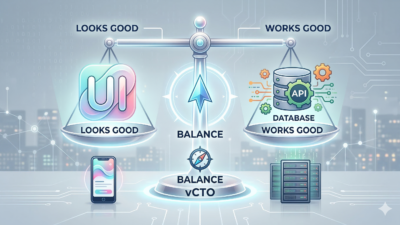
How a VCTO Aligns “Looks Good” with “Works Good”: Full Guide

In 2026, many founders fall into a common trap. Consequently, they focus too much on a beautiful interface but ignore a stable foundation. However, a vcto understands that a great product needs a mix of “Looks Good” and “Works Good.” Therefore, focusing only on the visual layer leads to a product that fails under pressure. This guide explains how technical leadership ensures your product stays powerful and attractive.

Aligning User Experience with Technical Stability

First, you should recognize that a stunning design cannot save a product that crashes. Because users hate slow load times and bugs, a vcto puts performance next to aesthetics. For instance, they ensure that graphics do not slow down the processing speed of your app. Additionally, they help your design team understand what your technology can actually do. As a result, you build a product that delights users without losing speed or safety.

Choosing to work with a vcto also means you have someone to manage technical debt. Moreover, they act as a high-level reviewer to ensure every new feature is built on a solid base. For example, they might suggest simplifying a visual element to keep the app fast on mobile phones. Thus, you gain a product that stays quick even as you add more complex designs.

How a VCTO Aligns "Looks Good" with "Works Good": Full Guide


The Strategy of Functional Beauty

Next, you must consider how your choices affect your long-term business growth. Specifically, a vcto creates a roadmap where every visual update has a strong backend. Because they look at the product from a business perspective, they stop you from wasting money on flashy features. Furthermore, they use automated tests to catch bugs before your customers see them. Similarly, they ensure your data systems are ready to grow as your brand gains more users.

Balancing Speed and Quality

Furthermore, you should look at how fast your team can ship new updates. Since a poorly built system makes even small tweaks hard to finish, a vcto focuses on keeping the code clean. Moreover, they mentor your developers to follow best practices that reduce the need for constant fixes. Consequently, your team can spend more time on new ideas and less time on old mistakes. Therefore, their oversight turns your technology into a major advantage.

Key Ways a vcto Balances Form and Function

To summarize their impact, here are the main ways they assist leadership:

  • Performance Checks: They ensure high-quality code so the product remains fast.

  • Feature Order: They pick “must-have” functions over “nice-to-have” visuals to launch faster.

  • Growth Readiness: They prepare your system to handle thousands of users.

  • Tech Management: They handle technical talk so you do not have to learn jargon.

  • Safety Rules: They add security from day one to protect your data.

Conclusion

In conclusion, balancing “Looks Good” with “Works Good” is the secret to a top tech product. By prioritizing a strong foundation, you ensure your product is ready for real success. Moreover, a vcto provides the expert guidance needed to align your vision with reality. Therefore, do not settle for a product that only looks nice; invest in leadership that ensures it works well.

Frequently Asked Questions

1 What is the role of a vcto in design?

They ensure that design choices are technically possible and do not hurt the speed of the app.

2 How do I know if my product is only “Looking Good”?

If your app is pretty but slow, buggy, or hard to update, you likely have a technical foundation problem.

3 Can a vcto help with user testing?

Yes, they oversee the technical side of testing to see how the system handles real usage.

4 How long does a vcto stay with a company?

Many partnerships last for at least six months to make a real impact on the infrastructure.

5 Is a vcto involved in hiring designers?

They often help with hiring to ensure the designers know how to work with engineers.


Read More:

How to pick between a Virtual CTO and an In-House partner?

How a Virtual CTO stops your tech from failing today?

Does your new vcto keep Version 1 from breaking?