Refresh loader

Category : Technology Strategy

Home > Archive for Technology Strategy

Complete Guide to How a vCTO Future-Proofs Business

Technology changes fast. What works today might be outdated within a few years. Many businesses struggle to keep up. They invest in systems that quickly become old or unsupported. This is called tech obsolescence, and it can be costly. A vCTO, short for virtual Chief Technology Officer, helps solve this problem.

This guide explains how a he future-proofs your business and protects you from falling behind. We will cover what he does, why obsolescence happens, and how the right tech leadership prevents it.

What Is a vCTO and Why It Matters

A vCTO is an experienced technology leader who works with your business on a part-time or contract basis. Unlike a full-time CTO, he offers flexibility without the high cost of a permanent executive hire.

This role is especially valuable for startups and small to mid-sized businesses. Many of these companies cannot afford a full-time CTO salary. However, they still need expert tech guidance.

A vCTO brings years of experience across multiple industries. They help with technology strategy, system architecture, vendor selection, and team management. Most importantly, they help businesses avoid costly technology mistakes.

Furthermore, he often works across several clients. This means they bring fresh insights from different industries and technology trends. Your business benefits from this broader perspective.

In short, he offers senior-level tech leadership without long-term commitment. This makes it easier for growing businesses to access expert guidance.

vCTO Future-Proofs Business

Understanding Tech Obsolescence and Its Risks

Tech obsolescence happens when software, hardware, or systems become outdated. This can occur because newer technology offers better performance. It can also happen when vendors stop supporting older products.

Obsolete technology creates several risks. Security vulnerabilities increase, since outdated systems often stop receiving security updates. This makes businesses easy targets for cyberattacks.

Additionally, outdated systems often struggle to integrate with newer tools. This limits a company’s ability to adopt useful new technologies. Productivity suffers as a result.

Obsolescence also affects scalability. A system built for a small team may fail under the pressure of rapid growth. Without proper planning, businesses are forced into expensive emergency upgrades.

Many companies do not notice obsolescence until it causes a major problem. By then, fixing the issue often costs far more than preventing it would have.

This is exactly where a vCTO becomes essential. They identify these risks early, long before they become costly emergencies.

Industry data backs this up. Companies that delay technology upgrades often face higher long-term costs than those who address issues proactively, since rushed migrations under pressure tend to introduce new errors and downtime.

How a vCTO Prevents Obsolescence Proactively

A skilled vCTO does not just fix problems. They prevent them through proactive planning. Here is how this typically works.

First, he conducts a thorough technology audit. This reviews your current systems, software, and infrastructure. The goal is to identify outdated or risky components early.

Next, they create a technology roadmap. This roadmap outlines when systems should be upgraded, replaced, or retired. As a result, your business avoids sudden, costly emergencies.

He also evaluates new technologies relevant to your industry. They assess whether adopting new tools makes sense for your specific business goals. This prevents both falling behind and overspending on unnecessary upgrades.

Moreover, he builds strong vendor relationships. They negotiate better contracts and ensure your technology partners remain reliable long-term.

Security is another major focus. He implements security best practices and ensures systems stay updated. This significantly reduces the risk of breaches caused by outdated software.

Finally, he mentors internal teams. They train staff to manage and maintain systems effectively. This builds internal capability, rather than creating long-term dependency on outside help.

Real Benefits of Hiring a vCTO for Long-Term Growth

Businesses that work with a vCTO see several measurable benefits over time.

Cost savings are significant. Preventing obsolescence is far cheaper than emergency fixes. Businesses avoid expensive downtime and rushed system replacements.

Scalability also improves. He designs systems that grow with your business. This means fewer disruptions as your company expands into new markets or adds new products.

Additionally, businesses gain better strategic alignment. Technology decisions connect directly to business goals, instead of being made in isolation by different departments.

Risk reduction is another key benefit. With proactive security and system management, businesses face fewer cyber threats and compliance issues.

Many startups also use a vCTO during fundraising. Investors want confidence in a company’s technology foundation. He helps demonstrate strong technical leadership without the cost of a full-time hire.

Over time, this proactive approach keeps your business competitive. While competitors struggle with outdated systems, your business stays modern, secure, and ready for growth.

Team morale often improves as well. Engineers and staff prefer working with modern, well-maintained systems rather than constantly firefighting outdated infrastructure.

This stability also supports better hiring and retention within technical teams. Skilled engineers are more likely to stay at companies with strong, forward-thinking technology leadership.

Signs Your Business Needs a vCTO Right Now

Some warning signs suggest a business needs vCTO support immediately. Recognizing these early can prevent serious problems later.

Frequent system downtime is one clear signal. If outages happen often, your infrastructure likely needs expert review and a stronger maintenance plan.

Another sign is slow feature development. If your team struggles to ship updates quickly, outdated architecture may be the underlying cause.

Rising security concerns also point to a need for stronger leadership. Increased phishing attempts or unpatched software are serious red flags.

Additionally, if your business is preparing for fundraising or acquisition, investors will closely examine your technology. A vCTO helps prepare documentation and address weaknesses beforehand.

Finally, if your current team feels overwhelmed managing technology decisions alone, this is often the clearest sign. A vCTO provides the senior guidance your team needs.

How to Choose the Right vCTO for Your Business

Selecting a vCTO requires careful evaluation. Not every candidate will fit your specific industry or company stage.

Start by reviewing their experience with businesses similar to yours. A vCTO experienced with early-stage startups may differ greatly from one focused on enterprise systems.

Ask for specific examples of past obsolescence problems they have solved. Real examples reveal practical expertise far better than general claims.

Communication style also matters significantly. Your vCTO should explain technical issues clearly, especially to non-technical stakeholders and investors.

Furthermore, clarify availability and response times upfront. Some vCTO arrangements offer limited hours, while others provide more flexible support during critical periods.

Finally, request references from current or past clients. Speaking directly with other founders offers honest insight into working style and reliability.

It also helps to start with a smaller initial project before committing to a long-term arrangement. This trial period lets both sides confirm the relationship is a good fit before scaling up the engagement.

Conclusion

Technology will keep changing, and that is not going to slow down. Businesses that ignore this reality risk falling behind their competitors.

A vCTO future-proofs your business by identifying risks early, planning strategically, and preventing costly emergencies. This leadership model offers expert guidance without the expense of a full-time executive.

If your business relies on technology to grow, which most businesses do today, working with a vCTO is a smart, cost-effective decision.

Start by evaluating your current technology risks. Then, consider whether a vCTO could help you build a stronger, more future-ready foundation.

Frequently Asked Questions

  1. What does a vCTO actually do for a business?

He provides strategic technology leadership, including system audits, roadmaps, vendor management, and security planning, on a flexible basis.

  1. How is a vCTO different from a full-time CTO?

He works part-time or on contract, offering senior expertise at a lower cost compared to a full-time executive salary.

  1. How does a vCTO help prevent tech obsolescence?

He audits current systems, builds upgrade roadmaps, and evaluates new technologies to ensure systems stay current and secure.

  1. Is a vCTO suitable for small startups?

Yes. Many startups use a vCTO because it offers expert technology guidance without the high cost of a full-time hire.

  1. How much does hiring a vCTO typically cost?

Costs vary based on scope and hours needed, but he is generally far more affordable than a full-time CTO salary.

Read More:

How vCTO Build Roadmaps for Business Growth

Complete Guide to Using a vCTO in Investor Pitches

How vCTO Build Roadmaps for Business Growth

Growing a business without a clear tech strategy is risky. Many startups build products quickly, then struggle to scale them later. This is where a vCTO becomes incredibly valuable.

A vCTO, or virtual Chief Technology Officer, provides strategic technology leadership. Unlike a full-time executive, a vCTO works part-time or on contract. This makes expert guidance accessible to growing businesses.

Many founders focus heavily on product development early on. Long-term technology planning often gets overlooked in the process. Businesses face costly setbacks once they start scaling as a result.

Picture a company that grows from a hundred users to a hundred thousand within a year. Systems built for early traction often buckle under that pressure. They helps prevent this kind of sudden, painful failure.

This guide explains how they create scalable roadmaps that support growth. You will learn what these roadmaps include and why timing matters. By the end, you will understand how they help businesses avoid common scaling mistakes.

How vCTO Build Roadmaps for Business Growth_Ouriken

What Is a vCTO and Why Businesses Need One

A vCTO is an experienced technology leader who works remotely or part-time. They guide technical decisions without requiring a full-time salary. This model suits startups and small businesses well.

Hiring a full-time CTO can be expensive for early-stage companies. He offers similar expertise at a fraction of the cost. This makes high-level strategy accessible to businesses of nearly any size.

Many founders are skilled at building products but lack deep technical strategy experience. He fills this gap effectively. They bring years of experience from scaling other companies successfully.

This experience often spans multiple industries and company stages. A vCTO who has guided several startups through growth understands common pitfalls. They recognize warning signs long before they become serious problems.

Beyond cost savings, they offer flexibility too. Businesses can scale their involvement up or down as needed. This adaptability suits companies with changing technical demands.

A vCTO also brings an outside perspective. Internal teams sometimes struggle to see blind spots in their own systems. Fresh eyes often catch problems that insiders overlook entirely.

Without strategic technology leadership, businesses often build systems that cannot scale. Quick fixes pile up over time. Eventually, these shortcuts create expensive technical debt that slows growth significantly.

Technical debt rarely announces itself loudly at first. It shows up quietly, as slower releases and frustrated engineers. By the time leadership notices, the cost of fixing it has often multiplied.

Founders sometimes assume strategic technology planning can wait until the company is larger. In practice, the opposite is usually true. The earlier a scalable roadmap is built, the less expensive it is to follow.

How vCTOs Build Roadmaps Aligned With Business Growth

A scalable roadmap outlines how technology will support business goals over time. vCTOs create these roadmaps by analyzing current systems and future needs. This process ensures technology grows alongside the business itself.

vCTOs typically begin with a thorough technical audit, for example. They review existing infrastructure, software, and processes. This audit reveals weaknesses that could limit future growth.

This early audit often surprises founders. Systems that felt stable can hide serious gaps once examined closely. Identifying these gaps early prevents far more expensive fixes later.

vCTOs align technology plans with business goals directly next. If a company plans rapid expansion, the roadmap must support increased demand. This alignment prevents technology from becoming a bottleneck later.

Scalability also includes choosing the right tools and platforms. vCTOs evaluate whether current systems can handle future growth. Sometimes, this means recommending new platforms early, before problems arise.

Choosing the right platform is rarely about chasing the newest technology. A vCTO weighs cost, team familiarity, and long-term support together. The goal is sustainable scaling, not constant reinvention.

Security and compliance are also built into these roadmaps. As businesses grow, they often face stricter regulations. A vCTO ensures systems remain compliant while continuing to scale smoothly.

Roadmaps created by vCTOs are rarely static documents. Markets shift, and customer needs change continuously. Skilled vCTOs review and adjust roadmaps regularly to stay aligned with real conditions.

Budget planning forms a key part of this process as well. Technology investments need to match available resources realistically. A vCTO helps prioritize spending where it creates the most long-term value.

Key Components of a Scalable Technology Roadmap

Scalable roadmaps include several essential components. Each one plays a specific role in supporting long-term growth. Understanding these components helps businesses evaluate their own technology plans.

Infrastructure planning comes first. This includes servers, cloud services, and system architecture. A scalable infrastructure can handle growing user numbers without major disruptions.

Software architecture is equally important. Poorly structured code can slow development as a company grows. vCTOs often recommend modular, flexible architecture to support future changes easily.

Data management also plays a critical role. As businesses grow, they collect more data than ever before. A scalable roadmap includes plans for storing, securing, and using this data effectively.

Team structure matters too, even though it seems less technical. Scaling technology requires the right people in the right roles. vCTOs often advise on when and how to grow technical teams.

Risk management rounds out a strong roadmap. This includes cybersecurity, system reliability, and disaster recovery planning. Identifying risks early helps prevent costly failures down the road.

Integration planning deserves attention as well. Growing businesses often add new tools and platforms over time. A scalable roadmap ensures these systems work together smoothly, rather than creating chaos.

Together, these components create a roadmap that supports sustainable growth. Missing even one piece can create vulnerabilities later. This is why experienced vCTOs take a comprehensive approach.

A roadmap missing risk management, for instance, might look complete on paper. Reality often proves otherwise once an unexpected outage or breach occurs. Comprehensive planning protects the business long before any crisis begins.

Best Practices for Working With a vCTO

Successfully working with a vCTO requires clear communication and defined goals. Businesses should approach this relationship strategically. Following best practices ensures the partnership delivers real value.

Start by clearly defining your business goals first. He needs context to build an effective roadmap. Vague goals often lead to misaligned technology strategies.

Involve key stakeholders early in the planning process. Input from different departments ensures the roadmap reflects real business needs. This collaboration leads to stronger, more practical outcomes.

Marketing, sales, and operations teams often see different parts of the same problem. He who hears from all of them builds a more complete roadmap. Isolated planning tends to miss important details.

Set realistic timelines for implementation. Scalable roadmaps often involve gradual changes, not overnight transformations. Patience allows for thoughtful, sustainable progress.

Maintain regular check-ins with your vCTO. Technology needs evolve as businesses grow. Frequent communication keeps the roadmap relevant and effective over time.

Be open to recommendations, even uncomfortable ones. They often identify problems that internal teams may resist addressing. Trusting their expertise leads to better long-term outcomes.

Document decisions and progress throughout the process. Clear records help track what has worked and what has not. This documentation also supports future planning and onboarding of new team members.

Finally, treat this relationship as a partnership, not a one-time project. Ongoing collaboration produces far better results than a single roadmap delivered and forgotten.

Conclusion

They play a vital role in building scalable roadmaps aligned with business growth. From technical audits to long-term planning, their expertise helps businesses avoid costly mistakes. Companies that invest in strategic technology leadership often scale more smoothly and confidently.

Working with a vCTO does not require a massive budget or commitment. Many businesses start small and expand the relationship over time. As technology needs grow, having the right strategic guidance becomes increasingly valuable.

Growth always brings new technical challenges, no matter the industry. Having an experienced guide nearby turns those challenges into manageable steps. That guidance is exactly what a skilled vCTO provides.

Businesses that plan early, with the right support, tend to scale with far less stress. A clear roadmap turns uncertainty into a series of confident, well-timed decisions.

If your business is approaching a growth milestone, now is a good time to start the conversation. A vCTO can help map out the next stage before pressure forces rushed decisions.

The right roadmap, built early, can quietly save a business months of costly rework later on, and far more peace of mind along the way.

Frequently Asked Questions

1. What does a vCTO do?
A vCTO provides part-time or contract-based technology leadership, helping businesses build scalable roadmaps aligned with growth goals.

2. How is a vCTO different from a full-time CTO?
A vCTO offers similar strategic expertise but works flexibly, often part-time, making it more affordable for growing businesses.

3. When should a business hire a vCTO?
Businesses often benefit from a vCTO when scaling technology, facing complex decisions, or lacking in-house technical leadership.

4. What is included in a scalable roadmap?
A scalable roadmap typically includes infrastructure planning, software architecture, data management, team structure, and risk management.

5. Can small businesses afford a vCTO?
Yes. vCTO services are often flexible and scalable, making them accessible to small and growing businesses alike.

Read More:

How a VCTO Helps Startups Choose Technology

Why a vCTO Is Better Than Temporary IT Consulting

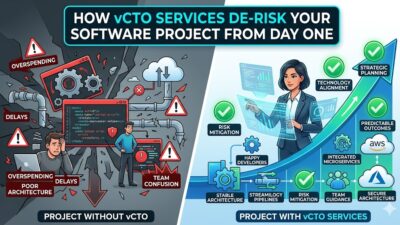
How vCTO Services De-Risk Your Software Project From Day One

Software projects fail all the time. In fact, research from the Standish Group shows that roughly 66% of technology projects fail or get significantly delayed. Bad architecture, unclear requirements, wrong tech choices — these are the most common culprits. However, there is a powerful solution that many businesses overlook: vCTO services.

A virtual CTO (vCTO) gives your project the strategic technology leadership it needs — without the cost of a full-time C-suite hire. Moreover, they step in at exactly the right moment: day one.

What Are vCTO Services?

A vCTO is an experienced technology leader who works with your business on a fractional or contract basis. They bring CTO-level expertise to guide your software architecture, team structure, vendor selection, and technology strategy.

Unlike a full-time CTO, a vCTO can start in days, not months. Furthermore, you only pay for the expertise you need, when you need it. This flexibility makes vCTO services ideal for startups, scale-ups, and established businesses launching new tech products.

vCTO services typically cover technical due diligence, architecture reviews, team building, technology roadmapping, and agile delivery oversight. Additionally, many vCTOs bring deep industry experience in specific sectors like fintech, healthtech, or ecommerce.

How vCTO Services De-Risk Your Software Project From Day One

Why Software Projects Fail Without Expert Tech Leadership

The biggest risk in any software project is making the wrong decisions early. For example, choosing the wrong database architecture might be invisible for months — but eventually costs enormous time and money to fix.

Without senior tech leadership, development teams often build what they are told rather than what the business actually needs. Consequently, features get built that users never use, while critical functionality gets missed.

Furthermore, without proper oversight, technical debt accumulates fast. Code quality drops. Security vulnerabilities creep in. Before long, the system becomes difficult to maintain and impossible to scale. A vCTO prevents all of this from happening in the first place.

Day One Impact: What a vCTO Does Immediately

The first 30 days of a software project set the tone for everything that follows. Therefore, having a vCTO engaged from the very start is transformative. Here is what typically happens on day one.

First, the vCTO conducts a technical discovery session. They ask hard questions about business goals, user needs, and technical constraints. As a result, the team gets clarity that prevents weeks of wasted work later on.

Second, the vCTO reviews any existing architecture plans or codebases. They flag risks immediately — before a single line of new code is written. Additionally, they define the technology stack and infrastructure approach based on your specific needs, not generic best practices.

Third, they establish engineering standards, workflows, and quality gates. Consequently, every developer on the team knows exactly what good looks like — from the very first sprint.

Architecture and Technology Decisions

One of the most valuable contributions a vCTO makes is in architecture decisions. These choices — monolith vs microservices, cloud provider, database type, API design — define the long-term cost and scalability of your product.

A vCTO brings pattern recognition that only comes from building many systems over many years. They know which shortcuts cause problems later. Moreover, they know which emerging technologies are genuinely useful and which are just hype.

For example, a startup building a customer-facing app might be tempted to build microservices from day one. However, an experienced vCTO would likely recommend starting with a well-structured monolith and refactoring later. That decision alone can save months of unnecessary complexity.

Vendor and Partner Selection

Most software projects rely on third-party vendors, SaaS tools, and development partners. Choosing the wrong ones is costly. A vCTO applies rigorous due diligence to every vendor selection decision.

They know what questions to ask, what red flags to look for, and what contracts to avoid. Additionally, they have often worked with — or heard of — the vendors you are considering. This lived experience is invaluable when evaluating proposals.

Furthermore, he can help you structure development partnerships to protect your IP, maintain code quality, and avoid lock-in. These protections are hard to put in place after a vendor relationship has started.

Team Building and Engineering Culture

Building the right engineering team is one of the hardest parts of any tech project. A vCTO helps you define the roles you actually need — not the roles that sound impressive on paper.

They can lead technical interviews, set coding standards, and onboard new developers effectively. Moreover, they help establish an engineering culture built on collaboration, quality, and continuous improvement.

For non-technical founders, this guidance is especially valuable. It removes the uncertainty that comes from not knowing whether your engineers are doing good work. Consequently, you can focus on the business while trusting the tech is in good hands.

Ongoing Risk Management

A vCTO does not just reduce risk on day one — they manage it continuously throughout the project. Regular architecture reviews, code quality audits, and sprint retrospectives all contribute to a healthier delivery process.

Additionally, he acts as an early warning system. They spot problems before they become crises. Whether it is a performance bottleneck, a security gap, or a team communication issue, they address it quickly and decisively.

Furthermore, they keep the technical roadmap aligned with the business strategy. As priorities shift — which they always do — he ensures the tech direction adjusts accordingly without causing chaos.

The Cost Comparison: vCTO vs Full-Time CTO

A full-time CTO in a major market costs between $200,000 and $400,000 per year in salary alone. Add benefits, equity, and recruiting costs, and the total rises substantially. Moreover, hiring the wrong CTO is one of the most expensive mistakes a startup can make.

By contrast, his services typically cost between $5,000 and $20,000 per month — depending on scope and engagement level. You get senior expertise on demand. Additionally, you avoid the risk of a bad full-time hire.

For early-stage companies, this flexibility is essential. As your needs grow, your vCTO engagement can scale with them. Consequently, you always have the right level of tech leadership for your current stage.

When to Bring in a vCTO

The best time to engage a vCTO is before you start building. However, it is never too late. Many businesses bring him to rescue a struggling project, audit an existing codebase, or prepare for a major new feature build.

In conclusion, vCTO services offer one of the highest-ROI investments a technology business can make. They bring clarity, quality, and confidence to software projects that would otherwise be riddled with risk. From day one, a great vCTO makes your project smarter, safer, and far more likely to succeed.

Read More:

Why Virtual CTO Services Myths Are Costing You Big

Virtual CTO: The Missing Link in Your Tech Team

Can a Virtual CTO Replace a Full-Time One: Full Guide