Refresh loader

Category : Email Branding

Home > Archive for Email Branding

How Do You Get Started With Smart Payments? Ultimate Guide

Smart Contracts in Payments: Real Business Use Cases

Payments still move too slowly for many businesses. Banks close on weekends. Cross-border transfers can take days. Fees pile up at every step. Smart contracts in payments offer a fresh way to fix these pain points. They run on a blockchain and follow rules that both sides agree on. This guide explains how they work in plain words. You will also see real business use cases and simple steps to get started. Founders, CTOs, and finance managers can all use these ideas.

What Are Smart Contracts in Payments?

A smart contract is a small program stored on a blockchain. It holds rules written in code. When the rules are met, the program acts on its own. No middleman needs to approve each step. Think of it like a vending machine for money. You put in the right input, and the machine gives the right output.

In payments, this idea becomes powerful. A smart contract can hold funds and release them at the right time. It can split a payment between several parties. It can also refund a buyer if a delivery fails. Every action is recorded on a shared ledger that nobody can quietly change. This record gives both sides proof of what happened and when.

This is why people call it programmable payments. Money follows rules instead of manual steps. Your finance team no longer chases invoices or checks emails for approval. The contract does that work. As a result, errors and delays drop sharply.

Smart contracts do not replace all payment systems. Cards and bank transfers still work well for many cases. However, smart contracts shine where trust, speed, or automation matter most. Many fintech companies now blend both worlds. They use stablecoins and blockchain payments alongside regular bank rails.

Why should business leaders care now? Customers expect instant service in every part of life. Online stores, SaaS firms, and marketplaces all compete on speed and trust. Payment delays hurt cash flow and customer happiness. Teams that adopt smarter payment solutions early gain a real edge over slower rivals.

Real Business Use Cases of Smart Contracts in Payments

Theory is nice, but results matter more. Here are four use cases where businesses already see value.

Cross-Border Payments and Remittances

International transfers are slow and costly. Money often passes through several banks before it arrives. Each bank adds fees and waiting time. With smart contracts and stablecoins, funds can settle in minutes. The sender and receiver see the same record at the same time. Global teams, freelancers, and exporters gain the most from this change. Currency conversion also becomes simpler and more transparent.

Escrow for Marketplaces and Services

Buyers fear paying for goods that never arrive. Sellers fear shipping without payment. A smart contract can act as a neutral escrow. It holds the money until both sides confirm the deal. When the buyer accepts delivery, the funds move to the seller. If a dispute arises, preset rules decide the outcome. This builds trust on online stores and freelance platforms.

Subscription and Recurring Billing

Subscription firms lose money when cards fail. Smart contracts can charge on a fixed schedule with clear limits. Customers set the maximum amount and the time frame. The contract cannot take more than they allow. Usage-based billing also becomes easier. SaaS companies can charge exactly for what a customer uses.

Trade Finance and Supplier Payments

Suppliers often wait 60 or 90 days for payment. Paperwork slows every step. A smart contract can release payment when a shipment reaches a set checkpoint. Data from sensors or shipping systems can trigger the payment. Suppliers get cash sooner, and buyers keep a clear audit trail. Small suppliers benefit the most from faster cash flow.

Retail and e-commerce brands also use smart contracts for loyalty rewards and split payments. A marketplace can divide one customer payment between the seller, the platform, and a delivery partner. Each party receives a fair share the moment the order closes. No one waits for month-end settlement runs.

Insurance is another strong fit. Travel and crop insurers can pay claims automatically when trusted data confirms an event. A flight delay, for example, can trigger an instant payout. Customers avoid long claim forms, and insurers cut admin cost. Payouts reach people when they need help the most.

Benefits and Risks You Should Weigh

Smart contracts bring clear gains. Payments settle faster, often within minutes. Fees can fall because fewer middlemen are involved. Transparent records make audits easier for regulators and internal teams alike. Automation also reduces manual errors and fraud risk. Finance teams can then focus on planning instead of reconciling accounts.

Risks exist too, and you should face them early. Code bugs can lock or leak funds. A famous hack of an early blockchain project showed how costly one flaw can be. Therefore, every contract needs a professional security audit before launch. Rules also change from country to country, so legal review is a must.

Price swings are another concern. Some digital assets lose value quickly. Stablecoins reduce this risk because they track a currency such as the US dollar. Even so, you should check how each stablecoin is backed. Choose issuers that publish regular reserve reports and pass independent checks.

Data quality matters as well, and it is often overlooked. A contract is only as smart as the data it receives. Trusted data feeds, called oracles, pass real-world facts to the contract. If the feed is wrong, the payment will be wrong. Pick reliable providers and test them well.

Finally, think about your team skills. Smart contract work needs care and special knowledge. Many businesses partner with experienced fintech consultants instead of hiring from scratch. A trusted partner can review your design, flag gaps, and guide the rollout. This saves time and reduces costly mistakes.

How to Start With Smart Contracts in Payments

You do not need a huge budget to begin. A careful pilot teaches you more than a big launch. Follow this simple path.

First, choose one clear problem. Maybe cross-border payouts cost too much. Maybe supplier payments arrive too late. Pick a case with a clear metric, such as cost per transfer or days to settle. Write down today’s numbers before you start, so you can compare them later. A focused goal keeps the project honest.

Next, select a platform. Ethereum and other networks each have trade-offs in cost, speed, and tools. Some businesses prefer private or permissioned chains for extra control. Payment providers also offer ready-made APIs, so you can skip heavy coding. Compare options based on your needs and compliance rules.

Then, involve your legal and security teams from day one, because fixing problems later costs far more. Confirm which licenses apply to your business. Plan for KYC and anti-money-laundering checks. Order a third-party code audit before real money moves. These steps protect your customers and your brand.

Finally, launch small and measure results. Test with a limited group of users or partners. Track speed, cost, and error rates against your old process. Share findings with your leadership team. If numbers look good, expand step by step.

Keep customers informed throughout the pilot. Explain in simple terms how their money moves and who protects it. Offer clear support channels for questions. Trust grows when people understand the process. Good communication can matter as much as good code.

Conclusion: Put Smart Contracts in Payments to Work

Smart contracts in payments turn slow, manual money flows into fast, rule-based ones. They help with cross-border transfers, escrow, billing, and supplier finance. They also add trust through transparent records. Still, success needs careful design, strong security, and clear legal guidance. Start with one use case, prove the value, and grow from there. Keep your customers, your auditors, and your legal team involved at every stage. The businesses that learn now will lead the next wave of digital payment solutions.

How Do You Get Started With Smart Payments

Frequently Asked Questions

What are smart contracts in payments?

They are blockchain programs that move money when set rules are met. They remove the need for manual approval. Every step is recorded on a shared ledger.

Are smart contract payments safe?

They can be safe when the code is audited and well tested. Poor code creates risk. Always use trusted developers and a third-party security review.

Do smart contracts lower payment costs?

Often, yes. Fewer middlemen mean fewer fees. Savings are biggest for cross-border payments and high-volume payouts.

Can small businesses use smart contract payments?

Yes, they can. Many payment providers offer ready-made tools. A small firm can start with one use case, such as escrow or international payouts.

Do smart contracts replace banks?

No, they work alongside banks. Most businesses still use bank accounts for cash in and cash out. Smart contracts add speed and automation on top.


Also Read:

How Should Leaders Decouple Monolithic Apps? Ultimate Guide

Decoupling Monolithic Legacy Apps: How to Transition to Microservices Without Halting Daily Business Operations

Introduction

Legacy systems keep many businesses running, but they also slow growth. Decoupling monolithic legacy apps into microservices offers a path forward. Yet, Managing Directors and CFOs often worry about disruption. Nobody wants to risk daily operations for a technical upgrade.

The good news is that decoupling monolithic legacy apps does not require a full shutdown. With the right plan, teams can modernize gradually while the business keeps running. This guide explains how leaders can approach this transition with confidence and control.

You will learn why monolithic systems become a growing risk, what microservices offer instead, and how a phased approach protects revenue and uptime throughout the entire project.

Why Monolithic System Apps Become a Business Risk

Monolithic applications bundle every function into one large codebase. Early on, this structure feels simple and efficient. Over time, however, it becomes harder to update, scale, or secure.

A single bug can affect the entire system instead of one small feature. Similarly, adding new capabilities often takes months instead of weeks. As competitors move faster, this slowdown becomes a real financial risk for the business.

For CFOs, the cost is not always obvious at first. However, rising maintenance costs and lost opportunities add up quickly. Decoupling monolithic legacy apps addresses this risk before it grows larger.

Recruitment also becomes harder over time. Engineers increasingly prefer working with modern, modular systems. Companies stuck with aging monoliths often struggle to attract and retain skilled technical talent.

Security patching also grows more difficult as monolithic systems age. Vendors eventually stop supporting older frameworks entirely. This leaves the business exposed to vulnerabilities that newer, modular systems would have avoided.

Customer experience suffers too when legacy systems slow down feature delivery. Clients notice when a competitor rolls out improvements faster. Over time, this gap can quietly erode market share, even when the core product remains strong.

Infrastructure costs often creep upward as well. Monolithic systems are typically scaled as one large unit, even when only one part of the application faces heavy demand. This inefficiency adds unnecessary expense to already tight technology budgets.

Integration with modern tools becomes increasingly difficult too. Newer analytics platforms, payment providers, and customer tools often expect modern interfaces that older monolithic systems were never designed to support.

Employee morale can suffer as well, in ways that rarely appear on a balance sheet. Developers who spend most of their time fighting an outdated codebase often grow frustrated, which can quietly increase turnover across the technical team.

Business agility suffers most of all. When launching a new product feature takes six months instead of six weeks, the business loses the ability to respond quickly to shifting customer demand or new competitive threats.

The Business Case for Microservices Migration Apps

Microservices break a large application into smaller, independent parts. Each part can be updated, scaled, or replaced without touching the rest. This structure gives businesses far more flexibility over time.

For example, a finance team could update its reporting module without affecting inventory systems. Meanwhile, customer-facing teams could ship new features faster. As a result, the business responds to market changes with less friction.

From a financial view, microservices reduce long-term maintenance costs. They also lower the risk of one failure taking down the entire platform. This stability matters greatly to leaders responsible for uptime and revenue.

Scalability improves as well. During peak demand, only the busiest services need extra resources. This targeted scaling is far more cost-effective than scaling an entire monolithic application at once.

Microservices also support faster experimentation. Product teams can test new ideas on one service without risking the stability of the whole platform. This freedom often leads to quicker innovation across the business.

Vendor flexibility improves too. Individual services can use the best available technology for their specific job. In contrast, a monolith usually locks the whole business into one aging technology stack.

Resilience also improves with microservices. If one service experiences an outage, the rest of the platform typically keeps running. A monolith, by contrast, often goes down entirely when a single component fails.

Compliance reporting becomes simpler too, in many cases. Auditors can review a single, well-defined service rather than tracing logic scattered across one enormous codebase. This clarity often shortens audit cycles and reduces the resources needed each year.

Faster onboarding for new engineers is another underrated benefit. A newly hired developer can learn one small, focused microservice far more quickly than they could ever learn an entire sprawling monolithic application.

Better testing is a further advantage worth mentioning. Small, focused services are easier to test thoroughly than one giant application, which means bugs get caught earlier and fixed at a lower cost overall.

A Phased Approach That Protects Daily Operations 

Successful decoupling never happens all at once. Instead, teams use a phased approach called the strangler pattern. New microservices gradually take over specific functions while the old system keeps running.

First, teams identify low-risk, high-value functions to extract first. Next, they build a new microservice alongside the existing monolith. Traffic is then slowly redirected to the new service once it proves stable.

This method avoids a risky, all-or-nothing cutover. Consequently, daily operations continue without major interruptions. Employees and customers rarely notice the change happening behind the scenes.

Throughout each phase, monitoring and rollback plans matter greatly. If a new service underperforms, teams can revert traffic back to the monolith quickly. This safety net keeps the entire migration low-risk from start to finish.

Choosing the right first function to extract also matters. Teams often start with a well-understood, low-traffic feature. Early success here builds confidence before tackling more complex, business-critical functions later in the roadmap.

Testing each new microservice thoroughly before full rollout reduces surprises. Running the new service alongside the old one, comparing outputs, catches mismatches before customers ever notice a difference.

Communication with customers matters during this phase too, especially for platforms with external users. A short note about planned improvements, without technical detail, reassures clients that changes are deliberate and controlled.

Setting a realistic pace also protects the team from burnout. Rushing the strangler pattern to save time often reintroduces the very risks the phased approach was designed to avoid in the first place.

Documenting each completed phase creates a valuable reference for the rest of the project. Future phases move faster once the team has a proven playbook for extracting and validating each new service.

What Managing Directors and CFOs Should Plan For Apps

Leaders should treat this transition as a business initiative, not just an IT project. Budgeting should account for both migration costs and short-term parallel running expenses. Running two systems briefly is normal during a safe transition.

Additionally, leaders should set clear success metrics before starting. These might include reduced downtime, faster feature releases, or lower maintenance spend. Tracking these numbers keeps the project accountable to business goals.

Finally, choosing the right partner matters enormously. Experienced advisors help avoid common mistakes and unnecessary delays. This reduces risk and protects the return on investment throughout the process.

Leaders should also communicate progress regularly with the wider organization. Clear updates reduce anxiety among staff and keep department heads aligned on timelines, budgets, and expected outcomes.

It also helps to define a realistic timeline upfront, with room for adjustment. Complex legacy systems often reveal hidden dependencies once work begins. Building flexibility into the schedule prevents unnecessary pressure on the technical team.

Finally, leaders should plan for ongoing governance after the migration completes. New microservices still need clear ownership and maintenance plans. Without this, the business risks recreating some of the same complexity it just worked to remove.

Bringing in outside expertise for a limited period often pays for itself. Specialists who have led similar migrations before can spot risks that an internal team, focused on daily operations, might easily miss.

Leaders should also prepare a clear rollback plan for the entire program, not just individual services. Knowing exactly how to pause or reverse course, if business conditions change, gives the whole initiative a stronger safety margin.

Aligning the migration timeline with the company’s broader financial calendar also reduces friction. Scheduling major changes away from peak business periods, such as year-end reporting, protects the organization from unnecessary added pressure.

How Should Leaders Decouple Monolithic Apps

Conclusion

Decoupling monolithic legacy apps is no longer optional for businesses that want to stay competitive. With a phased, well-planned approach, this transition protects daily operations while unlocking long-term flexibility.

Managing Directors and CFOs who plan carefully avoid costly surprises later.

The businesses that modernize thoughtfully today will be the ones best positioned to adapt quickly to whatever the market demands next.

Patience and discipline, more than raw technical skill, tend to separate successful migrations from the ones that stall halfway through.

Build your authority with Ouriken Consulting and move toward microservices with a strategy built for business continuity.

Build your authority with Ouriken Consulting

Frequently Asked Questions

1. What does decoupling monolithic legacy apps mean?

It means breaking a large, single codebase into smaller, independent microservices that can be updated and scaled separately.

2. Can a business decouple a legacy app without downtime?

Yes, using a phased approach like the strangler pattern, businesses can migrate gradually while keeping daily operations running.

3. How long does a monolith to microservices migration take?

Timelines vary by system complexity, but most phased migrations take several months to a few years, depending on scope.

4. What should CFOs budget for during this transition?

CFOs should budget for migration costs, short-term parallel system expenses, and potential consulting or advisory support.

5. Why should Managing Directors care about this technical change?

Legacy systems slow growth and raise operational risk. Decoupling them protects revenue, uptime, and long-term competitiveness.

Also Read:

How Much Can You Save With a Virtual CTO? Ultimate Guide

How Do FinTech Apps Handle 50k Active Users? Ultimate Guide


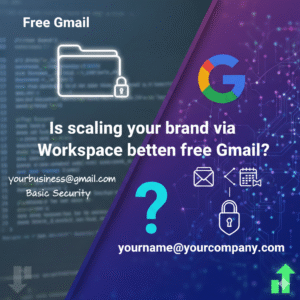
Is scaling your brand via Workspace better than free Gmail?

In today’s fast-paced digital world, businesses need the right tools to thrive. Many small businesses start with free Gmail accounts. However, as they grow, these free tools often fall short. Because of this, upgrading to Google Workspace is a game-changer. It offers advanced features, better security, and a professional look. For instance, this move is not just an expense. In fact, it is a smart investment.

The Limitations of Free Gmail for Businesses

Free Gmail is great for personal use. However, it has many limits for business. First, your email address looks unprofessional. Specifically, an email like yourbusiness@gmail.com lacks trust. Furthermore, free Gmail has fewer storage options. You also miss out on shared calendars. Similarly, collaborative documents are not as powerful. Security features are also very basic. This puts your business data at risk. In contrast, Google Workspace solves all these issues. Indeed, it is a necessary step for serious operations.

Is scaling your brand via Workspace better than free Gmail?

Google Workspace: More Than Just Email

Google Workspace offers a full suite of apps. It includes Gmail, Calendar, Drive, and Docs. Additionally, you get Meet for video calls and Chat for team messages. All these tools work together seamlessly. Therefore, your team can collaborate easily from anywhere. For example, you can edit a document with a teammate in real-time. Files save automatically to the cloud. Thus, you never lose work. It truly boosts team productivity every day.

Enhanced Security and Control

Security is a major concern for any business. Free Gmail offers standard security. Google Workspace, however, provides advanced protection. For example, it has stronger spam filters. It also uses data encryption. You also get admin controls. This allows you to manage user access and device security. For instance, you can wipe data from lost phones. Plus, you get 24/7 support. This keeps your business safe from threats. Your data and reputation are too important to risk.

Professional Branding with Custom Email

A custom email address makes your business look professional. Imagine yourname@yourcompany.com. This builds trust with clients. Similarly, it reinforces your brand identity. Google Workspace makes setting this up very easy. For instance, you can create multiple email aliases for different roles. Consequently, this presents a unified front to the world. Indeed, first impressions truly matter in the business world.

ROI Example 1: Increased Productivity

Let’s look at a small team of 5 people. Each person wastes 30 minutes a day on basic tasks. This includes finding files or dealing with email issues. This totals 2.5 hours lost per day. Over a month, that is 50 hours. If an employee’s wage is $20 per hour, that is $1,000 lost monthly. With Google Workspace, team collaboration saves time. For example, shared docs and smart search cut down wasted time by half. Therefore, you save $500 per month.

ROI Example 2: Better Security Prevents Costly Breaches

A data breach can cost a small business thousands. In fact, it can even lead to closure. Studies show average breach costs are very high. Imagine a breach costs your business $5,000. Google Workspace’s advanced security reduces this risk greatly. By spending a small amount on Workspace, you protect against huge losses. This is like buying insurance for your data. Furthermore, the peace of mind is worth it. It is a smart move for your future.

ROI Example 3: Scalability and Future Growth

As your business grows, your needs change. Google Workspace scales with you. For instance, you can easily add new users. Similarly, storage can expand as needed. New features roll out regularly. This ensures your tools stay modern. Therefore, you will not outgrow your software. This long-term thinking saves money and effort. Consequently, you avoid changing systems later. It sets a strong foundation for future success.

Invest in Your Business’s Future

Choosing Google Workspace is a strategic decision. It is about more than just email. It is about security, collaboration, and professional image. The clear ROI examples show its value. Small businesses that upgrade gain a competitive edge. Therefore, they work smarter and not harder. They protect their data and build trust. Make the switch today and watch your business thrive.


FAQs

1 Why should I pay for Workspace if Gmail is free?

Professional email and better security are worth the cost. Therefore, your business looks more trustful.

2 Can I keep my old emails when I move?

Yes, Google has tools to move your old mail. Consequently, the transition is very easy.

3 Is Workspace safe for my business data?

Yes, it has advanced encryption and admin controls. Thus, your data stays very safe.

4 What if my team is very small?

Even a team of one benefits from a custom domain. For instance, it builds your brand fast.

5 Is it hard to set up Workspace?

No, the setup is very simple and fast. Furthermore, Google offers 24/7 help.

Read More:

Will New Workspace Rules Help Your Team Scale?

Why Gmail Blocks Your Emails and How to Fix It Easily

Restore Deleted Google Workspace Users With This Simple Hack