Refresh loader

Category : Digital Growth

Home > Archive for Digital Growth

Can a Virtual CTO Replace a Full-Time One: Full Guide

You built your MVP. Congrats — that’s genuinely hard work. But now, a bigger challenge appears. How do you take that early-stage product and turn it into something truly scalable? How do you make the right tech decisions without burning your runway? And how do you do all of this without a full-time CTO eating up half your salary budget? The answer, for a growing number of startups, is simple. They hire a Virtual CTO.

In this post, we’ll break down exactly what a Virtual CTO does, why they matter at the MVP stage, and how they help you scale without the chaos.


First, What Exactly Is a Virtual CTO?

Let’s clear this up right away.

A Virtual CTO — also called a CTO-as-a-Service or fractional CTO — is an experienced tech leader who works with your company on a part-time or contract basis. They’re not a full-time hire. Instead, they bring senior-level expertise exactly when and where you need it.

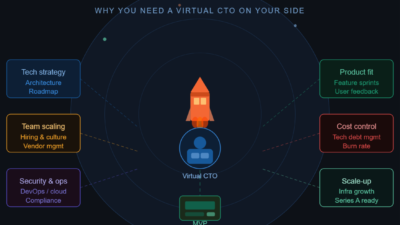
Think of them as your on-demand technology co-founder. They guide your tech strategy, review your architecture, manage your dev team, and help you make critical decisions — all without the overhead of a permanent C-suite hire.

For early-stage startups, this model is incredibly powerful. And here’s why.


The Problem With Scaling an MVP Alone

Building an MVP is one thing. Scaling it is a completely different game.

When you’re in the MVP phase, speed is everything. You cut corners, ship fast and validate quickly. That approach is exactly right for early-stage testing.

But then, something shifts. Users come in. Traffic grows. Features stack up. And suddenly, the quick fixes and shortcuts you relied on early on start breaking things. Your tech debt grows and system slows down. Your team struggles to keep up.

At this point, most founders face a tough choice. Do they hire a full-time CTO and spend $150,000–$250,000 a year on salary alone? Or do they muddle through, making costly tech decisions without the right expertise?

Neither option is ideal. And that’s exactly the gap a Virtual CTO fills.


What a Virtual CTO Actually Does for Your Startup

So, concretely, what does a Virtual CTO bring to the table? Quite a lot, actually.

They build a clear tech roadmap.

First and foremost, a Virtual CTO creates structure. They assess where your product is today. Then, they map out where it needs to go. Moreover, they help you prioritize features based on user needs, market demands, and technical feasibility — not just gut feel.

Without this roadmap, startups tend to drift. They build what feels urgent, not what’s actually important. As a result, they waste months and money on the wrong things.

They fix your architecture before it breaks you.

Early MVPs are rarely built to scale. That’s fine — they’re not supposed to be. However, as you grow, poor architecture becomes a serious liability.

A Virtual CTO audits your tech stack and spots the weak points. They redesign systems for scalability. They help you migrate from monolithic structures to microservices if needed. And they do all of this proactively — before things break in production.

They manage and mentor your dev team.

Great developers don’t always make great leaders. And as your team grows, leadership becomes just as important as code quality.

A Virtual CTO steps in to fill that gap. They run technical reviews and set coding standards. They help resolve conflicts within the team. Furthermore, they mentor junior developers, which means your overall team quality improves over time.

They help you choose the right tools and vendors.

Every startup faces a flood of technology choices. Which cloud provider should you use? Should you build or buy? Which third-party APIs make sense for your stack? These decisions seem small, but they compound significantly over time.

A Virtual CTO has seen these decisions play out dozens of times. Therefore, they guide you toward choices that are cost-effective, scalable, and aligned with your long-term goals.

They handle investor and board-level tech conversations.

If you’re raising a Series A or preparing for due diligence, your tech story matters enormously. Investors want to know that your architecture can handle growth. They want to understand your security posture. They want confidence in your engineering team.

A Virtual CTO can speak that language fluently. They prepare tech documentation, answer investor questions, and give your startup serious credibility in the room.


Virtual CTO vs Full-Time CTO: Which Is Right for You?

This is the question most founders eventually ask. So, let’s tackle it directly.

A full-time CTO makes sense when your product is live and growing fast, your engineering team exceeds 15–20 people, and you need daily, hands-on tech leadership. Additionally, it makes sense when you have the budget and the need for a dedicated leader in the C-suite.

On the other hand, a Virtual CTO is the better fit when you’re still validating your product or scaling from MVP. It also makes sense when your engineering team is small — typically under 10 people. Moreover, it’s ideal when you need strategic guidance but not daily management, or when you want to preserve budget for product and hiring.

For most startups between pre-seed and Series A, a Virtual CTO offers dramatically better ROI. You get the expertise without the full-time cost. And you can scale the engagement up or down as your needs change.


Key Signs You Need a Virtual CTO Right Now

Still not sure if it’s the right time? Look for these signals.

Your dev team is making architecture decisions you don’t fully understand. Your product is slowing down under growing user load. You’re about to raise funding and need to sharpen your tech narrative. You’re hiring developers but have no senior leader to set standards. Your MVP has launched but you’re not sure what to build next.

If any of these sound familiar, it’s time to bring in a Virtual CTO. Waiting too long is one of the costliest mistakes a startup can make.


The Real Cost of Not Having Tech Leadership

Let’s talk numbers for a moment.

Technical debt is expensive. According to industry research, poor tech decisions made early can cost 3–5x more to fix later. Furthermore, a single bad architecture choice — like choosing the wrong database or building a non-scalable microservice structure — can delay your product roadmap by months.

On top of that, hiring the wrong developers without proper oversight costs startups an average of 1.5x their annual salary in lost productivity and rehiring. And a security breach caused by poor oversight? That can end a startup entirely.

The math is straightforward. A Virtual CTO typically costs a fraction of a full-time hire. Yet, they prevent mistakes that cost multiples of that amount. It’s not a cost — it’s a return on investment.


How to Find the Right Virtual CTO for Your Startup

Not all Virtual CTOs are created equal. So, it’s worth knowing what to look for.

First, look for domain experience. A Virtual CTO who has worked in fintech, for example, will understand your compliance landscape better than a generalist.

Second, check for startup experience specifically. Building and scaling startups is very different from enterprise IT. You need someone who thinks fast and moves lean.

Third, ask for references. Talk to founders they’ve worked with before. Find out how they handled conflict, pressure, and rapid change.

Finally, ensure cultural fit. A Virtual CTO is a leadership partner. They need to mesh with your team, your values, and your pace.


Final Thoughts

Going from MVP to scalable product is one of the hardest transitions in the startup journey. There are so many decisions to make. So many ways to go wrong. And so much at stake.

That’s exactly why you shouldn’t do it alone.

A Virtual CTO brings the experience, structure, and clarity you need to move fast — without breaking things. They help you build smarter, scale faster, and grow with confidence.

Because the best startups don’t just build great products. They build great tech foundations. And that starts with having the right leader in the room.

Ready to scale? It might be time to make your first virtual hire.


Found this useful? Share it with a founder who’s still figuring out their tech strategy.

Read More:

Why Vcto is the Key to Early Stage Tech Stability Full Guide

Common Vcto Myths and the Strategic Truths Behind Them

The Ultimate 90 Day vcto Checklist for Every Founder

How to choose the right Virtual CTO service provider?

Choosing the right Virtual CTO (vCTO) service provider is a pivotal decision that directly influences your long-term success. Consequently, you must approach this selection process with a high level of strategic thinking to ensure your technology scales at the same pace as your business. Furthermore, selecting the wrong partner can lead to expensive technical debt that eventually slows your growth. Therefore, this comprehensive guide will help you identify the best leadership for your technical team.

Understand Your Specific Technology Needs

First, you should identify the exact type of help your company requires at this current stage. Because every business is unique, vCTO providers often specialize in very different areas of organizational growth. For instance, some focus exclusively on early-stage startups that need a basic prototype. Meanwhile, other providers help mature companies that need to scale their existing infrastructure. Additionally, you might need someone to fix a messy codebase or someone to build a new product from scratch. As a result, knowing your specific goals will help you filter through many options quickly and efficiently.

Choosing the right Virtual CTO service provider involves looking for deep technical expertise and leadership. Moreover, a great provider must understand your specific industry and its unique regulatory challenges. For example, a fintech company has very different security needs than a simple retail shop or a lifestyle blog. Thus, you should ask for specific examples of how they have solved similar problems in the past. In addition, ensure they are comfortable with the latest AI tools, cloud platforms, and cybersecurity protocols.

How to choose the right Virtual CTO service provider?

Evaluate Communication and Strategic Alignment

Next, you must test how well the provider communicates complex ideas to non-technical stakeholders. Specifically, a Virtual CTO acts as a vital bridge between your business goals and your engineering team. Because of this role, they must be able to explain technical risks and opportunities in plain English. For example, if they only use technical jargon, you might struggle to make informed decisions about your budget. Similarly, they should be proactive in suggesting new ways to save money or increase operational efficiency.

Furthermore, you should check their availability and how they fit into your unique company culture. Since they will be a part of your executive leadership team, they need to be available when big decisions happen. However, most vCTOs work with multiple clients simultaneously, so you must define clear expectations for their time and focus. Consequently, a 30-day trial period is often the best way to see if the partnership actually works. Finally, always check their professional references to see how they handled high-pressure situations in previous roles.

Developing a Robust Technical Roadmap

A primary benefit of hiring a Virtual CTO is the creation of a clear and actionable technical roadmap. Specifically, this roadmap should align with your business milestones for the next twelve to twenty-four months. Because technology changes rapidly, your roadmap must be flexible enough to adapt to new market trends. For instance, your vCTO should help you decide when to migrate to a new server or when to integrate new software. Additionally, they should provide cost estimates for every major phase of development. Consequently, you will have a much clearer picture of your future financial requirements.

Furthermore, a great vCTO will help you build a culture of technical excellence within your internal team. Since they are seasoned leaders, they can mentor your junior developers and help them improve their coding standards. Moreover, they can establish better workflows, such as automated testing and continuous integration. As a result, your team will become more productive and produce higher-quality work over time. Therefore, the right provider does not just give advice but also elevates the skills of everyone around them.

Checklist for Selecting Your Virtual CTO

To make the process easier, you can use a simple checklist to compare different providers side by side. Each provider should meet these basic standards before you consider signing a long-term contract.

Selection Step What to Check? Why it Matters?
Industry Experience Do they understand your market? Prevents industry-specific errors.
Technical Skills Are they experts in your stack? Ensures high-quality code and architecture.
Communication Can they explain tech simply? Keeps stakeholders informed and aligned.
Availability Will they be there when needed? Prevents delays in critical decision-making.
Strategy Do they care about your growth? Aligns technology with business profit.

Conclusion and Best Practices

In conclusion, finding the right Virtual CTO service provider requires careful research and clear communication. By following these steps, you can find a partner who helps you build a strong and scalable technical foundation. Moreover, a great vCTO will save you significant time and money in the long run by avoiding common mistakes. Therefore, do not rush the process and always prioritize strategic alignment over flashy technical buzzwords. A successful partnership will turn your technology from a source of stress into a powerful engine for business growth.

Frequently Asked Questions

1 What does a Virtual CTO actually do for my business?

A Virtual CTO provides high-level technical leadership without the high cost of a full-time executive. Specifically, they handle long-term strategy, technical hiring, and complex technology roadmaps.

2 Is a Virtual CTO better than hiring a full-time CTO?

It depends on your current stage of growth and your available budget. For example, early-stage startups often prefer vCTOs because they are more cost-effective and offer greater flexibility.

3 How do I know if I truly need a Virtual CTO?

You likely need one if your developers lack clear direction or if you are struggling to make big technical decisions. Consequently, they provide the missing senior-level guidance your team needs.

4 What is the typical length of a Virtual CTO contract?

Many contracts are month-to-month to allow for flexibility, but most successful partnerships last for at least six months. Thus, it gives them enough time to make a real impact on your infrastructure.

5 Can a Virtual CTO help with my annual security audits?

Yes, they often oversee all security protocols and ensure your company stays compliant with modern industry standards. This reduces your risk of data breaches and legal issues.


Read More:

How to pick between a Virtual CTO and an In-House partner?

How a Virtual CTO stops your tech from failing today?

Does your new vcto keep Version 1 from breaking?

Does your new vcto keep Version 1 from breaking?

The world of modern business is moving at a very fast pace today. Many firms wonder how they can stay ahead of the next big shift. However, the answer lies in choosing the right path for your digital growth. Because of this, staying ahead means looking toward a smart and flexible leader. Specifically, hiring a vCTO is now a vital step for your firm. This shift offers a clear map for success and a very professional way to work. This move is not just a trend for small teams. In fact, it is a very smart investment for any brand today. Consequently, a smart choice helps you build a future proof brand name.

Does your new vcto keep Version 1 from breaking?

Building a Strong Base for Your Future Growth

Many firms find that turning a big plan into real work is very hard. However, teams still try to hunt for the best ways for months. First, traditional ways are far too expensive and slow for most small firms. Specifically, poor tech choices can hide many deep and dark costs of old manual habits. Furthermore, finding a top tool that stays for the long term is rare. You also miss out on fast moves while your output stays low. Similarly, a vCTO ensures that your first version does not crumble under pressure. This puts your growth on a steady path for a long time. In contrast, making a strategic tech hire early on helps you win.

Setting a Gold Standard for Your Digital Team

The journey to the top begins when you pick a dedicated tech partner. At this stage, you might wonder why a cheap pick often fails you. These new tools must act as your top guide on a steady basis. A vCTO ensures your tech and its true worth match your goals. They are built to spark fast progress in every single project.

You should also know that an executive partner offers more than a simple task list. While a solo human just finishes a task, a vCTO guides your whole path. Furthermore, they move firms past the fear of bad tech choices early. This approach starts very strong by setting a gold standard for all. It truly boosts initial trust for you every day with fans.

Scaling Fast with a Strategic Leadership Model

After you join the model, the goal shifts to gaining big wins. One of the top wins of expert help is getting dedicated guidance. The reality of a modern vCTO then delivers a very custom plan for your firm. This path matches what you need and how you act every day. Therefore, if a project starts, you get fast and clear focus. You also gain access to a very diverse and deep skillset. This includes design, dev, and very deep digital security through smart systems. Access to these skills keeps all your users very happy and safe. It also shows you know your specific needs in a tough market.

How a Unified View Drives Real Business Value

As a firm’s tech grows, a strategic lead helps you find new ways. At this stage, the focus on a vCTO builds a very strong architecture. This plan is specific to what the modern user likes and wants. For example, some might get a faster way to find new items. The timing of these moves is very key for your success. Furthermore, the leader handles all your vendors and developers with ease. This ensures your project plan is solid from the very first step. Such smart timing helps firms move toward a big global win. Smart leaders push for more scale every single year for you. Indeed, the right partnership reveals who is truly ready.

Turning Insights into a Sustainable Content Edge

Data is the backbone of all smart marketing and content success today. The way a vCTO works constantly tracks how every user acts with your tech. This includes how they read and share your posts or apps. These facts help refine the paths for every brand you lead. Therefore, the system learns and grows over time to serve you better. This data driven path ensures the best results for your firm. It also prevents any bad risks from hurting your brand name. Smart leadership relies on real facts to win every single time. Your plan and focus are too important to risk at any step. The core of your strategy is about long term brand health.

Joining Human Talent with Efficient Tech Systems

For the best results, smart tech joins your team in a seamless way. This link ensures all facts stay in one place for your team. Managers and teams share the same live info to move faster. This stops double work and missed ideas for new products or sales. The system provides a full view of every piece you need. Consequently, it supports personal touches at every single step of the way. Your strategy works best when you see a vCTO joined with intelligent tools. It sets a strong base for your future success in any market. Thus, picking the right tech head is about building a real team. It is a key part of your modern world politics and trade.

Is a Slow Path Harming Your Long Term ROI?

Picking the slow path for scaling is a very big risk. You must look for signs that you need a better vCTO for your brand. If your tech is slow, you might need a new plan now. If your costs are too high, experienced systems can fix the leak. The process makes your work much easier and more clear. It also leads to more sales in the long run for you. Businesses that use this path gain a big edge over rivals. Therefore, they work much smarter and not harder to win today. They turn new tech into a tool for more joy and gain. This standard is the path to your best results in life.

Managing the Risk of High Technical Debt Early

Technical debt can be very hard to handle for a small team. However, the right vCTO makes this work feel very light and fast. First, the system sorts through billions of facts in a second. Specifically, it finds the gold in a mountain of digital noise. Furthermore, this provides you with clear and simple steps to take. You also avoid the stress of being buried in too many bugs. Similarly, the tech presents the info in a way that is easy. This helps your team make fast choices with very high trust. Indeed, the logic of high-level oversight protects your code base. It ensures you do not pay for the same work twice.

Conclusion and the Path Forward for Your Firm

The future of your tech is too important to leave to chance. Today, you can gain a top expert view of a vCTO without the huge cost. This smart move helps you scale faster and much smarter too. It turns your tech into a real win for your brand name. You will see more growth and less stress every single day. Therefore, you should act now to secure your spot in the market. Knowing the truth of quality leadership leads to true success. It is the best way to ensure your success for many years. You will find that the right leader makes all the difference. Take this step and watch your business reach new heights soon.


FAQs

1 What is a vCTO?

It is a virtual leader who handles all your tech needs for a lower cost.

2 How does a vCTO help with scaling?

They build a system that can grow without breaking as you get more users.

3 Does it help save money on tech?

Yes, it stops bad debt and makes sure your team works on the right tasks.

4 Is it hard for a small firm to start?

No, it is very easy to scale and it fits firms of any size today.

5 Why is this more than just a simple tool?

It is about a new way to win in a very crowded and fast market.


Read More:

How scaling with vCTO gives a better ROI than a freelancer?

Can scaling with a vCTO build a better brand?

Is scaling your brand via Workspace better than free Gmail?