Refresh loader

Category : Fractional CTO

Home > Archive for Fractional CTO

How WIP Audits Help vCTOs Lead Teams Better

Tech projects fail quietly. Work progresses on paper. However, real progress often lags behind. WIP audits help close that gap. Virtual CTOs (vCTOs) use them to stay aligned with engineering teams and ensure accountability across every sprint.

What Is a WIP Audit?

WIP stands for Work in Progress. A WIP audit is a structured review of all ongoing technical tasks. It checks what is actually being built versus what is reported. Additionally, it identifies bottlenecks, blockers, and half-finished work before they become real problems.

WIP audits are not performance reviews. They are diagnostic tools. The goal is not to catch people failing — it is to surface hidden risks early. Therefore, they create a culture of transparency rather than fear.

How WIP Audits Help vCTOs Lead Teams Better

The Role of a vCTO in Technical Oversight

A vCTO is a fractional or virtual Chief Technology Officer. Many startups and growing companies hire vCTOs to lead technology strategy without the cost of a full-time executive. vCTOs work part-time but take on full executive responsibility for technical direction.

Furthermore, vCTOs often inherit codebases and teams they did not build. This makes WIP audits critical. They allow vCTOs to quickly understand what is happening, what is stuck, and where technical debt is accumulating.

Consequently, decisions are based on reality, not reports.

Why WIP Audits Matter for Startups

Startups move fast. Speed often creates invisible problems. Engineers juggle multiple tasks at once. Context switching reduces quality. Work gets started but not finished. These issues pile up quietly.

Moreover, investors and boards ask for progress updates. Founders need accurate answers. A WIP audit gives vCTOs the data they need to answer confidently. Additionally, it helps teams prioritize correctly and drop low-value work.

How vCTOs Conduct a WIP Audit

  1. Review the project board: Examine all active tickets in Jira, Linear, or Trello.
  2. Check code repositories: Look at open pull requests, unmerged branches, and stale commits.
  3. Interview engineers: Ask short, direct questions about blockers and progress.
  4. Compare estimates vs actuals: Identify tasks that are taking longer than planned.
  5. Document findings: Capture issues, risks, and recommended actions clearly.

Common Issues WIP Audits Uncover

WIP audits reveal patterns that regular standups miss. One common issue is zombie tasks — items marked as in progress but untouched for days. Another is scope creep, where small tasks balloon into complex features without visibility.

Additionally, audits often surface integration issues. Services that are built in isolation but not connected. They also expose dependency blockers — engineers waiting on other teams without escalating. Therefore, fixing these issues early prevents major project delays.

Tools vCTOs Use for WIP Audits

  • GitHub / GitLab: Review open PRs, commit history, and branch activity.
  • Jira / Linear: Analyse ticket age, cycle time, and status accuracy.
  • Notion / Confluence: Check if documentation matches what is being built.
  • Slack: Review communication threads for hidden blockers and delays.
  • CI/CD dashboards: Verify that pipelines are passing and deployments are on track.

Building a WIP Audit Cadence

A single WIP audit provides a snapshot. Regular audits provide a trend. Most vCTOs run audits every two weeks, aligned with sprint cycles. However, high-risk projects may need weekly reviews.

Importantly, the audit process should be lightweight. It should not slow the team down. A focused 60-minute review with a structured checklist is more effective than a lengthy meeting. The Findings should be shared with stakeholders in a simple summary format.

How WIP Audits Build Trust With Stakeholders

Founders and investors want confidence that technical work is on track. WIP audit reports provide that confidence with evidence, not promises. They show exactly where the project stands, what risks exist, and what actions are planned.

Moreover, regular audit reports demonstrate vCTO competence. They show that technical leadership is engaged, rigorous, and proactive. Consequently, stakeholders trust the vCTO’s assessments during board meetings and investor updates.

Avoiding Common WIP Audit Mistakes

i. Do not turn audits into blame sessions — focus on systems, not individuals.

ii. Do not skip the code review component — reports can be misleading.

iii. Do not run audits without a clear framework — structure ensures consistency.

iv. Do not ignore recurring issues — patterns need systemic fixes.

v. Do not forget to follow up — audits are worthless without action.

Final Thoughts

WIP audits are one of the most powerful tools in a vCTO’s toolkit. They create visibility where none existed. They surface risk before it becomes crisis. Most importantly, they build a culture where progress is measured by outcomes, not activity. For any company serious about technical execution, WIP audits are not optional — they are essential.

Read More:

Virtual CTO Tactics for Better Product Quality

Why Regular WIP Reviews With vCTO Save Project From Disaster

The Best Virtual CTO Services Blend Into Your Team

Why Virtual CTO Services Myths Are Costing You Big

Every growing business hits a technology wall at some point. The systems start to crack. The tech decisions get harder. Yet hiring a full-time CTO can feel out of reach. That is exactly where virtual CTO services come in. However, there is a lot of confusion around what they are and what they actually do.

Myths spread fast. Consequently, many business owners miss out on a service that could transform how they grow. So, let us break down the biggest myths about virtual CTO services and replace them with the truth.

What Are Virtual CTO Services?

A virtual CTO is a senior technology leader who works with your business on a part-time or contract basis. They bring C-suite level expertise without the full-time cost.

They handle tech strategy, vendor management, team oversight, and roadmap planning. Furthermore, they can fill in during leadership gaps or guide a company through a major digital shift.

It is a flexible model. Yet, despite its clear value, misconceptions continue to hold businesses back.

Why Virtual CTO Services Myths Are Costing You Big

Myth 1: Virtual CTO Services Are Just for Big Companies

The Myth

Many founders believe that a CTO, even a virtual one, is only needed by large enterprises with complex tech stacks and hundreds of developers.

The Truth

Small and mid-size businesses actually benefit the most from virtual CTO services. Startups need strategic direction early. Mid-sized firms need structure as they scale.

Moreover, a virtual CTO helps smaller businesses avoid costly tech mistakes before they happen. They provide exactly the kind of senior guidance that most growing companies lack.

Getting expert advice early is far cheaper than fixing bad decisions later. Additionally, it levels the playing field with larger, better-resourced competitors.

Myth 2: A Virtual CTO Is Not as Committed as a Full-Time One

The Myth

The idea is simple: if someone is not in your office every day, they cannot truly be invested in your success.

The Truth

Commitment is measured in outcomes, not office hours. Virtual CTO services are built on results-driven engagement. Their value depends entirely on delivering real impact.

In fact, many virtual CTOs are deeply focused on their clients. They bring a focused, outcome-driven mindset because their reputation depends on it.

Furthermore, a virtual CTO brings fresh perspective from working across multiple industries. That cross-sector insight is something a single in-house hire often cannot provide.

Myth 3: Virtual CTO Services Are Too Expensive

The Myth

Some business owners assume that CTO-level expertise always comes with a full-time salary, benefits, and equity. Consequently, they never even ask about alternatives.

The Truth

Virtual CTO services cost a fraction of a full-time hire. A full-time CTO can cost between $200,000 and $400,000 per year in salary alone. Add benefits, equity, and onboarding costs, and the number climbs fast.

By contrast, virtual CTO services are priced on a part-time or project basis. You pay for what you need, when you need it. Additionally, there are no long-term commitments or HR overhead.

For most growing businesses, the ROI is significant. Better tech decisions mean fewer expensive mistakes. Moreover, faster execution means faster revenue.

Myth 4: A Virtual CTO Cannot Manage Your Tech Team

The Myth

This myth suggests that remote or part-time engagement makes it impossible to lead developers, designers, or tech vendors effectively.

The Truth

Virtual CTOs lead teams every day. Remote team leadership is now a standard and proven model across industries. In fact, many developers actively prefer working with experienced remote leaders.

A skilled virtual CTO knows how to run sprints, set priorities, and create accountability, all without being physically present. They use the same tools and frameworks as any in-house leader.

Furthermore, their focus is on building systems that do not depend on one person being in the room. That kind of scalable leadership structure is actually a competitive advantage.

Myth 5: You Only Need a Virtual CTO If You Have a Tech Product

The Myth

Many non-tech businesses believe that a CTO, virtual or otherwise, only matters if you are building software or running a tech platform.

The Truth

Every modern business is a technology business. Retail, healthcare, finance, hospitality, and education all rely heavily on digital tools, data, and automation.

A virtual CTO helps any business make smarter decisions about the tech that runs their operations. They evaluate software vendors, improve cybersecurity posture, and ensure digital systems support business goals.

Additionally, they help non-tech leaders understand technology well enough to make informed decisions. That clarity is valuable in any industry.

Myth 6: Virtual CTO Services Are a Temporary Fix

The Myth

Some leaders see a virtual CTO as a stopgap. They plan to hire a full-time CTO soon and see the virtual option as a short-term patch.

The Truth

Many businesses use virtual CTO services for years. It is not a stopgap. It is a strategic choice.

For companies that do not need full-time tech leadership, a virtual model offers ongoing senior guidance without the overhead. Furthermore, as needs evolve, the engagement can scale up or down accordingly.

Moreover, a good virtual CTO builds long-term relationships. They learn your business deeply and become a trusted part of your leadership team over time.

Myth 7: Anyone Can Call Themselves a Virtual CTO

The Myth

This concern is real. The market has grown fast. Therefore, some worry that quality is inconsistent and that finding a truly experienced virtual CTO is difficult.

The Truth

Yes, quality varies. However, that is true in every professional services market. The key is knowing what to look for.

A credible virtual CTO has real experience leading technology at a senior level. Look for a track record of building and scaling tech teams, managing complex projects, and driving digital strategy. Additionally, check for strong references and clear communication skills.

The best virtual CTOs often come through trusted networks or reputable agencies. Doing your due diligence pays off significantly.

Myth 8: A Virtual CTO Cannot Understand Your Business Well Enough

The Myth

Some leaders believe that without being embedded in the company full-time, a virtual CTO will never truly grasp the culture, the team, or the business model.

The Truth

Great virtual CTOs are skilled at rapid business immersion. They ask the right questions fast. They learn your goals, your constraints, and your team dynamics quickly.

Moreover, their experience across many businesses actually helps. They bring pattern recognition that a first-time in-house hire may lack. They have seen similar challenges before and know how to navigate them.

Consequently, the onboarding process for a virtual CTO tends to be shorter and more focused than for a full-time executive.

How to Know If Virtual CTO Services Are Right for You

Ask yourself a few honest questions. Does your business need strategic tech leadership but not a full-time hire? Are you making technology decisions without enough confidence? Furthermore, are you scaling fast and need expert oversight without a large investment?

If you answer yes to any of these, virtual CTO services deserve serious consideration. They are not a compromise. They are a smart, deliberate choice.

Additionally, many companies start with a virtual CTO and later transition to a full-time hire once they have the revenue and scale to justify it. The virtual model is an excellent bridge.

What to Look for When Hiring a Virtual CTO

First, look for relevant industry experience. A virtual CTO with background in your sector will ramp up faster and spot risks more quickly.

Second, assess their communication style. A great CTO must translate complex tech concepts for non-technical leaders. Clarity and patience are non-negotiable.

Third, check their network and vendor relationships. Moreover, review how they structure their engagements. Clear deliverables and measurable outcomes are signs of a professional.

Finally, trust your instincts. You need a strategic partner, not just a consultant. The relationship must be built on honesty and mutual respect.

Final Thoughts

Virtual CTO services have come a long way. They are no longer a niche or experimental option. Today, they are a proven, strategic model used by companies of all sizes.

The myths around them are understandable. Any emerging service category faces scepticism. However, the evidence is clear.

A skilled virtual CTO can transform your technology strategy, reduce risk, build stronger teams, and accelerate growth. All without the cost and commitment of a full-time executive hire.

Consequently, the biggest risk is not in trying virtual CTO services. The biggest risk is in letting myths stop you from accessing the expertise your business needs to grow.

Read More:

Virtual CTO: The Missing Link in Your Tech Team

Can a Virtual CTO Replace a Full-Time One: Full Guide

Why Vcto is the Key to Early Stage Tech Stability Full Guide

Virtual CTO: The Missing Link in Your Tech Team

Bringing in a Virtual CTO sounds great on paper. Senior tech leadership, no full-time salary, flexible engagement. Perfect, right?

But then a nagging question creeps in. “Will this person actually work with my team? What about our agency partner? Will they clash with our developers or confuse our vendors?”

These are fair concerns. The good news is, they are also largely unfounded — provided you choose the right Virtual CTO and set things up well. In fact, when done correctly, a Virtual CTO doesn’t just fit into your existing structure. They make it work better.

So, let’s walk through exactly how this integration happens in practice.

Virtual CTO: The Missing Link in Your Tech Team


Understanding the Virtual CTO’s Role in Your Ecosystem

Before diving into specifics, it helps to understand what a Virtual CTO is — and is not — in your organisation.

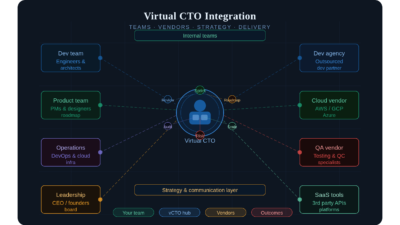
A Virtual CTO (also called a fractional CTO or CTO-as-a-Service) is an experienced technology leader who joins your company part-time or on a contract basis. They are not a project manager. They are not a developer. And they are certainly not there to replace your existing team.

Instead, they sit above the day-to-day delivery layer. They provide strategic direction, technical oversight, and leadership continuity — without disrupting the people already doing the work. Think of them as the conductor of an orchestra, not the musician who replaces another. Everyone plays their part; the Virtual CTO simply makes sure the music comes together.


Working With Your In-House Development Team

For many companies, the biggest concern is how a Virtual CTO will interact with internal developers. Will there be tension? Will engineers feel micromanaged?

The short answer is no — at least not if the Virtual CTO approaches the role correctly.

A seasoned Virtual CTO understands that their job is to enable, not interfere. From day one, they typically begin with a listening phase. They meet the team and review existing code, architecture, and processes. They understand how things work before suggesting changes.

After that initial discovery period, they focus on a handful of high-leverage activities. Code reviews and architecture guidance happen at a strategic level, not a granular one. Sprint planning and technical roadmaps get cleaner, more structured. Engineers get clearer priorities and fewer conflicting instructions from the top.

Importantly, a good Virtual CTO also becomes a career resource for your developers. They mentor senior engineers, help resolve technical disputes, and create a healthier engineering culture overall. Rather than creating tension, they typically earn respect — because they bring experience the team can genuinely learn from.


Integrating With Outsourced or Agency Development Partners

Many startups and growing businesses rely on an external development agency or offshore dev team. This is where Virtual CTO integration becomes especially valuable.

Without a tech leader in-house, founders often struggle to manage agency relationships effectively. They can’t fully assess the quality of work being delivered. They don’t know if the architecture the agency proposes is truly in their long-term interest. And they lack the authority to push back when timelines slip or decisions feel wrong.

A Virtual CTO changes that dynamic entirely.

First, they serve as a technical bridge between you and the agency. They translate business requirements into clear technical briefs and review deliverables before sign-off. They hold the agency accountable to standards — quality, security, documentation, and code maintainability.

Second, they protect you from vendor lock-in. Some agencies deliberately build in dependencies that make switching costly. A Virtual CTO spots these practices early and insists on clean, portable code and proper knowledge transfer. That alone can save you enormous pain down the road.

Third, they manage the relationship professionally. Instead of chaotic back-and-forth between founders and agency project managers, there is a single senior technical point of contact. Communication sharpens. Accountability improves. Delivery accelerates.


Collaborating With Cloud and SaaS Vendors

Beyond development teams, most modern businesses rely on a stack of third-party vendors — cloud providers like AWS, Google Cloud, or Azure, as well as SaaS platforms, analytics tools, and API integrations.

Managing these vendors strategically is a genuine skill. Without proper oversight, companies over-provision cloud resources, sign long-term contracts they outgrow, and accumulate tool sprawl that costs far more than it delivers.

A Virtual CTO takes ownership of your vendor landscape. They audit what you are currently using and what it costs and identify consolidation opportunities. They negotiate with vendors on your behalf — or advise you on how to do so effectively and ensure your cloud architecture is optimised for cost and performance, not just functionality.

Moreover, when evaluating new tools or platforms, they serve as your technical filter. Instead of relying on a vendor’s sales pitch, you have an expert who can assess whether a tool genuinely fits your stack and your growth stage. That alone prevents a lot of expensive mistakes.


Communicating With Leadership and the Board

One often-overlooked integration point is the relationship between your tech function and your senior leadership team. This gap causes real problems in many organisations.

Technical teams speak in code, frameworks, and infrastructure concepts. Founders, investors, and board members speak in strategy, revenue, and risk. Typically, nobody is translating effectively between these two worlds.

A Virtual CTO fills that gap naturally. They distil complex technical realities into clear, business-focused language and present technology updates in board meetings, investor due diligence sessions, and strategy reviews — in a way that actually lands. They help leadership make better decisions by giving them the technical context they need, without overwhelming them.

Additionally, when a fundraise requires technical documentation or a data room needs an architecture overview, the Virtual CTO handles it. This credibility boost is something many founders underestimate until they actually experience it.


Practical Integration: How the First 30 Days Typically Look

It helps to understand what the onboarding process actually looks like in practice. Here is a typical first-month pattern for a Virtual CTO integration.

During the first week, they focus on discovery. That means reviewing the existing codebase, infrastructure, and documentation. It also means meeting every key stakeholder — developers, designers, operations leads, and founders. No recommendations are made yet. Listening comes first.

By week two, they start forming a view. They identify the three to five most pressing technical risks or gaps. They also map out existing vendor relationships and assess which are working well and which are not.

During weeks three and four, they begin adding value actively. A revised technical roadmap takes shape. Communication processes between the team and leadership get structured. Any immediate blockers — whether a pending architectural decision or a vendor contract renewal — get addressed with guidance.

By the end of the first month, integration is typically smooth. The team has seen how the Virtual CTO operates. Trust begins building. Founders feel more confident. And the technical function starts running with noticeably more clarity.


Common Myths About Virtual CTO Integration

A few misconceptions are worth addressing directly.

“They won’t understand our business fast enough.” A good Virtual CTO has done this many times. They know how to get up to speed quickly and ask the right questions early.

“Our team will resist an outsider.” Resistance usually fades fast when the team sees the Virtual CTO is there to support, not replace or criticise.

“We can’t afford to brief someone new.” The onboarding investment is genuinely small compared to the value delivered. Most teams report feeling relief — not burden — within the first few weeks.


Final Thoughts

A Virtual CTO is not a disruption to your team or your vendor relationships. Done right, they are the glue that makes all of it work better.

Your developers get clearer leadership and agency partners get better accountability. Your vendors get properly managed and leadership team gets a trusted technical voice.

Integration does not have to be complicated. It just has to be intentional.

And when it is, a Virtual CTO quickly stops feeling like an outsider. They become exactly what every growing tech business needs — a steady, experienced hand guiding the whole machine forward.

Read More:

Can a Virtual CTO Replace a Full-Time One: Full Guide

Why Vcto is the Key to Early Stage Tech Stability Full Guide

Common Vcto Myths and the Strategic Truths Behind Them

Why Vcto is the Key to Early Stage Tech Stability Full Guide

Starting a new software project is a big step for any firm. You want to move fast and win the market. However, many projects fail because they do not see risks early. This is exactly why you need a vcto to guide you. A vcto identifies potential traps before they become big problems for you. They look at your plan with a critical eye. For this reason, they help you avoid the most common tech mistakes. Therefore, your project has a much higher chance of success from the start.

A vcto acts as a safety net for your investment and your time. Specifically, they check if your ideas are easy to build and scale. If a plan is too risky, they will tell you right away. Consequently, you do not waste money on features that will not work. In addition, they ensure that your team has all the tools they need. This proactive approach is the key to a smooth launch for your brand. Thus, a vcto is a vital partner for any head of a startup.

Why Vcto is the Key to Early Stage Tech Stability Full Guide

Choosing the Right Tech for Stability

One of the biggest risks in tech is picking the wrong tools. If you pick a tool that is too old, your app will be slow. If you pick one that is too new, it might break. A vcto helps you find the perfect balance for your specific needs. They pick tools that are proven to be safe and fast. For instance, they might suggest a cloud plan that grows as you get more users. This choice ensures that your site never crashes during a big surge. You stay safe and reliable with a vcto.

Transition words help us see the link between choice and safety. For example, a vcto looks at the long term cost of every tool. They do not just pick what is popular today. They pick what will keep your firm strong for many years. As a result, you avoid the high cost of changing your tech later. Furthermore, a vcto helps you hire devs who know these tools well. They make sure your team is ready for any challenge that comes. Truly, a vcto is the best guard for your software roadmap.

Protecting Your Data and Your Users

Security is a risk that you cannot afford to ignore. A single hack can ruin your reputation in just one day. He builds a wall around your data from the very first line of code. They implement the best safety rules to keep hackers out. Therefore, you can sleep well knowing your firm is protected at all times. They also set up regular backups so you never lose your hard work. This level of care is essential for any modern business today.

He also makes sure you follow all the laws about data. For instance, they help you stay compliant with global rules for user privacy. This prevents any legal trouble or big fines for your firm. In addition, they train your staff on how to stay safe online. They show them how to spot a scam before it hurts the team. So, a vcto creates a culture of safety across your whole office. You build trust with your users and your board with him.

Keeping the Project on Time and Budget

Delays are a major risk that can drain your startup bank account. Many projects take twice as long as the founder expects. A vcto prevents this by setting realistic goals for your dev team. They break down big tasks into small and easy steps. Because of this, you can see the progress of your project every day. They also handle any blocks that slow the team down. Similarly, they keep a close eye on your spending to prevent waste.

He ensures that every hour of work adds real value to your brand. They stop the team from getting distracted by minor tasks. Instead, they focus on the core features that your users truly want. For example, they might delay a “cool” feature to fix a vital bug first. By doing this, they keep your project lean and mean. Thus, your software stays on the path to a successful and fast launch. He is the key to a project that finishes on time. You get the best results with him leading the way.


Frequently Asked Questions

1 How does a vcto find risks in a project?

They perform a deep audit of your code and your plan. A vcto looks for any weak spots that could lead to a crash or a hack later.

2 Can a vcto help if my project is already in trouble?

Yes, he can step in at any time to fix a failing project. They identify the root cause of the delay and set a new path for success.

3 Is a vcto better than a regular project manager?

He has deeper tech skills than most managers. They understand the code and the architecture, which is vital for managing risk in software.

4 Will a vcto make my developers work faster?

Yes, by removing technical blocks and setting clear goals. He ensures that your developers can focus on what they do best without any stress.

5 How does a vcto save me money on Day One?

They prevent you from buying unnecessary tools and hiring the wrong people. He ensures that your budget is spent on the most impactful tasks for your firm.

Read More:

Common Vcto Myths and the Strategic Truths Behind Them

The Ultimate 90 Day vcto Checklist for Every Founder

How to Use VCTO Insights for Software Ownership

Common Vcto Myths and the Strategic Truths Behind Them

Myth One: A Vcto Is Just a Coder

Many people think a vcto is just a lead dev with a new title. This is a big myth that can hurt your firm. A vcto does not just write code for your app. Instead, they lead your whole tech plan and your team. You need him to think about the big picture and your growth. They look at how tech fits into your real business goals. For this reason, they are more like a boss than a worker. Therefore, you get high level leadership that a coder cannot give.

The truth is that he builds a bridge between your ideas and your tech. Specifically, they help you make smart choices that save you cash. They do not just fix bugs in your script. Consequently, they make sure your firm is ready for the long term. In addition, they talk to your board and your investors for you. This means they act as a true partner in your success. Thus, a vcto is a strategic asset for any startup head.

Common vcto Myths and the Strategic Truths Behind Them

Myth Two: Remote Means Out of Touch

Some bosses fear that a vcto will not know what is going on. They think being virtual means they are out of the loop. However, this is not true in our digital world today. He uses great tools to stay close to your team at all times. They join your daily calls and check your work frequently. Because of this, they often know more than a boss who is in the office. They see the data and the results with total clarity.

Transition words help us see how ahe stays connected to you. For example, they use video and chat to lead your devs every day. They also set up clear tracks for every task in your firm. This makes the work easy to see and easy to manage from anywhere. As a result, your team feels more supported and more focused. Furthermore, he brings a global view to your small startup. They know what the best firms in the world are doing right now. You get the best of both worlds with a vcto.

Myth Three: Only Tech Firms Need a Vcto

Another common myth is that only app firms need a vcto. This is a mistake that many non tech bosses make. In fact, every modern firm runs on tech today. If you have a site or a shop, you need him to stay safe. They ensure your data stays out of the hands of hackers. Therefore, they protect your brand and your customer trust. He also helps you pick the right tools to sell your goods online.

A vcto looks for ways to make your work much faster and easier. For instance, they might find a tool that does your chores for you. This frees up your time to focus on your real passion. In addition, they help you scale your systems as you get more fame. This prevents a crash when you have a big sale or a new launch. So, he is vital for any firm that wants to grow in a smart way. Truly, ahe is the best guard for your digital life.

Myth Four: A Vcto Is Too High in Cost

Cost is a major concern for many early stage startups. Some think a vcto is only for firms with a lot of gold. But the truth is that he is a very lean choice. You only pay for the time you actually need from them. This is much cheaper than hiring a full time head of tech. For this reason, you get elite skills at a price you can afford. You save on tax and health fees and office space too.

A vcto also helps you save money by stopping bad tech buys. They ensure you do not waste cash on tools that do not work. Because of this, he often pays for their own cost in a few months. They also help you raise more money by proving your tech is strong. Investors love to see him on your team list. Similarly, they help you plan your budget with total precision and care. Thus, a vcto is a smart financial move for your startup journey.


Frequently Asked Questions

1 Is a vcto as good as a full time CTO?

Yes, for most startups, he gives you the same level of skill. They provide the same strategy and leadership but with more flexibility for you.

2 Can a vcto help with my cloud security?

Absolutely, he makes sure your cloud is locked tight. They implement the best tools to guard your data from any digital threats or hacks.

3 How does a vcto manage a team they cannot see?

They use tools like Jira and Slack to track every task. He focuses on the results and the data to ensure the team is fast.

4 Does a vcto work for many firms at once?

Yes, he often helps a few firms at the same time. This is how they keep their skills sharp and their costs low for you.

5 Will a vcto stay with me for a long time?

You can keep him for as long as you need their help. Many firms keep them for years as a trusted part of their core team.

Read More:

The Ultimate 90 Day vcto Checklist for Every Founder

How to Use VCTO Insights for Software Ownership

How a vcto Prevents Costly Technical Mistakes: Full Guide

The Ultimate 90 Day vcto Checklist for Every Founder

Setting the Stage in the First Month

The first month for a vcto is all about a deep dive into your firm. They start by looking at every part of your tech stack and your team. You should expect a full tech audit as the first big task. This audit shows what works well and what needs a fast fix. For this reason, he talks to your devs to find their pain points. They also check your code for any hidden risks or old tools. Therefore, you get a clear view of your current health in a very short time.

A vcto also looks at your business goals to align them with your tech. Specifically, they want to know where you want to be in one year. If your tech does not match your vision, they will tell you right away. Consequently, you save time by not building the wrong features for your users. In addition, they check your cloud bills to find ways to save cash. This quick win proves the value of a vcto to your board. Thus, the first 30 days build a strong base for all your future growth.

The Ultimate 90 Day vcto Checklist for Every Founder

Building the Roadmap in the Second Month

Once the audit is done, he starts to build your long term map. This roadmap is a core task that shows every step of your tech journey. It lists the new tools you need and the old ones to drop. For instance, they might plan a move to a faster database to handle more users. This plan helps your team stay focused on the most vital tasks. Similarly, it gives you a clear budget for the next two quarters of work. You stay on track and on budget with a vcto.

Transition words help us see how he links the past to the future. For example, they take the gaps from the audit and turn them into goals. They also set up better ways for your team to work and communicate. This might include new rules for code reviews or faster daily meetings. As a result, your dev speed will start to go up in this second month. Furthermore, a vcto helps you pick the right staff to hire next. They know exactly which skills your team lacks to reach the next big milestone.

Scaling and Security in the Third Month

By the third month, he focuses on making your startup safe and strong. They implement a full security plan to guard your data from any hacks. This plan includes things like better passwords and regular data backups for the firm. Therefore, you can tell your users and investors that their data is totally safe. Also, he prepares your systems for a lot more traffic and load. They ensure that your site stays up even if you get a big surge of users. So, you are ready for a major marketing push.

He also starts to mentor your lead devs to help them grow as leaders. They share their deep knowledge to make your internal team much more capable. Because of this, your firm becomes less reliant on him for every small choice. Instead, they focus on the high level strategy that drives your brand forward. In addition, they help you prepare for any technical due diligence for future funding. They make sure all your docs and code are in top shape for any expert review. Truly, they turns your tech into a professional asset in just 90 days.


Frequently Asked Questions

1 What is the most vital task for a vcto in week one?

The first task is a deep audit of your current tech and team. This helps a vcto see the risks and the wins in your current setup right away.

2 How often should a vcto update the tech roadmap?

A vcto should check and update the map at least once every month. This ensures your tech always matches your changing business goals and market needs.

3 Can a vcto help with hiring new devs in the first 90 days?

Yes, a vcto often takes over the vetting and testing of new talent. They make sure you only hire people who fit your culture and your tech stack.

4 Does a vcto provide a report on cloud costs?

Yes, finding ways to lower your cloud bill is a key part of the first 90 days. A vcto can often save you enough cash to pay for their own fee.

5 When will I see a change in dev speed with a vcto?

You should see a clear lift in speed by the second month of work. This happens as a vcto removes the blocks that slow your team down every day.

Read More:

How to Use VCTO Insights for Software Ownership

How a vcto Prevents Costly Technical Mistakes: Full Guide

The Right Time to Hire a vcto for Your Technology Roadmap

How to Use VCTO Insights for Software Ownership

Understanding the Hidden Fees of Tech

Software costs more than just the first price you see. Many founders think a one time buy is enough for their firm. However, the true cost grows over many years of use. You must pay for updates and fixes and safety checks too. Because of this, you need a vcto to look at the full picture. A vcto knows that hidden fees can hurt your cash flow. They help you see these costs before you sign any deal. Therefore, you stay safe from bad surprises in your tech budget.

Lifecycle pricing is a core part of a smart business plan. Specifically, it tracks every cent you spend from start to finish. If you do not plan for this, your tech will become a burden. Consequently, your growth might slow down as bills pile up. A vcto acts as your guide through these complex financial paths. They make sure you pick tools that stay cheap to run over time. In addition, they stop you from buying features you will never use. Thus, a vcto saves you money while keeping your systems strong.

How to Use VCTO Insights for Software Ownership

Planning for Long Term Tech Health

A vcto looks at how your software will age in the future. Software is like a car that needs regular oil changes to run well. If you ignore it, the cost to fix it later will be huge. For this reason, a vcto builds a plan for steady updates and maintenance. They ensure your team has the right tools to keep things fast. Likewise, they watch for new tech that might be cheaper and better. By doing this, they keep your firm at the top of the market.

Transition words help us follow the logic of a good tech plan. For example, a vcto links your tech choices to your actual profit. They do not just look at code; they look at your bank account too and helps you to decide when to build your own tools or buy them. This choice is vital for your long term success and stability. Furthermore, a vcto helps you negotiate better deals with your tech vendors. They know the market rates and the tricks that firms use. As a result, you get the best value for every dollar you spend.

Managing the Risk of Old Systems

Old software can be a major risk to your startup safety. When a tool is old, it becomes easy for hackers to get inside. A vcto tracks the age of all your systems to prevent this. Therefore, they tell you exactly when it is time to move to a new tool. This move protects your data and your customer trust at all times. Also, old tech is often very slow and hard for your staff to use. So, a vcto improves your team output by giving them fresh tools.

Replacing a system is a big task that needs a clear head. He manages this change so it does not stop your work. They pick a path that has the least risk for your daily tasks. In addition, they train your team on the new software so they are ready. This makes the transition smooth and fast for everyone in the firm. Truly, he is the best person to lead your firm through tech changes. They turn a risky task into a sure win for your brand. You stay safe and fast with a vcto at your side.

Scaling Your Budget for Future Growth

As you get more users, your tech costs will naturally go up. A vcto prepares your budget for this growth so you are not shocked. They use data to predict how much more you will pay next year. Because of this, you can raise money with a clear and honest plan. Investors love to see that you know your future costs so well. Similarly, he looks for ways to lower costs as you get bigger. They might move you to a bulk plan that saves you a lot of cash.

He ensures that your tech does not eat all your profits. They keep a close eye on your cloud bills and your seat fees. For instance, they might find that you are paying for staff who left the firm. By cleaning these lists, they save you money in a single day. Moreover, they help you set a tech roadmap that fits your real income. Thus, your startup stays healthy and ready for a big exit or a merger. A vcto is the key to a lean and mean tech machine. They make your tech work for you, not against you.


Frequently Asked Questions

1 What is the lifecycle cost of a software tool?

It is the total sum of the buy price plus the cost of setup and support. A vcto calculates this for you to help you pick the best deal.

2 Why is a vcto better at pricing than a dev?

A dev looks at how code works, but a vcto looks at the business side too. They understand how tech costs impact your total profit over time.

3 How does a vcto find hidden tech fees?

They read the fine print in contracts that most people skip over. A vcto knows which vendors tend to raise prices after the first year of use.

4 Can a vcto help me move to free software?

Yes, if a free tool is safe and fits your needs, a vcto will suggest it. They always aim to give you the most value for your tech spend.

5 When should I ask a vcto to check my tech costs?

You should do this at least once every six months to stay safe. A vcto can find new ways to save you money as the market changes quickly.

Read More:

How a vcto Prevents Costly Technical Mistakes: Full Guide

The Right Time to Hire a vcto for Your Technology Roadmap

How a vcto Prevents Costly Technical Mistakes: Full Guide

Why Tech Debt Is Bad for You

Tech debt is a big risk for your firm. It happens when you move too fast. You might pick a quick fix now. But this choice hurts you later. Your app may become slow. It may even break. Therefore, you need a vcto to help you. A vcto knows how to keep things simple. They make sure your code is good. So, you can grow without fear.

A vcto looks at your plans. They check your tech every day. Because of this, they see risks early. They tell you what to fix first. Then, your team stays on track. Most importantly, he saves you cash. You do not waste time on old bugs. Instead, you build new things. Thus, he is a smart choice for any head of a firm.

How a vcto Prevents Costly Technical Mistakes: Full Guide

How a vcto Keeps Code Clean

Clean code is the key to a fast app. A vcto sets the rules for your team. For example, they show how to write clear scripts. Every dev must follow these rules. Consequently, the work stays neat. If the code is neat, it is easy to fix. Also, he does regular checks. They look for small mistakes. By doing this, they stop big problems.

Transition words help us see the path. Specifically, a vcto links your goals to your tech. They do not use hard tools if a simple one works. For instance, they pick the best cloud for you. This means your site stays up. In addition, he helps new staff learn fast. They give them a map of the code. As a result, your firm grows well. You stay ahead of the game with him.

Using Tools to Stop Errors

Automation is a great way to stay safe. A vcto sets up tools that check your work. These tools find bugs in a flash. Therefore, your team does not have to hunt for them. This saves a lot of time. Likewise, it keeps your users happy. No one likes an app that fails. So, he makes sure your app is strong. They use tests to prove it works.

Continuous work is also a big part of the plan. He makes sure new code fits well. For this reason, you can ship updates fast. You do not have to wait for weeks. Instead, you can move in days. Furthermore, these tools keep your data safe. He knows how to lock the doors. They guard your firm from hacks. Truly, he is a shield for your startup.

Keeping the Team on Track

Focus is vital for a small firm. He helps your team stay on the main task. They stop people from doing odd jobs. Because of this, you get more done. They also talk to your lead devs. They give them tips to get better. Similarly, they help you hire new stars. He knows who has the best skills. So, you build a top team.

Planning for the future is a core task. He looks at what comes next. They prepare your tech for more users. For example, they might move you to a bigger server. This prevents a crash when you get famous. Moreover, they explain tech to your board. They use plain words that all can feel. Thus, everyone knows the plan. He makes the hard parts easy for you.


Frequently Asked Questions

1 What is tech debt in simple terms?

It is work you must do later because you took a short cut now. A vcto helps you avoid these short cuts.

2 Can a vcto save my startup money?

Yes, a vcto stops you from buying tools you do not need. They also make your team move faster.

3 How does a vcto help with hiring?

They test the skills of new devs. This ensures you only hire the best people for your vcto team.

4 Is a vcto good for a non tech boss?

Yes, they act as your translator. They turn tech talk into clear business goals that you can use.

5 How often do I talk to my vcto?

You can talk to them every day or once a week. They fit your needs as your firm grows.

Read More:

The Right Time to Hire a vcto for Your Technology Roadmap

The vcto Hiring Checklist: Finding the Right Tech Partner

Can scaling with a vCTO build a better brand?

Have you ever felt lost in a sea of complex tech choices? Today, many owners struggle to find the right path for their digital growth. However, a new way to lead your tech team is changing everything. Because of this, staying ahead means looking toward a smart and flexible leader. Specifically, knowing what is a virtual CTO is now a vital step for your firm. This shift offers a clear map for success and a very professional way to work. This move is not just a trend. In fact, it is a very smart investment. Consequently, a vCTO helps you build a future-proof brand. You will see a clear gain by following this powerful lead.

The Rise of Virtual CTO Services

Many firms find that hiring a full-time tech chief is very hard. However, teams still try to hunt for the perfect local leader for months. First, traditional hiring is far too expensive and slow for most small firms. Specifically, a high salary and big benefits can stall your budget. Furthermore, finding a top expert in a tight market takes up too much of your time. You also miss out on fast moves while the seat stays empty.

Similarly, paying for a full-time role you do not yet need is a waste. This puts your business growth at a total halt. In contrast, startups and MSMEs are now adopting the vCTO model to win. Indeed, it is the best step for serious and fast growth.

Can scaling with a vCTO build a better brand?

Virtual CTO Defined

The journey to the top begins when you learn vCTO meaning and how it fits your firm. At this stage, you might wonder what exactly a vCTO does for you. These leaders act as your top tech guide on a part-time basis. They ensure your tech and its true worth match your goals. They are built to spark fast progress in every project.

You should also know the difference between a vCTO, a fractional CTO, and a consultant. While a consultant just gives advice, a vCTO takes charge of your tech path. Furthermore, they move firms past the fear of bad tech debt. This approach starts very strong by setting a gold standard. It truly boosts initial trust for you every day.

Key Benefits of a Virtual CTO

After you join the model, the goal shifts to gaining big wins. One of the top benefits of virtual CTO help is getting expert guidance at a small cost. The smart system then delivers a very custom plan for your firm. This path matches what you need and how you act. Therefore, if a project starts, you get fast and clear focus. You also gain access to a very diverse skillset. This includes design, dev, QA, cloud, and deep security. Access to these skills keeps all your users very happy. It also shows you know your specific needs through virtual CTO services. Your brand and its trust are too vital to risk.

How vCTO Services Scale Businesses

As a firm’s tech grows, a vCTO helps you find new ways to scale. At this stage, they focus on building a very strong architecture. This plan is specific to what the modern user likes and wants. For example, some might get a faster way to pay with a single click. The timing of these moves is very key for your success. Furthermore, the leader handles all your vendors and developers with ease. This ensures your lifecycle plan is solid from design to build. Such smart timing helps firms move toward a big global win. Smart leaders push for more scale every single year. Indeed, well-timed tech truly matters in the business world.

Is a vCTO Right for You?

Picking the right path for scaling is a very big choice. You must look for signs that your business needs a vCTO right now. If your tech is slow, you might need a new plan. If your costs are too high, a vCTO can fix the leak. The process makes your work much easier and more clear. It also leads to more sales in the long run. Businesses that use this path gain a big edge over every rival. Therefore, they work much smarter and not harder to win. They turn new tech into a tool for more joy. This standard is the path to your best results. Use this system today and watch your firm grow fast.

Conclusion

The future of your tech is too important to leave to chance. Today, you can gain a top expert without the huge cost. This smart move helps you scale faster and much smarter. It turns your tech into a real win for your brand. You will see more growth and less stress every single day. Therefore, you should act now to secure your future.

Book a free vCTO consultation and discover how we can help your business scale faster and smarter.


FAQs

1 What is a virtual CTO?

It is a smart system. It gives you a tech chief on a flexible basis.

2 How does a vCTO help with costs?

It uses a part-time model. Therefore, you pay only for the expert time you use.

3 Is it easy for a small firm to start?

Yes, it is very easy to scale and adapt. It fits firms of any size or type.

4 Does a vCTO manage the developers?

Yes, they make the team work better. They handle the boring tasks for your firm.

5 Why are virtual CTO services vital?

They use smart ideas and deep skill. Consequently, each move is based on what you need to grow.

Read More:

Is scaling your brand via Workspace better than free Gmail?

Will New Workspace Rules Help Your Team Scale?

Why Gmail Blocks Your Emails and How to Fix It Easily