Refresh loader

Archive : Product Development

Home > Posts tagged Product Development

How Does Technical Debt Work for Founders? Ultimate Guide

The Non-Technical CEO’s Guide to Technical Debt: Calculating the True Financial Cost of Delayed Code Refactoring

As a CEO, you hear the phrase “technical debt” often. Your engineering team mentions it in meetings. However, nobody explains what it actually costs your business. This guide fixes that gap.

You will learn what technical debt really means, why it grows over time, and how to estimate its financial impact. No coding background is required. By the end, you will feel confident asking your engineering team the right questions.

Let’s begin with a simple, non-technical definition.

What Technical Debt Actually Means

Technical debt is the extra cost your company pays later because of shortcuts taken earlier. Engineers often skip proper solutions to hit a deadline. This choice speeds up launch, but it creates hidden problems that surface over time.

Think of it like a loan. Borrowing money lets you buy something now. However, you must pay interest until the loan is settled. Technical debt works the same way. Your team ships faster today, but future changes become slower and more expensive.

For example, imagine your engineers built a payment feature quickly, without proper testing. It works fine at first. Later, when you add a new payment method, that shortcut causes bugs. Fixing those bugs takes longer than building it properly would have taken originally.

Importantly, technical debt is not always a mistake. Sometimes it is a smart, deliberate trade-off. The real danger comes from ignoring it for too long, similar to ignoring loan interest until it becomes unmanageable.

Why Technical Debt Grows Silently

Technical debt rarely announces itself. Your product still works. Customers still use it. Meanwhile, the cost keeps building beneath the surface, unnoticed by anyone outside engineering.

This happens because debt compounds. One shortcut makes the next feature slightly harder to build. That feature then requires its own shortcut, and the cycle repeats. Over months or years, small compromises stack into a fragile, tangled codebase.

As a result, your engineering velocity slows down gradually. New features that once took two weeks start taking six. Bugs appear in places nobody expects. Your best engineers spend more time fixing old problems than building new value.

Meanwhile, this slowdown often gets blamed on other things. Leadership might assume the team needs more headcount, or better project management. In truth, the root cause is often unmanaged technical debt eating away at productivity.

Recognizing this pattern early gives you a real advantage. Instead of reacting to symptoms, you can address the actual cause before it damages your roadmap.

How to Calculate the True Financial Cost

Now let’s connect technical debt to real numbers. You don’t need to understand code to estimate its cost. You only need a few data points from your engineering team.

Start by asking for velocity trends. Compare how much your team shipped six months ago versus today, with a similar team size. A clear slowdown often signals growing technical debt, especially if scope and priorities have stayed consistent.

Next, ask about bug rates. Request the percentage of engineering time spent fixing bugs versus building new features. High bug-fixing time usually points directly to fragile, poorly maintained code.

Then, estimate delayed revenue. If technical debt slows a feature launch by two months, calculate what that delay costs in lost sales or missed market opportunity. This number often surprises leadership teams the most.

Finally, factor in employee turnover risk. Skilled engineers dislike working in messy codebases. High technical debt often leads to burnout and attrition, which adds recruiting and on-boarding costs on top of everything else.

Add these four factors together. You will get a rough, but realistic, picture of what delayed refactoring truly costs your business each quarter.

Making Smarter Refactoring Decisions

Once you understand the cost, the next step is deciding when to act. Refactoring means cleaning up code without changing what it does for the user. It is maintenance work, similar to renovating a building’s foundation.

Not every piece of technical debt needs immediate attention. Some shortcuts stay harmless for years. Others become critical fast, especially in code your team touches often.

A helpful approach is prioritizing by impact. Ask your engineering leaders which parts of the codebase cause the most delays or bugs. Focus refactoring efforts there first, rather than trying to fix everything at once.

Additionally, build refactoring into your regular roadmap. Companies that treat it as a one-time emergency project often struggle. Teams that dedicate a small, consistent percentage of each sprint to cleanup avoid painful debt spirals altogether.

Finally, involve engineering leadership in planning conversations early. When technical debt decisions happen alongside business goals, both sides make better trade-offs. This collaboration prevents the common trap of choosing speed now at a much higher cost later.

How Does Technical Debt Work for Founders

Conclusion

Technical debt is not just an engineering problem. It is a financial issue that touches your revenue, your team, and your ability to grow. Understanding it in plain terms helps you make better decisions as a leader.

Use the framework in this guide to start real conversations with your engineering team. Ask about velocity, bug rates, delayed revenue, and turnover risk. These numbers turn a vague technical concern into a clear business case.

If you want expert support translating technical debt into a financial strategy, Build your authority with Ouriken Consulting. Their team helps non-technical leaders make confident, informed engineering decisions.

Frequently Asked Questions

  1. What is technical debt in simple terms? Technical debt is the extra cost a company pays later because of shortcuts taken during earlier development. It slows future work and increases long-term expenses.
  2. How can a non-technical CEO measure technical debt? You can measure it indirectly through velocity trends, bug-fixing time, delayed launches, and engineer turnover. These signals reveal the financial impact without requiring coding knowledge.
  3. Is technical debt always a bad thing? No. Technical debt can be a smart short-term trade-off. Problems arise only when it goes unmanaged for too long and starts slowing the entire team down.
  4. How often should companies refactor their code? Most successful teams treat refactoring as ongoing work, dedicating a small portion of each development cycle to it, rather than waiting for a major crisis.
  5. Who should be responsible for managing technical debt? Engineering leadership typically owns the technical decisions, but CEOs should stay involved in prioritization since technical debt directly affects business outcomes and cost.


Also Read:

How Should CEOs Fix a Late App Launch? Ultimate Guide

How Do You Plan a Fractional CTO Transition? Ultimate Guide

How Virtual CTO Navigate Technical Debt for New Founders?

For a non-technical founder, building a software product can feel like navigating a maze without a map. Consequently, a Virtual CTO acts as your primary navigator, turning a vague business idea into a functional and scalable digital asset. Furthermore, they protect your capital by ensuring you do not overspend on unnecessary features or the wrong developers. Therefore, this guide explores how these leaders help founders overcome the specific hurdles of launching a tech venture.

Defining a Minimum Viable Product (MVP) Without Waste

First, you should realize that most non-technical founders try to build too much too soon. Because of this common mistake, a Virtual CTO focuses your energy on defining a Minimum Viable Product that solves a core problem for your users. For instance, they identify which features are essential for a launch and which can wait for future updates. Additionally, they help you choose a technology stack that is cost-effective today but powerful enough for tomorrow. As a result, you avoid wasting your initial budget on “bloatware” that users might not even want.

Choosing to work with a Virtual CTO also means you have someone to manage the technical talent you hire. Moreover, they act as a high-level interviewer to ensure you are not fooled by developers who talk a big game but lack actual skill. For example, they can conduct deep technical reviews of a freelancer’s past work or an agency’s portfolio. Thus, you gain the peace of mind that your product is being built by qualified hands. In addition, they establish clear coding standards so that any new developer can step in and understand the work immediately.

How Virtual CTO Navigate Technical Debt for New Founders?


Protecting Your Intellectual Property and Data

Next, you must consider the security and legal aspects of building a digital product. Specifically, a Virtual CTO ensures that your company actually owns the code your developers write. Because many founders forget to sign the right IP transfer agreements, they often run into legal trouble when they try to raise money later. Furthermore, they implement security best practices from day one to protect user data from potential breaches. For example, they might set up encrypted databases or multi-factor authentication for your staff. Similarly, they ensure your infrastructure complies with global standards like GDPR or SOC2.

Strategic Scaling and Investor Readiness

Furthermore, you should look ahead to the moment your product starts gaining hundreds or thousands of users. Since sudden growth can crash a poorly built system, a Virtual CTO prepares your architecture to handle high traffic spikes. Moreover, they manage your cloud costs so that your server bills do not explode as your user base grows. As a result, your business stays profitable even as it scales. Therefore, their strategic oversight prevents “technical debt” from becoming a silent killer of your startup.

Finally, when you are ready to pitch to venture capitalists, having a Virtual CTO on your team adds immense credibility. Specifically, they can answer the deep technical questions that investors ask during the due diligence process. Because they have a long-term roadmap in place, they can prove that your tech is built on a solid foundation. For instance, they can show how the platform will evolve over the next three years to stay ahead of competitors. Consequently, you are much more likely to secure the funding needed to reach the next level of growth.

Five Key Ways a Virtual CTO Supports Founders

To summarize their impact, here are the most important ways they assist non-technical leadership:

  • Feature Prioritization: They distinguish between “must-have” and “nice-to-have” features to speed up your time to market.

  • Vendor Management: They handle communication with agencies or freelancers so you do not have to learn technical jargon.

  • Quality Assurance: They perform regular code audits to ensure the product is stable and bug-free before users see it.

  • Cost Optimization: They select the right tools and servers to keep your monthly overhead as low as possible.

  • Technical Vision: They align every line of code with your long-term business objectives and profit goals.

Conclusion

In conclusion, a Virtual CTO is the most valuable partner a non-technical founder can have during the early stages of a startup. By providing high-level guidance, managing talent, and protecting your data, they allow you to focus on marketing and sales. Moreover, they ensure that the product you build today is ready for the challenges of tomorrow. Therefore, investing in strategic technical leadership is not an expense but a safeguard for your entire business journey.

Frequently Asked Questions

1 Can a Virtual CTO help me hire a permanent technical team?

Yes, they often lead the transition from a virtual model to a full-time in-house team by identifying and onboarding your first permanent engineers.

2 What is the first thing a Virtual CTO does after joining?

Typically, they start with a deep audit of your current plans or code to identify immediate risks and opportunities for improvement.

3 How does a Virtual CTO handle communication with non-tech founders?

A great vCTO translates complex engineering issues into business risks and financial impacts so you can make confident decisions.

4 Will a Virtual CTO write the actual code for my product?

Generally, no. Their role is strategic leadership and management, though they may review code to ensure it meets high-quality standards.

5 Is a Virtual CTO expensive for a bootstrapping founder?

Because they work on a part-time or project basis, they are significantly more affordable than a full-time executive while providing the same level of expertise.


Read More:

How to choose the right Virtual CTO service provider?

How to pick between a Virtual CTO and an In-House partner?

Does your new vcto keep Version 1 from breaking?

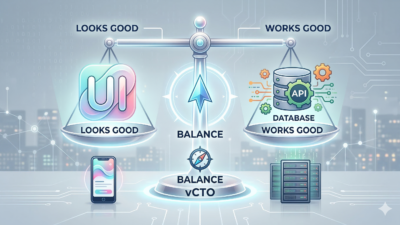
How a VCTO Aligns “Looks Good” with “Works Good”: Full Guide

In 2026, many founders fall into a common trap. Consequently, they focus too much on a beautiful interface but ignore a stable foundation. However, a vcto understands that a great product needs a mix of “Looks Good” and “Works Good.” Therefore, focusing only on the visual layer leads to a product that fails under pressure. This guide explains how technical leadership ensures your product stays powerful and attractive.

Aligning User Experience with Technical Stability

First, you should recognize that a stunning design cannot save a product that crashes. Because users hate slow load times and bugs, a vcto puts performance next to aesthetics. For instance, they ensure that graphics do not slow down the processing speed of your app. Additionally, they help your design team understand what your technology can actually do. As a result, you build a product that delights users without losing speed or safety.

Choosing to work with a vcto also means you have someone to manage technical debt. Moreover, they act as a high-level reviewer to ensure every new feature is built on a solid base. For example, they might suggest simplifying a visual element to keep the app fast on mobile phones. Thus, you gain a product that stays quick even as you add more complex designs.

How a VCTO Aligns "Looks Good" with "Works Good": Full Guide


The Strategy of Functional Beauty

Next, you must consider how your choices affect your long-term business growth. Specifically, a vcto creates a roadmap where every visual update has a strong backend. Because they look at the product from a business perspective, they stop you from wasting money on flashy features. Furthermore, they use automated tests to catch bugs before your customers see them. Similarly, they ensure your data systems are ready to grow as your brand gains more users.

Balancing Speed and Quality

Furthermore, you should look at how fast your team can ship new updates. Since a poorly built system makes even small tweaks hard to finish, a vcto focuses on keeping the code clean. Moreover, they mentor your developers to follow best practices that reduce the need for constant fixes. Consequently, your team can spend more time on new ideas and less time on old mistakes. Therefore, their oversight turns your technology into a major advantage.

Key Ways a vcto Balances Form and Function

To summarize their impact, here are the main ways they assist leadership:

  • Performance Checks: They ensure high-quality code so the product remains fast.

  • Feature Order: They pick “must-have” functions over “nice-to-have” visuals to launch faster.

  • Growth Readiness: They prepare your system to handle thousands of users.

  • Tech Management: They handle technical talk so you do not have to learn jargon.

  • Safety Rules: They add security from day one to protect your data.

Conclusion

In conclusion, balancing “Looks Good” with “Works Good” is the secret to a top tech product. By prioritizing a strong foundation, you ensure your product is ready for real success. Moreover, a vcto provides the expert guidance needed to align your vision with reality. Therefore, do not settle for a product that only looks nice; invest in leadership that ensures it works well.

Frequently Asked Questions

1 What is the role of a vcto in design?

They ensure that design choices are technically possible and do not hurt the speed of the app.

2 How do I know if my product is only “Looking Good”?

If your app is pretty but slow, buggy, or hard to update, you likely have a technical foundation problem.

3 Can a vcto help with user testing?

Yes, they oversee the technical side of testing to see how the system handles real usage.

4 How long does a vcto stay with a company?

Many partnerships last for at least six months to make a real impact on the infrastructure.

5 Is a vcto involved in hiring designers?

They often help with hiring to ensure the designers know how to work with engineers.


Read More:

How to pick between a Virtual CTO and an In-House partner?

How a Virtual CTO stops your tech from failing today?

Does your new vcto keep Version 1 from breaking?