Refresh loader

Archive : Business Growth

Home > Posts tagged Business Growth

How vCTO Makes Tech Strategy a Business Asset

Technology used to be a support function. IT teams kept systems running. The business made decisions separately. That model is obsolete. Today, technology drives revenue, shapes customer experience, and defines competitive positioning. Tech strategy is not separate from business strategy. They are the same thing. Yet many companies still operate with a disconnect between their technology decisions and their business goals. This misalignment costs money, slows growth, and creates risk. A virtual CTO, or vCTO, exists specifically to close this gap. This guide explains why the alignment matters and how vCTO services make it happen.

The Collapse of the Line Between Tech and Business

In every modern industry, digital capability determines competitive strength. Retailers that master data analytics outperform those that rely on intuition. Financial firms with superior technology infrastructure process transactions faster and more cheaply. Healthcare providers using digital platforms deliver better patient outcomes.

Technology decisions have direct business consequences. Choosing the wrong software platform slows product development. Underinvesting in cybersecurity creates financial and reputational risk. Failing to adopt cloud infrastructure limits scalability.

Conversely, smart technology investments create lasting advantages. The right data infrastructure enables better decision-making. Modern development tools accelerate time to market. Cloud-native architectures reduce operational costs significantly.

Furthermore, customers now interact with businesses almost entirely through digital channels. The technology that powers these channels is not a back-office concern. It is the customer experience itself.

As a result, businesses that treat technology purely as an operational expense rather than a strategic asset consistently underperform those that do not.

How vCTO Makes Tech Strategy a Business Asset

Why Most Companies Struggle With Tech-Business Alignment

Alignment sounds simple. In practice, it is remarkably difficult for most organizations.

The core problem is communication. Technical leaders speak in system architectures, APIs, and sprint cycles. Business leaders speak in revenue targets, customer acquisition, and margin improvement. These two languages rarely translate well without deliberate effort.

Additionally, technology roadmaps are often built in isolation. IT teams plan infrastructure upgrades based on technical needs. Business teams plan product launches and market expansions. These timelines rarely align without someone actively managing the connection.

Resource allocation is another frequent failure point. Technology investments compete for budget with marketing campaigns and sales headcount. Without a clear connection between tech spending and business outcomes, technology often loses these budget battles.

However, when technology loses resources unfairly, the business loses capabilities it does not immediately notice it needs. The consequences surface later in the form of technical debt, security vulnerabilities, and inability to scale.

Moreover, mid-sized companies face a particular challenge. They have outgrown simple IT needs but cannot afford a full-time Chief Technology Officer. They operate in a strategic gap with no senior technology leader to connect their technical decisions to business goals.

What a vCTO Does and Why It Matters

A virtual CTO provides senior technology leadership on a fractional or part-time basis. The vCTO brings CTO-level expertise without the cost of a full-time executive hire.

The primary role of a vCTO is strategic alignment. They translate business objectives into technology requirements. They also communicate technology constraints and opportunities in business terms that non-technical leaders understand.

A vCTO typically starts by auditing the existing technology landscape. They assess current systems, infrastructure, technical debt, and capability gaps. This audit creates a clear picture of where technology supports the business and where it holds it back.

From this baseline, the vCTO develops a technology roadmap that directly connects to business priorities. Each initiative on the roadmap links to a specific business outcome.

Furthermore, the vCTO helps with vendor selection and technology investment decisions. They evaluate tools based on business fit, not just technical specifications. This prevents costly mistakes like adopting platforms that cannot scale with business growth.

Similarly, a vCTO plays a critical role during digital transformation initiatives. These projects frequently fail when business and technology teams operate without a shared leader to bridge the gap. The vCTO provides that leadership without requiring a permanent executive appointment.

How vCTO Aligns Technology Decisions With Business Outcomes

Alignment requires ongoing effort, not a single strategy session. A vCTO maintains alignment through several consistent practices.

Regular business reviews connect technology performance to business metrics. The vCTO tracks how technology investments affect revenue, customer satisfaction, and operational efficiency. This accountability ensures technology spending justifies itself in business terms.

Prioritization frameworks help teams make better decisions. When competing technology projects exist, the vCTO evaluates them based on business impact rather than technical interest. The highest-value projects receive resources first.

Additionally, the vCTO manages the relationship between internal technology teams and the broader business. They translate priorities clearly in both directions. Technical teams understand why business priorities matter. Business leaders understand technical constraints before making commitments.

Risk management is another area where vCTO alignment adds value. Technology risks like cybersecurity threats, compliance gaps, and infrastructure fragility have direct business consequences. The vCTO quantifies these risks in business terms and ensures they receive appropriate attention and investment.

Talent strategy also falls within vCTO scope. Technology teams need skills that match business direction. The vCTO identifies skill gaps, guides hiring, and sometimes restructures team responsibilities to better serve strategic goals.

Consequently, organizations with a vCTO make faster, smarter technology decisions. They avoid expensive mistakes. They build technology capability that directly supports growth.

When Does a Business Need a vCTO

Not every company needs a vCTO at every stage. However, several signals indicate that fractional CTO services would add significant value.

Rapid growth is one clear trigger. Scaling operations quickly creates technology demands that internal IT teams are rarely equipped to handle strategically. A vCTO guides technology decisions during this critical period.

Digital transformation projects are another. Migrating to cloud platforms, building new digital products, or overhauling core systems all benefit from senior technology leadership that understands both the technical and business dimensions.

Companies preparing for fundraising or acquisition also benefit. Investors and acquirers scrutinize technology infrastructure carefully. A vCTO ensures the technology landscape is sound, well-documented, and strategically coherent before due diligence begins.

Finally, companies that have experienced repeated technology failures or runaway IT costs are strong candidates. A vCTO brings the strategic oversight needed to fix root causes rather than repeatedly patching symptoms.

Conclusion

Technology strategy and business strategy are inseparable in the modern economy. Companies that treat them as separate disciplines pay the price in misalignment, wasted investment, and missed opportunities.

A virtual CTO provides the strategic bridge between technology capability and business objectives. For mid-sized companies especially, this fractional model delivers executive-level technology leadership at a fraction of the cost.

If your business is making technology decisions without connecting them explicitly to business outcomes, a vCTO may be exactly what you need. The investment in alignment pays dividends at every stage of growth.

Frequently Asked Questions

  1. What is a vCTO?

A virtual CTO is a fractional or part-time Chief Technology Officer who provides senior technology strategy and leadership. They are typically engaged by businesses that need CTO-level expertise but do not require or cannot afford a full-time hire.

  1. How does a vCTO align tech and business strategy?

He translates business goals into technology requirements and explains technology constraints in business terms. They build technology roadmaps tied to business outcomes and ensure decisions on both sides are made with shared understanding.

  1. What industries benefit most from vCTO services?

Technology-dependent industries benefit most, including SaaS companies, fintech startups, healthcare platforms, ecommerce businesses, and any company undergoing digital transformation. However, virtually any mid-sized company with complex technology needs can benefit.

  1. Is a vCTO the same as an IT manager?

No. An IT manager handles day-to-day operations and maintenance. He provides executive-level strategic leadership, connecting technology decisions to long-term business goals and competitive positioning.

  1. How much does a vCTO cost compared to a full-time CTO?

He can cost several hundred thousand dollars annually including salary and benefits. He typically costs a fraction of this depending on engagement scope, making it highly accessible for growing companies.

Read More:

Why a vCTO Is Better Than Temporary IT Consulting

How vCTO Builds Better Delivery Governance Systems

Common Vcto Myths and the Strategic Truths Behind Them

Myth One: A Vcto Is Just a Coder

Many people think a vcto is just a lead dev with a new title. This is a big myth that can hurt your firm. A vcto does not just write code for your app. Instead, they lead your whole tech plan and your team. You need him to think about the big picture and your growth. They look at how tech fits into your real business goals. For this reason, they are more like a boss than a worker. Therefore, you get high level leadership that a coder cannot give.

The truth is that he builds a bridge between your ideas and your tech. Specifically, they help you make smart choices that save you cash. They do not just fix bugs in your script. Consequently, they make sure your firm is ready for the long term. In addition, they talk to your board and your investors for you. This means they act as a true partner in your success. Thus, a vcto is a strategic asset for any startup head.

Common vcto Myths and the Strategic Truths Behind Them

Myth Two: Remote Means Out of Touch

Some bosses fear that a vcto will not know what is going on. They think being virtual means they are out of the loop. However, this is not true in our digital world today. He uses great tools to stay close to your team at all times. They join your daily calls and check your work frequently. Because of this, they often know more than a boss who is in the office. They see the data and the results with total clarity.

Transition words help us see how ahe stays connected to you. For example, they use video and chat to lead your devs every day. They also set up clear tracks for every task in your firm. This makes the work easy to see and easy to manage from anywhere. As a result, your team feels more supported and more focused. Furthermore, he brings a global view to your small startup. They know what the best firms in the world are doing right now. You get the best of both worlds with a vcto.

Myth Three: Only Tech Firms Need a Vcto

Another common myth is that only app firms need a vcto. This is a mistake that many non tech bosses make. In fact, every modern firm runs on tech today. If you have a site or a shop, you need him to stay safe. They ensure your data stays out of the hands of hackers. Therefore, they protect your brand and your customer trust. He also helps you pick the right tools to sell your goods online.

A vcto looks for ways to make your work much faster and easier. For instance, they might find a tool that does your chores for you. This frees up your time to focus on your real passion. In addition, they help you scale your systems as you get more fame. This prevents a crash when you have a big sale or a new launch. So, he is vital for any firm that wants to grow in a smart way. Truly, ahe is the best guard for your digital life.

Myth Four: A Vcto Is Too High in Cost

Cost is a major concern for many early stage startups. Some think a vcto is only for firms with a lot of gold. But the truth is that he is a very lean choice. You only pay for the time you actually need from them. This is much cheaper than hiring a full time head of tech. For this reason, you get elite skills at a price you can afford. You save on tax and health fees and office space too.

A vcto also helps you save money by stopping bad tech buys. They ensure you do not waste cash on tools that do not work. Because of this, he often pays for their own cost in a few months. They also help you raise more money by proving your tech is strong. Investors love to see him on your team list. Similarly, they help you plan your budget with total precision and care. Thus, a vcto is a smart financial move for your startup journey.


Frequently Asked Questions

1 Is a vcto as good as a full time CTO?

Yes, for most startups, he gives you the same level of skill. They provide the same strategy and leadership but with more flexibility for you.

2 Can a vcto help with my cloud security?

Absolutely, he makes sure your cloud is locked tight. They implement the best tools to guard your data from any digital threats or hacks.

3 How does a vcto manage a team they cannot see?

They use tools like Jira and Slack to track every task. He focuses on the results and the data to ensure the team is fast.

4 Does a vcto work for many firms at once?

Yes, he often helps a few firms at the same time. This is how they keep their skills sharp and their costs low for you.

5 Will a vcto stay with me for a long time?

You can keep him for as long as you need their help. Many firms keep them for years as a trusted part of their core team.

Read More:

The Ultimate 90 Day vcto Checklist for Every Founder

How to Use VCTO Insights for Software Ownership

How a vcto Prevents Costly Technical Mistakes: Full Guide

Why Your Virtual CTO Prioritizes Quality Over Cost?

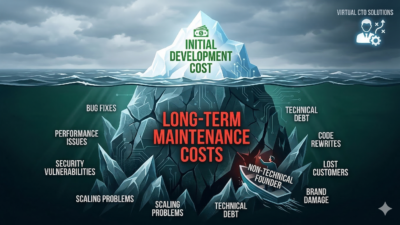
In 2026, many founders feel the temptation to build a product as cheaply as possible as a smart shortcut. However, this mindset is actually the most expensive tech strategy a business can adopt. Consequently, the initial savings you gain are quickly overshadowed by the compounding interest of technical debt. Therefore, hiring a Virtual CTO ensures you understand the true cost of cutting corners before you write your first line of code.

The Hidden Price of Technical Debt

First, you should recognize that low-cost development often results in a fragile foundation. Because cheap code is rarely documented or optimized, making even small changes becomes a massive undertaking later. For instance, adding a simple new feature might take weeks instead of days because the existing architecture is too messy to handle it. Additionally, you may find that your system cannot handle a sudden increase in users. As a result, you lose customers and revenue while your team scrambles to fix preventable bugs.

A Virtual CTO helps you avoid this downward spiral by setting high standards from day one. Moreover, they ensure that your developers follow a roadmap that keeps the system flexible. For example, they advocate for modular design and automated testing. Thus, your long-term maintenance costs remain predictable and low. In addition, they help you invest your budget into high-quality code that serves as a permanent asset rather than a temporary patch.

Why Your Virtual CTO Prioritizes Quality Over Cost?


Damage to Brand Reputation and User Trust

Next, you must consider the impact of a buggy product on your target audience. Specifically, if your application crashes frequently or has slow load times, users will move to a competitor immediately. Because trust is hard to build but very easy to break, a poor initial experience can permanently damage your brand. Furthermore, fixing a public-facing error is far more expensive than preventing it during the early development phase. Similarly, security vulnerabilities found in cheap code can lead to data breaches that carry heavy legal fines.

The Opportunity Cost of Constant Fixing

Furthermore, you should evaluate where your team’s time is actually going. Since a fix-later approach usually means your developers spend 80% of their time repairing old mistakes, they have no time to build new value. This is known as the opportunity cost of bad tech strategy. Moreover, your competitors who built a solid foundation will eventually outpace you because they can ship new features faster. Consequently, your business becomes stagnant because you are trapped in a cycle of maintenance rather than innovation.

Finally, when you eventually decide to fix the system, you often discover that a total rewrite is the only option. Specifically, trying to patch a fundamentally broken architecture is like trying to renovate a house with a crumbling foundation. Because a full rewrite requires you to pay for the same product twice, your cheap strategy becomes your biggest liability. Therefore, a Virtual CTO focuses on building right the first time to protect your future profit margins.

Why Quality Wins Every Time

To summarize, investing in high-quality leadership and code provides these essential benefits:

  • Faster Scaling: A solid architecture allows you to add thousands of users without the system breaking down.

  • Lower Long-Term Costs: High-quality code requires fewer developers to maintain, which saves you thousands in salary over time.

  • Better Developer Morale: Top-tier engineers want to work on clean, efficient systems rather than constantly fixing messy code.

  • Investor Confidence: Venture capitalists look for technical excellence during due diligence; cheap code is a major red flag.

  • Market Agility: When your foundation is strong, you can pivot your business model or add new services in record time.

Conclusion

In conclusion, the build-cheap-fix-later strategy is a dangerous trap that leads to wasted capital and missed opportunities. By prioritizing quality and strategic oversight from the beginning, you ensure that your technology is a catalyst for growth rather than a burden. Moreover, a Virtual CTO provides the expert guidance needed to balance speed with technical integrity. Therefore, invest in a strong foundation today to avoid the massive repair bills of tomorrow.

Frequently Asked Questions

1 What is the technical debt people talk about?

Technical debt is the future cost of choosing an easy, low-quality solution today instead of using a better approach that takes slightly longer.

2 How can a Virtual CTO identify technical debt?

They perform regular code audits and system reviews to find areas where the architecture is becoming fragile or inefficient.

3 Is it ever okay to build a quick and dirty MVP?

Yes, but only if you have a clear plan to refactor the code once you prove the concept to your users.

4 How do I explain the need for quality to stakeholders?

Show them the financial impact by comparing the cost of a one-time build versus the ongoing costs of constant bug fixes.

5 What is the most expensive part of a fix-later strategy?

Usually, it is the total rewrite of the platform, which effectively doubles your development costs and halts your growth for months.


Read More:

How Virtual CTO Navigate Technical Debt for New Founders?

How to choose the right Virtual CTO service provider?