10 Steps to Make Online Course Successful

Gone are the days where you might just ‘promise’ the opportunities in which you’re worth spending–now you’ve got to show. So, there is no better way to show your skills than by bringing together an online tutorial.

By teaching your subject you leave no shadow of a doubt that you know what you’re talking about, are excellent at what you’re doing and are an authority in your profession. As a website and business card, the online course is now as important to the toolbox of any developer, specialist, or opinion leader. One of the fastest and most impactful ways of getting your knowledge to a global marketplace, making a bigger impact, and making more money, is to download that knowledge dormant in your brain and turn it into a lead-generating, cash-making, impact-creating course online.

In this article, you will find an overview of the 10 major stages of the creation of online courses

While this is by no means an exhaustive list of all the items that need to be scheduled, prepared for and performed in order to build a good online course, it gives you the ‘stratospheric outline’ of the big milestones so you know what to expect and what the trip would look like before you start.

Pick the subject of the Ideal Course

The subject of the course needs to be something you enjoy. If you’re not passionate about your topic, it’ll be obvious if you don’t like your topic and make your workout as engaging as a sandwich in cardboard.

Don’t sound like you are going to have to teach a trade at the university level. Talk about the skills, strengths, and life experiences you’ve been through. Cooking your dream meals, interior decor, writing non-fiction, surviving a loved one ‘s death… the list of potential subjects for the course is infinite. In short, if you enjoy the subject, you ‘re good at it and you have the expertise (formal or life) in it, then you’ve got a subject that’s going to work for you.

Related Post: Things To Do For Secure Mobile Payment.

Ensure that the proposal for the course has strong business appeal

Hands up who wants to waste weeks of their lives designing an online course, with nobody to buy it at all? None. I didn’t believe it.

When you have chosen the subject for the online course, the next move is to run a variety of market research studies to determine if or not it has a business demand. Many course designers make the mistake of assuming that if there is a lot of competition in their field of the subject, then their idea, of course, does not fly. But in addition, this indicates that there is a high possibility that there will be good consumer demand for that concept of course, and perhaps worth more investigating.

The three main things to be checked for are:

  1. Were they thinking about it?
  2. Were people asking questions?
  3. Is there a gap in what that competition offers?

If the reaction to the three questions above is ‘yes’ and the idea is close but different from what’s currently out there, then you have an idea of course that has a chance of becoming a best-seller.

Render learning outcomes magnetic and convincing

Don’t underestimate the importance of the effects of research. When you don’t do that with your online classes, your image and your bottom line could be severely compromised–let alone making the course design process stressful.

Would you hand over your money to someone you don’t understand for a product, and have no idea what it’s going to do for you? Clearly not.

Just because you know what your course is going to give your students it doesn’t mean they’re going to know. If your students don’t know HOW your course can benefit them, they can definitely not participate in it. Training results simply illustrate what the learner will do, experience, and understand at the conclusion of the lesson, use observable verbs. Which skills would they really demonstrate? What new insight did they gain? What emotions are they shifting away from or to? Clear learning results also ensure that only RIGHT students join your course – which means higher completion and satisfaction rates, and lower requests for a refund.

Pick and compile material for your Course

It is the stage when many course designers are starting to fear to slip down ‘Eternal Procrastination Trap.’    

The biggest reason we get stuck here is mostly due to the sheer amount of information we have in our minds or in books, on our hard drives, in our notepads, and so on all around us. At this point, art is not only about what we should include in our course, but what items we can leave out. It is where the work you’ll be doing in the business review process and the learning outcomes come to serve you again now. As you sort through your piles of content, throw away anything that is not directly related to a learning outcome. Second, ensure that every learning result is consistent with content. Only include content that responds to burning questions from your audiences, or fills out gaps that your competitors have not met.

Structure your Course and Modules

That is the stage where you now take a look at all of your material and start organizing the common topics, suggestions, and insights into modules and then arrange the lectures within those modules in the most inclusive and rational way so that they form a fluid series of lessons.

Determine the safest and most efficient methods of implementation for every lesson

It is now time to focus on how best to produce your content. You ought to be mindful of the various other learning values, learning styles, and all the different ways you can implement the training and make sure the training is as enjoyable as possible.

Are you going to have videos, reading content, audio content, activities? Which sort of graphics do you want to have? Were you going to have places in Group learning? You ought to ensure that you have a combination of visual, auditory, and realistic methodologies so that everyone is interested and has the best learning opportunity possible.

Filming, capturing and editing the classes online             

This is the Process of Development. Around now, you will have a detailed course schedule, all of your material together and know exactly how each aspect of your online course will be presented.

This is the time for the fun aspect-to get on tape. For example how you execute your teaching depends largely on what the client wants to engage with, and which approach more successfully achieves the learning outcomes.

The most powerful form of distribution at present, however, is film. This could be ‘talking head’ footage when you’re on camera in the picture. You would also be able to get ‘black screen’ talking head videos.

This means that you are recording behind you with a green background-where you have a green screen, during the editing process you can have anything behind you. It could be a picture, cartoons, or even a still image, behind you. I use the green screen to get my PowerPoint presentations in the post-editing process that’s perfect for my classroom style preparation.

Another approach is called screencasting, which is where you film your computer screen–you may opt to add a screenshot of your own form of camera on top of it. You can very quickly learn how to edit the videos yourself. It helps you to easily delete editing and replace your green screen, correct your sound, apply icons, text and pop-ups, and your videos; save them as an mp4 and then upload them to your learning network online.

Create your Online School

The first thing to remember here is that there are three big ways of marketing the courses online.

  1. Digital marketplaces for course
  2. Learning Management Systems
  3. Plugins on your website, or apps.

Your own Academy is a learning management program that you can connect to your website and totally market as your own channel. It makes the production of the learning items online fast and quick to sell.

My choice is Thinkific (I’m running all of my courses on this platform), so if you’re already early in the discovery process, here’s a rundown of all the items you should be searching for in an LMS (Learning Management System).

Having the right price strategies and tapping into a business model focused on greater knowledge

Assure that you have strategized how and where your online course will fit into your business model as a whole.                                                   

Each of these will mean that your course needs to be slightly different in design, provide a different volume of value, have different marketing methodologies, and put your followers and students into very different types of funnels. It would also have a huge effect on the price you choose to add to your online course so that it suits the role it is offered within your company properly.

There is no right or wrong price for an online course, or even recommendation quality because it depends so much on what you offer. But as a starting point, my advice is to evaluate and compare your proposal against competing goods in the marketplace –take a look at what your rivals are paying for and selling, and then figure out how good and better yours could be. Once you have improved yours, the quality of mine would be marginally higher instead. Never lower the price because that’s only going to make it look like it has less worth than the rivals.

Related Post: How To Make Your Online Meeting More Engaging?

Release and Campaign Continuing

If you think the job is done now that you’ve finished your course online, think again now that the real work is off! Too many course designers make the mistake of assuming that they will now have an income stream after their course is developed. To advertise your course and recruit students, you need to launch and continuing marketing campaign.

  • Can you run discount deals on early birds?
  • Will you have a marketing campaign for content and will sell your courses online?
  • Would you want to run ads?
  • Have you got a list to market for?
  • Can you partner with those influencers?
  • Will you want to run an affiliate program?
  • How are you going to use these social media?

And the list goes on….

Be sure you have a marketing strategy for your online course for at least 18 months, and note that the second you quit promoting is the second one you quit offering.

Conclusion

So, there you have it-a ‘birds-eye-view’ of the big milestones in the development of online course!

Hopefully, these steps will give you a clear sense of what to expect from your online course design and marketing path.

How to Make your Online Meetings more Engaging?

Fortunately distributed work doesn’t have to lead to disorganized meetings.

With some planning and a strategy, the team can have online meetings which are just as efficient and productive as having everyone in the same place.

Nowadays, remote meetings are becoming common. Sometimes, it’s the only way a contractor on the other side of the world can catch up. What’s more, businesses will reduce travel costs by 30 percent thanks to online meetings.

On the other hand, keeping focused when you’re all on the line is not always easy, instead of sitting next to each other.

To make the online meeting productive, all the participants must be kept engaged.

In this article, you will learn how to do it.

What makes people less engaged during online meetings?

Online meetings are also said to be less successful than face-to-face ones. So, why exactly is it so difficult to keep workers involved during the entire meeting?

There is always a way to look at your phone but during an online meeting, you will feel less embarrassed because it’s much harder for the other participants to realise that – especially when your camera is off.

During an online meeting, it is also much harder to build a personal connection with your participants. This is another reason why people don’t feel so obliged to stay focused.
You create a bond when you see someone face to face, keep eye contact, follow the language of the body.

All these factors make people interested more in the discussion. Last but not least, people often lose their focus during formal meetings because they’re more informal, especially if they call from home.

They feel relaxed because they can conduct a meeting from their living room, with their cat on their lap and Facebook opened in other browser cards.

There’s nothing wrong with feeling confident but the idea is to remain focused.

How to keep your participants engaged in an online meeting?

There’s nothing wrong with feeling relaxed, but the idea is to stay focused anyway. So, how do you keep the participants involved during the entire meeting? We know it could be difficult.

Below we share our best tips for successful meetings online.

First things first: You need to think about technical information to make your remote meeting successful. Be sure to use a secure internet connection, as well as a secure video calls device.

1. The shorter, the better

Stick to the timetable decided, and do not break it. The optimum meeting time is between 15 and 30 minutes, as we discussed in another article about successful meetings. If it’s not necessary, it’s much better not to choose longer time frames.
Also, if you were to hit the meeting date, people would still not be fully concentrated. The attention spans are becoming progressively shorter today – the only thing they’ll concentrate on is to count the minutes before the meeting is over.

2. Break the ice

Online meetings provide you with fewer chances to shape a bond with participants.
The time slots are also typically very short, which has its intent, but it also doesn’t give you much space for small talk.
In comparison, you don’t need that much time – all you need to do is build a nice environment at the beginning of the meeting.
A quick “How are you doing? “It’s going a long way.
Starting with casual chit-chat, participants could feel more comfortable and, eventually, more engaged in the meeting.

3. Introduce all participants

Some apps don’t show all members of the group, some only show a tiny pic of the user. Hence the camera has a slight angle too.
If the other side has a party you will not be able to fit everyone in the picture. That is why meeting someone individually is always a good idea.
Participants are more likely to get interested in learning who’s on the other side.

4. Create an agenda and share it before the meeting

Respect the fact that you’re not the only one that has a lot on their plate.
Meetings take time, including those online. This is why you should also take some of your time to come up with a plan that you’ll stick to and know exactly what issues you need to raise.
This is also a good move to forward the agenda to all the participants in advance.
Everybody can then better plan for the meeting, and avoid disruptive questions during the meeting.

5. Get smart with scheduling

Using a dedicated tool for scheduling meetings can work wonders.
For example, Harmonizely allows all participants to choose a suitable time for a meeting and to schedule reminders in advance.
This will make them more involved and concentrated, provided that it gives them a sense of power. We are free to handle all meetings scheduled which makes life much easier.

6. Invite the right people

How many people should be invited to such a meeting?
The fewer people who participate in the meeting most of the time, the better. Research indicates that 5 to 8 individuals are involved in the most successful meetings.
Be sure to invite others who are willing to contribute to that event. All will have the chance to talk and show their position this way.
So note-the fewer participants, the lower the chances of having some internet contact problems.

7. Stay focused on the goal

Reminding the participants of the main goal during the meeting will help them remain focused on the main issue.
You may want to write it down on a whiteboard if appropriate, and position it within the range of the camera.
These tricks will help you stay focused and not move away from the subject.

8. Ask questions directly

You don’t really hate it when there are two or three people talking at once?
This is sadly going to happen even more during online meetings. Often due to poor internet connectivity the voices can overlap, and the whole thing becomes a big mess.
Response, right? Ask him when you ask a question, ask it directly. It will help you prevent misunderstandings and everyone knows there is talk/

9. Don’t skip the review

You just don’t hate it when two or three people are talking at one time?

This will happen even more during online meetings, sadly. Often the voices will overlap because of poor Internet access, and the whole thing becomes a huge mess.

The response, right? Ask Him directly when you ask a question. It will help you prevent misunderstandings and everyone knows the talk is going on

We hope those tips will allow you to conduct online meetings even better from now onwards!

The unique way to IT Consulting & Audit

In terms of technology, several factors can slow down your company. Deconstruction and review of the systems that are concealed within IT projects are important to monitor any issues. For this reason IT assessment and consultant procedures are a great starting point. How is ti that they look in practice? What are the IT audit and consultants’ stages, and why are they playing a vital role in business growth? Let’s work it out. The green light for digitalization has been turned on by serious players from each industry. From banking and finance firms to real estate, healthcare businesses, and travel and hospitality providers (and much more!) – all decision-makers from B2B and B2C have embraced technology to improve their market position.

Even though tech giants spend billions of dollars on Research and Development is completely incredible and overwhelming for the rest of the peloton, managers of smaller firms and start-up founders are not giving up the fight. We continue to invest in web and mobile apps (and more complex IT solutions) to get them excelling.

And you need to develop a technology plan to stay in the game. The very first thing you should be on your radar is to get and IT partner to launch an audit of your technical premises. Why? For What? Because it starts by getting rid of the obstacles that stand in your way to scale up your business.

You’ll need to budget for a qualified IT audit to identify the challenges properly.

Let’s decode piece by piece the IT audit and the IT consulting services.

What is the concept of an IT audit?

Before we disclose the process stages, we need to start with basic – what are the procedures for IT  auditing? And why are they so critical for bringing projects with technology to higher levels?

IT  audit is essentially a comprehensive test, designed to analyze any software products. The best practice at Ouriken from our perspective is to assign a project to our consultants and developers. We take a deep dive deep into a project, carrying a highly detailed review of the customer’s development processes.

Related Post: How To Accelerate Productivity In Modern IT Infrastructure Management

What are the IT audit elements?

Most companies expect such programs to deliver game-changing benefits. Why is it they are working? We may divide an IT audit process into the following components, regardless of the size of a given company:

  • Analyzing stacking technology. In designing a product, we take a closer look at what has already been used. We’re interested in developers of software and frameworks that have decided to work with. The next issue is about the future of product development, centered on those tools and frameworks.
  • Running tests on code. This stage requires practical experience and expertise. This scrutinizes the code already written by tech teams of clients. We need developers specialized in different programming languages to be able to do that.
  • Check the check. This aspect of an It audit focuses on testing procedures, identifying continuous integration errors. We also test the data security status at this point and let our DevOps engineers examine the methodology used in the project.
  • Studying the administration of programs. Every digital project has its own Director of Projects. As a software house, our job is to test the backdrops of a project management workflow and look for any problems there. Optimizing the flow is important, and finding a way to improve efficiency with more agile communication.
  • Looking for team leadership. Locating within a team structure or team management style can be full of problems. We are looking forward to learning about the roles that team members have and how a client is coping up with new employees on board.

Pointing out the issues at each point leads to an audit and its policy formulating frames. In the end, full audit reports and a report will result in a trustworthy, well-conducted IT audit process. The next step is where IT advisory services come up. We need to take care of all the issues outlined in the paper. We lease our consultant as an outsourced Technology Referee to monitor the fixing process.

Why is it so important to audit the IT?

The meaning is straight forward. A software product needs to perform well, and be scalable, to be effective. If those things are incorrect, the technology will stand in the way of making your company prosper. We’re ready to collect data after we nail down problems and identify all the limitations. During team shadowing, we interview the mangers, rub elbows with client employees, and analyze the code and documentation. As soon as we pass that point, we’ll be able to name the solutions and create a roadmap to implement necessary project changes.

Common development issues for enterprises

Just like in film scripts, first, we have to recognize the villain to call for a superhero. What are the usual problems that business owners and C-level execs face when it comes to processing technology? What issues cause them to believe they need an outsider to solve them?

We face technology challenges for our clients in four main areas:

Firstly, Selecting the technologies in terms of reliability and scalability of their implementations. Secondly, forming of the processes of development, testing, and production. Thirdly, software consistency and team management. And fourthly, to come up with the final strategic decisions and point out one course for the technology of the organization.

Scalability and Stability of your software Technology

That is inevitable, if your business grows, you’ll need your website or app ready for a stronger stream of visitors. Whether you’re running an e-commerce site or a SaaS platform focused on browsers, the strategy should also include adding more features to attract more users.

But if the program isn’t robust enough, it will be frustrating for you and the customer of your product to increase the number of functionalities. You wouldn’t want your customers to fall off your website or device, as the page load time is too long. Most importantly, you would not want your product’s features to fail to work properly. If the primary functionalities refuse to perform well, scalability will do not do the trick.

Develop, Test and Manufacture

Each software solution has to have a co-ordinated product development sequence. Though it sounds obvious, it is worth treating each of these environments with the same level of respect. You’ll miss fixing the bugs along the way if you put most of the effort into the development phase and skip to the production. In addition, if development, testing, and manufacturing environments do not match, you will stumble over problems later while upgrading your product.

Our dedicated developers at Ouriken take care of those three elements. They can track and eliminate any bottleneck situations because they have unlimited access to the whole production process. They immerse themselves in the project to discover any issues related to code, tools, test methods, and DevOps activities.

Code Quality and the People Behind it

While roughly two-thirds of respondents are satisfied with their software quality, there has been a general downward trend since 2016.

Only 43% of respondents are satisfied with their current code review process, or very satisfied.

The respondents identified code review as the number way to improve the quality of code for the third straight year.

These insights into software development indicate that code quality is still something that needs to be improved and code analysis is a part that needs to be focused on.

Luckily we got a solution here. Through various, foreign IT ventures, our contractors, lead and senior developers have accumulated their valuable experience. One of their goals is ensuring high-quality code.

Grow Your Company with a custom Tech Strategy

The importance of developing a sound strategy, particularly with a focus on tech, is hard to overestimate. We do what it takes to create one for a consumer – we evaluate the business needs, the value of the company and how it can grow with the help of the latest technology.

We help set the goals and help our clients achieve them. A digital strategy is not a ready-made product put on a shelf, it is a project that is fully customized.

Related Post: Digital Infrastructure: What Is It?

Time to improve your IT Audit & Consultancy Business

It’s a milestone for your business to recognize a technological problem within your organization. To do this, a software house specializing in providing IT consulting services needs to be teamed up with.

Immediately after a startup or a well-established organization decides to put their faith in our expertise we release our troops. We call it a period of Exploration and that is where the beauty lies. Our consultant will take a deep dive into your idea with a Dev team backed up. We are the technological situation and the level of workflow. We are on a roadblock chase. We need to learn what slows the process down, and what the limits are.

Then ultimately, step-by-step, we go through your delivery process. To dod this, we are armed with weapons such as codebase review, delivery process assessment, then workshops conducted with key players in your project.

Performance Boost – it’s not a vague idea or a sales pitch fueled by buzzword. It’s a commitment to deliver technology factors that are responsible for your business’ performance and development.

Optimization of development- opening our consultant’s doors to your software development climate. The outcome of the consultation process with IT? To take the technological productivity to a different level.

Ouriken Consulting excels in co-creation & collaboration activities for the development of creative & innovative products or delivering high-quality services in the field of IT.

[contact-form][contact-field label=”Name” type=”name” required=”true” /][contact-field label=”Email” type=”email” required=”true” /][contact-field label=”Website” type=”url” /][contact-field label=”Message” type=”textarea” /][/contact-form]


3 Steps to ensure that your Cloud Data is Secured

Back in January 2018, LogicMonitor conducted a study – Cloud Vision 2020: The Future of Cloud – which estimates that 83 percent of the workloads of companies will shift to the cloud by 2020. The report also addresses serious data security issues associated with this huge cloud revolution.

According to the same report, after transferring their company data into the cloud, 66 percent of IT professionals assume that security is their biggest concern. The figures that vary over time, but the study points to increasing concern about cloud computing techniques and why protection is not adequate for cloud providers.

Measures for maintaining data security in the cloud

Cloud computing enables companies of all sizes with minimal investment in IT infrastructure to run and scale seamlessly. Nonetheless, taking into account the many risks and threats to cloud security, especially for companies from highly regulated industries such as banking, healthcare, and insurance, it is important to take multiple measures to protect data.

Related Post: 3 Best Cloud Migration Strategies You Must Know About

Implement a management system for identification and access

The aim of an Identity and Access Management (IAM) program is to ensure that the right people have access to the company’s right assets. An IAM solution is a critical part of the security strategy of an organization in today’s digitally connected world. Use single sign-on (SSO) systems, multi-factor authentication, and privileged access management, an IAM system helps an organization monitor and control user access. The right IAM solutions help companies to promote safe and efficient access to technology services across a variety of systems while providing a number of benefits, such as:

  • Easy to access to services through a centralized portal for users to access them.
  • Reducing the cost of protection because of a single IAM program handles all user access, enabling administrators to concentrate on other work besides security.
  • Better data protection approach through the integrated authentication and authorization capabilities available on a single platform.

cloud consulting services, cloud migration services, keep cloud data safe

Continue to test the safety measures

While keeping up with the times and constantly updating security measures is important, keeping a check on current measures is also essential. IP addresses, and so on, maybe costly but, relative to the damages that a company might suffer in the case of a cyberattack, it’s minimal. This year, massive data breaches have occurred, causing companies and government agencies to rely more than ever on their data security. The testing of existing security systems is one of the first areas of focus necessary to prevent such breaches. That’s why all sorts of companies are gradually working with white hats or ethical hackers fo in-depth security assessments.

As a bonus, regular testing of your cloud security measures will make a huge difference, not only to ensure security but also to enhance system performance as a whole.

Related Post: 101 Guides to Cyber Security

Consider the potential of an in-house assault

There is a tendency to believe that only outsiders can launch an attack on your enterprise when it comes to data breaches. The entire act of taking strict security measures can be made meaningless by not realizing that an attacker might be responsible for compromising your data.

An attack within the company is not unheard of – indeed, as stated by Cybersecurity Insiders’ 2019 Insider Threat Survey, 70 percent of companies experience indoor attacks very regularly. In the past 15 months, at least one Identity and Access Management system such an attack has been encountered by 60 percent of these organizations. Regardless of the sector in which it operates, the risk of internal attacks should not be taken lightly – particularly given that such violations can often go undetected. Make sure that no user should have access rights beyond the scope of their job to protect the company from internal breaches. Make sure that no user should have access rights beyond the scope of their job to protect the company from internal breaches. This limitation covers computers and software. Remove access to services that are outdated and be prompt when an employee leaves to revoke all access privileges. In addition, place a limit on which data applications the employee/user can access from and through which computer they can access it.

Conclusion

Training users or workers is also important in order to prevent any unintentional leakage of sensitive data. Be consistent with the training and keep up-to-date with development. Our technology consultants and cloud transformation specialists at Ouriken ensure that in every approach we offer data security is an important consideration.

Ouriken’s cloud consulting services identify and prioritize cloud applications, optimization, cloud migration which helps your business. Our cloud security services experience ahs also led to our Identity and Access Management (IAM) solution being developed to do what’s right to protect your data, contact us today!

[contact-form][contact-field label=”Name” type=”name” required=”true” /][contact-field label=”Email” type=”email” required=”true” /][contact-field label=”Website” type=”url” /][contact-field label=”Message” type=”textarea” /][/contact-form]

Things To Do For Secure Mobile App Development

The planet out there has more smart devices connected to the internet than men. With app commitment to dominance, mobile phone use continues to grow at a very high rate. The security concerns are overrated when the race gets a hit on a track.

There is no question that online app retailers such as the Google Play Store and the Apple Store are of interest. Nevertheless, various organizations and developers are launching their apps with increasing app supremacy. Everybody wants an app on the market – all these inventions are safe? Our recent research on Mobile App Development Safety with the aid of VeztekUSA leads us to some reasons to put this issue into perspective.

Related Post: Why and How to optimize your website for mobile devices?

You may follow those below, but the element that makes malicious hacking possible should be recognized before that. It is the organizations that allow employees to carry their smartphones in and use them. BYOD (Bring Your Own Device) is the framework to which these organizations adapt. It provides consumers with a positive experience, which exposes the IT department to the risk of un-securing data access on enterprise systems. Therefore, mixed usage leads to vague conclusions for the underlying security problems and this unclear terrain makes it easy to hack. Now, before jumping into the security of the device, here are the ADIDS steps for which you should be prepared:

Preparation for the Five Big Steps App

Just like any other project, it takes planning to develop an app. It is necessary to understand the entire environment in which the organization must work for the creation of mobile apps. You should be mindful that this environment should create a smooth process of development and speed up implementation. Whether the app is built by a third-party vendor or produced in-house, keep a close check of the audience, data, infrastructure, application delivery, and the support for successful growth.

  • Audience – Determine the correct audience; build people to understand whether one or more apps are needed. Understand what the audience needs; visitors to the internet are different from a mobile user, look at the viewpoints, decide the medium to use, restrict devices that access the site if the app is a mobile website.
  • Data – determine the data you need to show on the web, understand the data you need to make offline available.
  • Infrastructure – set up web services for accessing data to determine the structures on which data resides.
  • Deployment – The app store has its own application and registration fee in order to understand the assets required for deployment.
  • Support – who will fund the project should be transparent and prepare for knowledge transfer beforehand.

Safe And Secure Development of Mobile Apps

  • Hold the coding clear – Mobile malware often tapers the bugs in the design or coding of an application. The malicious code has been reported to infect millions of mobile devices and risen to twenty times that number. Attackers have the opportunity to get a copy of the software and reverse engineer it, even before exploiting the bug. The popular apps are repackaged as “rogue software” and are posted along with the malicious code on the third-party app store. Developers should, therefore, be assisting with software capable of finding and closing vulnerabilities.
  • Keep the device secured – the application’s protection is directly proportional to the system. The involvement of rogue apps will lead to execution risks is the system is disabled or stuck in jail. Organizations can determine the underlying device’s security by – the software sandbox should be intact, the apps should not be able to access organizational data, the prison break technology and how it can be identified should be copied, the current application credibility and intelligence sources should be considered and the application or data functionality should be disabled or allowed depending on the level of risk.
  • Keep the data secured – the data can increase the potential for data loss when exchanged with non-enterprise applications. Mobile data encryption can be used to secure data and remote wipe can also be used to repair devices that have been lost or stolen. In addition, data elements should be encrypted individually to manage application data sharing on devices.
  • The transaction must be secured – Transaction risk tolerance varies as users as users are allowed to transact on – the – go with enterprise services via mobile applications. Organizations can build risk-conscious transaction strategies that limit mobile risk factors and policies based on client-side features (including user location, system protection attributes, and network connection securities). Organizations can also use the mobile risk engine to associate risk factors as IP velocity.

Secure transaction, secure payments =, secure information

Conclusion

Business executives and IT professionals should understand how mobility affects their BYOD age-related business risk profile. Enterprises leap into mobile application growth but do not take into account the planning required to successfully deploy an app. Until embarking on a mobile app development project, there are five main ADIDS steps that should be explored. Smooth execution is assured through diligent planning as well as through knowledge of the process. By being cautious and organized, you can escape difficulties, but you need to consider your design for success in the development process.

Related Post: How will 5G affect the development of mobile apps in 2020?

Ouriken application development & support services help you maintain your business-critical mainframe applications & replace legacy applications. Ouriken is a standalone web design and digital agency. We design and implements powerful solutions for small and medium businesses in technology, business, and operations.

[contact-form][contact-field label=”Name” type=”name” required=”true” /][contact-field label=”Email” type=”email” required=”true” /][contact-field label=”Website” type=”url” /][contact-field label=”Message” type=”textarea” /][/contact-form]

How will 5G affect the development of mobile apps in 2020?

It’s been over a decade now since I bought my first mobile phone. Features like calling, sending messages and caller ID were the only requirement, using the internet on the mobile phone was still a myth. As technology advanced we were able to use the internet on phone and connecting with friends right from our bed was a big deal then. But, cut to today, if you ask people to use mobile with slow internet, they might not talk to you again.

Jokes apart, people now want fast loading websites and information which travels at the speed of light. And 4G was serving us well. However, technology evolves every minute, I’m looking forward to seeing the blazing speed 5G has to bring. I’m sure this is a mutual feeling. It’s not just me; everyone wants a 5G smartphone too. 5G will have a transformative impact on health, education, and industry. And when you’re thinking about companies, app development is one of them. The cost of developing a mobile app is rising high.

The path-breaking innovation will not only affect companies but will also embrace this technology by people from all walks of life. By 2024, according to Statista, there will be 1.88 billion global subscribers in their pockets with 5G enabled smartphones.

mobile app development, mobile app development stistics

The mobile network of the fifth generation is supposed to be 1,000 times faster than a 4G network. A high-frequency bandwidth called ‘Millimeter’ will be used by 5G mobile phones to allow data to travel quickly.

Why is everyone looking forward to using the 5G technology?

Let’s narrow down to some of the key benefits of using 5G:

  • Although 4G mobiles transmit data at 20Mbps speed, a 5G smartphone transmits data at 10-500 Gbps speed.
  • Streaming uninterrupted 4k HDR
  • 5G promises worldwide uninterrupted connectivity.
  • 5G technology can bring all networks together on one platform.

Let’s talk about how 5G can impact the creation of mobile apps throughout the world.

There are certain aspects that every mobile app developer needs to consider before creating a mobile app – first, the framework for mobile app growth. Every phone will work seamlessly with a good mobile app. Rest around the corner with 5G launch; developers are now considering changing their optimization strategies to take full advantage of 5G.

If you are willing to develop 5G mobile apps here are some things you should know at all costs:

eMBB (Enhanced Mobile Broadband)

With the support of improved mobile broadband, app developers have plenty of space to create appealing, responsive and out-of-the-world interfaces. There is space for playing with AR, VR, UltraHD and even 360 streaming video with eMBB. Such advanced technologies can help create exotic digital experiences that can attract customers and lower the rate of dropping out of the app.

URLLC (Ultra-Reliable Low Latency Communication)

One of the revolutionary features of a 5G smartphone is that data is shared in real-time between devices. Due to ultra-low latency communication, even when you are traveling in a vehicle or performing surgery in real-time, you will be able to transfer data in real-time.

Imagine driving and finding a red light. Logically, when the light goes green, it’s an indication to accelerate, but you see a car running a red light on your right side just when you are about to accelerate.

Today, to avoid the collision, the human mind may take time to decide whether to accelerate or hit the brakes. But if you’re riding in a 5G-leveraged self-driven car, it will stop immediately by detecting the 5G signal in the other direction.

5G mobile technology would allow app developers the freedom to create improved user experience by creating apps that were once a vision of moving level constraints. In fact, the best part is that 5G should reduce the loading time of the device, regardless of its volume.

Related Post: Things to consider for successful Migration Testing

mMTC (Massive Machine Type Communication)

We can have more community linked to 5G. You know that Machine Type Communication (MTC) is just communication between one computer and another without a human being’s intervention.

Massive Machine Type Transmission (mMTC) and mIoT traffic must deal with 5G networks. With the following implementations, this will have a huge impact on our individual and collective lives.

  • 5G enabled health bands will send an ambulance to either a patient at home or someone who has experienced a life-threatening accident immediately by intimate health services.
  • By autonomous drones, farmers will able to monitor and control their plants, machinery, and livestock.
  • It would be a dream come true for the public to stream your favorite entertainment content without a stutter.
  • Tracking bands allowed by 5G will allow parents to keep an eye on their children.
  • Users will be able to connect to their smart home devices, allowing then to maximize on-the-go power consumption.
  • You will be able to communicate and tell your driver-less car when to get your door and when to enter the parking lot.

There will be no lagging problem at all with low-power use and high-speed. Taking into account the above mentioned technologies, app developers will develop better mobile apps that would harness 5G’s power to create tomorrow’s truly smart cities.

Let’s Talk About Other Hand which everyone ignores.

Everybody is always excited about the new tech. Why wouldn’t that be? You can see the emergence of new possibilities that would benefit everybody.

But nobody wants to talk about the problems that accompany the new tech in this excitement. Because we all know that not all glitter is gold, let’s dig into some of the drawbacks of sung 5G technology.

Related Post: 9 Tips to Reduce Mobile App Development Cost

You should be aware of some eye-opening stuff here:

  • 5G is not going to work on older devices.
  • You’re going to have to buy 5G enabled devices and they’re pricey.
  • 5G mobile phone security is still at stake. The sharing of personal data is not transparent.
  • The wave-length of high frequency used in 5G mobile phones pose a serious threat to human health.

Ouriken application development & support services help you maintain your business-critical mainframe applications & replace legacy applications. Ouriken is a standalone web design and digital agency. We design and implements powerful solutions for small and medium businesses in technology, business, and operations.

[contact-form][contact-field label=”Name” type=”name” required=”true” /][contact-field label=”Email” type=”email” required=”true” /][contact-field label=”Website” type=”url” /][contact-field label=”Message” type=”textarea” /][/contact-form]

SEO Strategies to achieve a better result in 2020

It’s almost the start of the New Year, and most marketers are preparing themselves to revamp their marketing strategy. Modern marketing is very dynamic and constantly evolving. Keeping an eye on changes and optimizing your campaign accordingly is critical. For 2020, tactics that succeeded in 2019 may not deliver the best results. I write about the most significant SEO strategies in 2020 that will deliver better results. Read the post and share your knowledge, views, and thoughts in the comment box below. If you have any concerns about SEO strategies for better results in 2020 and beyond, then continue to ask.

Make a thorough audit before implementing any changes on your website. It helps you to see the website’s positive and poor aspects. The more data you have, the better will be your website. In this post, we address four advanced techniques that, if well applied, will bring you great results in 2020.

Here are the SEO tactics one needs to follow

Optimize the structure and navigation of the website

Nobody profits from difficult and messy website navigation. Such sites are hard to manage and can get out of control in a jiffy. These websites are also hard to navigate and can cause visitors to a lot of trouble. Websites users want the most efficient way to get from point A to point B. They’re not going to bother to waste time browsing through multiple menus to find out what they need. Here are some things to remember when it comes to navigating the website.

  • Make sure you are at the forefront of your most important menus.
  • Keep all menus above the fold and just below the logo of the brand.
  • Follow the framework of the standard website design.
  • Optimize the URL so that it can be read and include keywords in it.
  • Enable bread-crumbs search as it helps users to move quickly between pages.
  • Make sure you have a search bar at the top of your page.

These are just some of the many ways your website navigation can be optimized. You can use crawlers on the website to see how easy it is to navigate the site. This will help you optimize yourself.

Related Post: Why and how to Optimize your Website for mobile devices?

Concentrate on User Experience

Google respects, above all other rating indicators, three variables. Those are information, connections, and interactions with the user. RankBrain, a Machine Learning Ai, is used by the search engine to evaluate what kind of user experience the website provides. The AI takes notes of variables such as Click Traffic, Dwell Times, Bounce Tariffs, etc. to understand how satisfied the website users are.

To ensure that users have a good time with it, you need to customize your website. It includes improving the design, branding, content, CTA, and overall performance of the website. Let’s look  at some ways to improve the experience of the users:

  • Keep a clean, clutter-free GUI (graphical user interface). Do not add to the page too many intrusive advertisements and pop-ups.
  • Enable enough space for people to easily scroll through the content. Make sure that people have less room o accidentally click on links.
  • Divide the material into small pieces that are digestible. Include shorter sentences, short paragraphs, and bullet points.
  • Uses pictures to provide details about visuals.
  • Perform A/B or multivariate testing to ensure a great response to your website.

It is also a good idea to explore the website from the user’s perspective on multiple platforms. This will give you a clear idea of how the platform functions and where it needs to be improved.

App Optimization

If you’ve been in the SEO industry or done some form of digital marketing in the past year, you’re probably already familiar with the Mobile-First Index. This is an indexing tool that rates websites higher than those that don’t work well on mobile phones.

App optimization, SEO tactics for 2020

Currently, this only applies to websites with both mobile and desktop versions. Yet Google could not make it down the line standard. The following tips can help you significantly improve your mobile performance.

  • Use a website design that is responsive. Without compromising quality or performance, this system can easily adapt to different screen sizes and devices.
  • Verify that your website is loading within 3 seconds. Most people expect loading websites at that time, and if it takes longer, around 40% are likely to leave a mobile website.
  • Optimize your images to ensure that mobile screens are well loaded and displayed.
  • To ensure that website performance is consistent on all platforms, choose a good quality hosting service.

If your mobile quality isn’t good, you’re going to lose out on a lot of people. Mobile is becoming one of the main channels and will eventually overtake the desktop.

Related Post: Guide to Voice Search Optimization

Develop and optimize material

Content is one of the most significant factors in the ranking. If your content is good, you’re going to provide better user experience, gain a good reputation, and establish authority. All you need to do is ensure that your content is not 2020 standards. Here’s an overview of what you need to remember:

  • Make sure the content has a total of over 2,000 characters. The short-term content of fewer than 1,000 words on the SERPs is not high and does not gain many social shares.
  • Use as much as you can from original research. Invest more in content quality than in content quality.
  • Focus on a topic of the cluster rather than keywords. It helps you to refine the purpose of scan for users. Build content relevant to subjects that will be part of the user search session.
  • Include as many internal connections as possible to distribute the reference juice. Make sure the material is reliable and well-written. It’s also a good idea to get people involved in your post’s comment section. Answer your question, clarify, and maintain the connection between reader and creator.

digital marketing, seo tactics 2020, digital solutions

Conclusion

These advanced techniques will help you reach new heights with your SEO in 2020. Once you have a good campaign for SEO, make sure that you also have a good system for data analysis. SEO is not a fixed method that, when applied, you should forget about it. The world continues to change, and keeping an eye on the changes makes sense. The data collected can be used before they can do too much harm to refine future campaigns and correct errors.

Ouriken’s digital solution services not only help the client create integrated digital ecosystems but also to strengthen brands, increase ROI, new business value. Ouriken is a standalone web design and digital agency. We design and implements powerful solutions for small and medium businesses in technology, business, and operations. 

[contact-form][contact-field label=”Name” type=”name” required=”true” /][contact-field label=”Email” type=”email” required=”true” /][contact-field label=”Website” type=”url” /][contact-field label=”Message” type=”textarea” /][/contact-form]

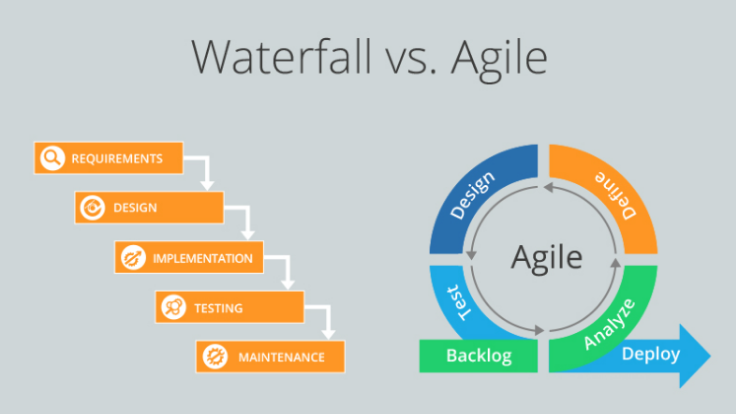
Which one is right for you: Waterfall or Agile?

The first thing to discuss before starting a project for most IT companies is whether to follow the Waterfall or Agile software development method. The two methods come with their own distinct advantages and thus contribute differently to the resulting performance. Here, in order to help you choose better, we aim to differentiate between the two.

System of Waterfalls

The waterfall method is a conventional, linear approach to the creation of code following a recorded sequence of steps:

  1. Documentation of criteria
  2. Design
  3. Testing code and unit
  4. Testing the system
  5. Testing of user acceptance
  6. Correction of bugs
  7. Product completed

The above sequence is followed by a waterfall method project in steps without going back and forth.

Waterfall’s Method Advantages

  • The project’s process flow is determined and agreed from beginning to end, making end-to-end planning more efficient and transparent.
  • Measuring progress across the SDLC is easier.
  • Client presence is hardly needed except for pre-determined reviews and approvals.
  • Design is completed early in the development cycle, making the completion of the project faster in projects requiring the integration of multiple modules.
  • Since ALL the software deliverables are decided early, the software can be planned more carefully – this will ensure that no aspect of the software being developed is wrong with the software as a whole.

Related Post: What is Agile Methodology?

Drawback’s of process Waterfall

  • Up to the last few steps of the process, no working code is made.
  • It is not appropriate for projects where there is a risk of changing requirements. There are a fair amount of improvements that consumers put in with most projects.
  • Therefore, it will be impractical to use the waterfall model approach in such situations.
  • Changing a project’s scope in a waterfall methodology frequently can cause expensive delays and drastically change the required output.
  • Since all modules are integrated only at the last stage, it becomes difficult to identify potential project bottlenecks
  • Often with only the specifications file, it is difficult to visualize the program in its entirety. So in cases where changes to the software are needed, this can only be done after the development process has bee completed. This makes it hard to implement software changes when following the Waterfall method.

Agile Methodology

Agile is an iterative software development process that requires a close feedback loop to quickly develop applications. Agile deviates from a document-based approach to a collaborative software development approach. “Sprints” are created during the development of software using Agile instead of tasks. That sprint usually lasts a few weeks ad within that time a list of deliverables is completed and sent to the customer for review. There is an end-of-spirit test for customers after which the job for the next sprint is decided.

Related Post: What is Business Process Mangement?

The benefits of Agile method

  • Because the user is often involved in the process of software development, the correct decisions are made in the project very early.
  • For what the technology is shaping us to be, the user gets a first-hand view and can, therefore, get a sense of ownership of the venture.
  • If the time-to-time market available is short, Agile can help you quickly release a rudimentary software version.

Agile method Drawbacks

Agile can be problematic for customers who have no time or interest in getting involved with the project frequently. Since agile involves frequent re-prioritization, a few modules set for release within a sprint can become difficult to complete. In such instances, adding all of the functionality to the code requires additional sprints. This can increase the time and cost of implementing the solution.

While Agile and Waterfall are popular methods of software development, we are absorbing your requirements at Ouriken to design our own software development framework or to use Agile and Waterfall methods to deliver our best. To learn more about our methods of development, get in touch with us now.

Ouriken’s Agile consulting framework includes agile consulting, delivery transformation, digital, analytics, and development to meet customer needs. Ouriken is a standalone web design and digital agency. We design and implements powerful solutions for small and medium businesses in technology, business, and operations.

[contact-form][contact-field label=”Name” type=”name” required=”true” /][contact-field label=”Email” type=”email” required=”true” /][contact-field label=”Website” type=”url” /][contact-field label=”Message” type=”textarea” /][/contact-form]

Digital Infrastructure: What is it?

The global Digital Business Revolution is increasingly reshaping the traditional role of IT infrastructure. The demands placed on IT are evolving much faster than many expected in the ultra-competitive global economy which provides endless opportunities for disruption and demands continuous innovation.

Your Business Success is now determined by a combination of user experience, more attractive business models, and quick time-to-value with our Infrastructure Management Services. The expectations placed on IT leaders in this dynamic business environment present an opportunity that requires a fundamental change in the role of IT. We are seeing a remarkable remodeling of IT estates to better support the quicker launch of innovative new technologies and push disruptive business models. A focus on enabling business agility and enabling user experience that drives customer engagement and retention is described in Digital Infrastructure.

Business agility is directly related to your ability to respond quickly to the business’ changing needs. Here expectations need to be reframed in the awareness that Tine is the most critical factor in the hyper-competitive world in which we all now work. Infrastructure now needs to focus on designing, developing and delivering new products and services quickly.

The transition was marked by the recent acceleration in cloud services take-up. Although cost savings are often claimed as a key incentive for cloud migration, the reality for many new digital leaders is that the degree of business flexibility needed to deliver the new class of experienced-focused products quickly favors a cloud-native approach heavily. A strong preference for using pre-built cloud-hosted SaaS services dominates decision-making and comes before any new in-house resources are developed. Any new user-focused products that are based on a chosen PaaS framework that offers fast development, distribution, and simpler management while leveraging standardized platform capabilities.

Related Post: How to Accelerate Productivity in Modern IT Infrastructure Management?

Continuous Delivery and DevOps are good examples of automated work processes that concentrate on speed to quality while providing corresponding digital infrastructure that can deliverdeploy and manage services at will. The business requirement for near-instant response brings with it an inevitable move toward Automation as a key theme within Digital Infrastructure. In terms of cost, reliability, and speed, automation brings three key benefits. While the former is taken for granted, it is often overlooked the focus on speed and reliability. These benefits are now coming to the fore in the new Digital landscape that is dominated by customer experience. Agility also drives investment in infrastructure technology and processes that support new capabilities to be delivered quickly.

It is expected that the ability to deliver both Orchestrate and Automate business services through internal and third-party providers will become the core competency and a key role for Digital Infrastructure. Perhaps the most dramatic side effect of the digital business transition is the realization that the function of an IT Service is what the company and IT executives are looking for. Like any other traditional resource, the IT infrastructure has consumption has the same demand and consumption behavior in a digitally transformed market. The new normal is instantly on (and instantly off) without human intervention and rock-solid stability. The digital infrastructure also needs to offer a consumer-grade experience to the company, with quick discovery and click-to-consume services. And like other utility, these services ‘only function’ are flexible just scale quickly to meet demand without any complex processes hindered by human involvement.

Infrastructure Management Services

While your transformed digital infrastructure is more agile and more capable of delivering the capabilities the business demands quickly, it is also useful to consider how this drives new infrastructure features. The emphasis on user experience, in particular, is to expand the technology concept to include much richer, high-value services such as user- experience management; advanced predictive and cognitive analytics now expose all applications operating in this new digital environment to automated intervention, context, and comprehension. While digital infrastructure is expanding to include new capabilities, dominated by end-to-end automation and orchestration themes, we must not lose sight of how these in effect push new behavior in the manner in which we identify, use and maintain infrastructure.

Related Post: What is Business Process Management?

The business user needs the basic consumer-like experience, infinite versatility with instant value delivery. So your Digital Infrastructure’s final core attribute is that it really needs to be software-defined. Dependencies on computing, processing, and networking resources need to be abstracted and replaced by composite structures that can be installed, reconfigured, and broken ‘ at will ‘ to provide a vastly simplified property that is completely integrated with and allows a much more agile business environment.

Ouriken’s Infrastructure Management services include monitoring and tracking tools to effectively manage business-critical applications. We are a standalone web design and digital agency. We design and implements powerful solutions for small and medium businesses in technology, business, and operations.

[contact-form][contact-field label=”Name” type=”name” required=”true” /][contact-field label=”Email” type=”email” required=”true” /][contact-field label=”Website” type=”url” /][contact-field label=”Message” type=”textarea” /][/contact-form]