Refresh loader

Archive : technology strategy

Home > Posts tagged technology strategy

The Best Virtual CTO Services Blend Into Your Team

Technology leadership is one of the most expensive and difficult hires a growing company can make. A seasoned Chief Technology Officer commands a six-figure salary, equity, and years of onboarding time. Furthermore, finding the right one for your specific stage is even harder. Virtual CTO services offer a compelling alternative.

They deliver senior-level technical leadership at a fraction of the cost and with immediate impact. Moreover, the best virtual CTOs integrate so smoothly into your existing setup that your team barely notices the seam.

This guide explains exactly how virtual CTO services work alongside your current team, developers, and technology vendors. Consequently, you can make an informed decision about whether this model fits your business.

What Does a Virtual CTO Actually Do?

A virtual CTO, also called a fractional CTO or CTO-as-a-service, provides strategic technology leadership without being a full-time employee. They work with your company on a part-time or project basis. Additionally, many virtual CTOs serve multiple clients simultaneously, which keeps their market knowledge sharp.

Core responsibilities typically include technology strategy, architecture review, team oversight, vendor management, and technology roadmap development. Furthermore, they often represent the technology function to investors, board members, and partners when needed.

The scope can flex based on your needs. Some companies use a virtual CTO for a few hours per week to review technical decisions. Others engage one almost full-time during a product launch or digital transformation. Therefore, the model is highly adaptable.

The Best Virtual CTO Services Blend Into Your Team

Integrating With Your In-House Development Team

The most common concern when bringing in a virtual CTO is team resistance. Engineers often worry about oversight, micromanagement, or having their technical decisions second-guessed. Consequently, how the virtual CTO enters the team matters enormously.

Effective virtual CTOs begin with deep listening. They spend the first weeks learning how the existing team works — their tools, their rhythms, their pain points. Additionally, they identify strengths to build on rather than jumping straight to criticism and overhaul.

Participation in existing ceremonies is another key integration step. A virtual CTO who joins sprint planning, retrospectives, and architecture discussions quickly earns trust. Furthermore, they can spot strategic gaps that are invisible to team members who are too close to the day-to-day work.

Clear role boundaries prevent confusion. The virtual CTO owns strategy and architecture while team leads retain ownership of execution. Additionally, this clarity reduces friction and keeps both the virtual CTO and the in-house team focused on their respective strengths.

Working Alongside External Vendors and Agencies

Many growing companies use external development agencies, freelancers, or offshore teams rather than — or in addition to — in-house developers. Virtual CTO services are particularly well-suited to this scenario. Moreover, they add a missing layer of accountability that vendor relationships often lack.

Without technical leadership, vendor relationships tend to drift. Scope creep, quality issues, and misaligned priorities accumulate without anyone authorized and skilled enough to push back. Consequently, project timelines slip and budgets overrun.

A virtual CTO acts as the client-side technical authority. They review vendor proposals, evaluate technical decisions, and ensure deliverables meet real standards rather than just stated requirements. Furthermore, they can spot red flags in vendor communications that non-technical founders completely miss.

Additionally, a virtual CTO helps define better contracts and service-level agreements with vendors. Clear technical requirements in contracts reduce disputes and create measurable accountability. Therefore, you protect your investment before problems arise rather than litigating them afterward.

The Onboarding Process: What Good Integration Looks Like

A structured onboarding process is what separates effective virtual CTO engagements from disappointing ones. The first thirty days set the tone for everything that follows. Furthermore, clear deliverables during onboarding demonstrate value immediately.

  • Technology Audit: A comprehensive review of your existing technology stack, codebases, architecture, and infrastructure. This reveals immediate risks and long-term liabilities.
  • Team Assessment: Understanding the skills, gaps, and dynamics of your development team or vendor relationships. Additionally, this helps the virtual CTO know where to focus coaching and support.
  • Stakeholder Alignment: Meetings with founders, product leaders, and key investors to understand business goals. Consequently, the technology strategy aligns with commercial priorities from day one.
  • Risk Register: Identifying and prioritizing the most critical technical risks facing the business. Furthermore, this gives leadership a clear picture of what needs immediate attention.
  • 90-Day Roadmap: A prioritized plan covering quick wins, medium-term improvements, and long-term strategic bets. This roadmap becomes the working document for the entire engagement.

Communication Rhythms That Make It Work

Virtual CTO services depend heavily on communication quality. Because the engagement is not full-time, information flow must be deliberate and structured. Moreover, the right communication rhythm keeps the virtual CTO effective without consuming too much of your team’s time.

Weekly check-ins with founders and product leads keep priorities aligned. These short sessions — typically thirty to sixty minutes — focus on decisions needed, blockers to unblock, and upcoming critical moments. Additionally, they give founders a reliable touchpoint without the overhead of a full-time hire.

Asynchronous communication tools like Slack, Notion, or Linear allow the virtual CTO to stay connected to team workflow without requiring real-time availability. Furthermore, written communication creates a record of decisions and reasoning that benefits the entire organization.

Common Challenges and How to Overcome Them

No integration model is without challenges. Understanding common friction points helps you prevent them proactively.

Authority ambiguity is the most frequent issue. When team members are unsure whether to follow the virtual CTO or their direct manager, conflicting directions emerge. Consequently, clear role definitions communicated to the entire team from day one are essential.

Information silos also create problems. If the virtual CTO lacks access to relevant data — code repositories, incident logs, vendor contracts — their recommendations are based on incomplete pictures. Therefore, full access to relevant systems must be part of the onboarding agreement.

Finally, mismatched expectations about availability cause frustration on both sides. Define engagement hours clearly upfront. Additionally, establish an escalation path for true emergencies so the virtual CTO can prioritize high-stakes situations appropriately.

When Virtual CTO Services Are the Right Choice

These services are not the right answer for every situation. They work best in specific scenarios. Furthermore, being honest about your situation leads to better outcomes than hiring for the wrong reasons.

  • Pre-Seed to Series A Startups: Too early to afford a full-time CTO but complex enough to need strategic technical leadership.
  • Vendor-Heavy Operations: Companies relying on agencies or offshore teams who need a technical authority to maintain quality and accountability.
  • Digital Transformation Projects: Established businesses modernizing their technology who need temporary but expert guidance.
  • CTO Transition Periods: Organizations bridging between departing and incoming full-time CTOs, maintaining momentum during the gap.
  • Technical Co-Founder Search: Startups actively recruiting a technical co-founder who need technology leadership while the search progresses.

Conclusion: Integration Is a Strategy, Not an Accident

These services succeed when integration is treated as a deliberate strategy rather than a hope. The right virtual CTO brings deep technical expertise, a structured onboarding approach, and the interpersonal skills to earn trust quickly.

Furthermore, the best engagements add value in the first thirty days — not six months in. If your virtual CTO cannot demonstrate clear impact quickly, the engagement structure likely needs adjustment.

Ultimately, these services are about giving your team the strategic technology leadership they deserve without the overhead of a full-time executive hire. Consequently, more companies can access senior technical guidance — and build better products — than ever before.

Read More:

Virtual CTO Services and Your Vendor Ecosystem: Full Guide

How vCTO Services De-Risk Your Software Project From Day One

Why Virtual CTO Services Myths Are Costing You Big

How vCTO Services De-Risk Your Software Project From Day One

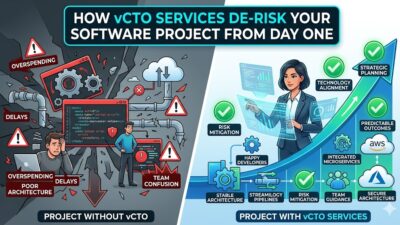
Software projects fail all the time. In fact, research from the Standish Group shows that roughly 66% of technology projects fail or get significantly delayed. Bad architecture, unclear requirements, wrong tech choices — these are the most common culprits. However, there is a powerful solution that many businesses overlook: vCTO services.

A virtual CTO (vCTO) gives your project the strategic technology leadership it needs — without the cost of a full-time C-suite hire. Moreover, they step in at exactly the right moment: day one.

What Are vCTO Services?

A vCTO is an experienced technology leader who works with your business on a fractional or contract basis. They bring CTO-level expertise to guide your software architecture, team structure, vendor selection, and technology strategy.

Unlike a full-time CTO, a vCTO can start in days, not months. Furthermore, you only pay for the expertise you need, when you need it. This flexibility makes vCTO services ideal for startups, scale-ups, and established businesses launching new tech products.

vCTO services typically cover technical due diligence, architecture reviews, team building, technology roadmapping, and agile delivery oversight. Additionally, many vCTOs bring deep industry experience in specific sectors like fintech, healthtech, or ecommerce.

How vCTO Services De-Risk Your Software Project From Day One

Why Software Projects Fail Without Expert Tech Leadership

The biggest risk in any software project is making the wrong decisions early. For example, choosing the wrong database architecture might be invisible for months — but eventually costs enormous time and money to fix.

Without senior tech leadership, development teams often build what they are told rather than what the business actually needs. Consequently, features get built that users never use, while critical functionality gets missed.

Furthermore, without proper oversight, technical debt accumulates fast. Code quality drops. Security vulnerabilities creep in. Before long, the system becomes difficult to maintain and impossible to scale. A vCTO prevents all of this from happening in the first place.

Day One Impact: What a vCTO Does Immediately

The first 30 days of a software project set the tone for everything that follows. Therefore, having a vCTO engaged from the very start is transformative. Here is what typically happens on day one.

First, the vCTO conducts a technical discovery session. They ask hard questions about business goals, user needs, and technical constraints. As a result, the team gets clarity that prevents weeks of wasted work later on.

Second, the vCTO reviews any existing architecture plans or codebases. They flag risks immediately — before a single line of new code is written. Additionally, they define the technology stack and infrastructure approach based on your specific needs, not generic best practices.

Third, they establish engineering standards, workflows, and quality gates. Consequently, every developer on the team knows exactly what good looks like — from the very first sprint.

Architecture and Technology Decisions

One of the most valuable contributions a vCTO makes is in architecture decisions. These choices — monolith vs microservices, cloud provider, database type, API design — define the long-term cost and scalability of your product.

A vCTO brings pattern recognition that only comes from building many systems over many years. They know which shortcuts cause problems later. Moreover, they know which emerging technologies are genuinely useful and which are just hype.

For example, a startup building a customer-facing app might be tempted to build microservices from day one. However, an experienced vCTO would likely recommend starting with a well-structured monolith and refactoring later. That decision alone can save months of unnecessary complexity.

Vendor and Partner Selection

Most software projects rely on third-party vendors, SaaS tools, and development partners. Choosing the wrong ones is costly. A vCTO applies rigorous due diligence to every vendor selection decision.

They know what questions to ask, what red flags to look for, and what contracts to avoid. Additionally, they have often worked with — or heard of — the vendors you are considering. This lived experience is invaluable when evaluating proposals.

Furthermore, he can help you structure development partnerships to protect your IP, maintain code quality, and avoid lock-in. These protections are hard to put in place after a vendor relationship has started.

Team Building and Engineering Culture

Building the right engineering team is one of the hardest parts of any tech project. A vCTO helps you define the roles you actually need — not the roles that sound impressive on paper.

They can lead technical interviews, set coding standards, and onboard new developers effectively. Moreover, they help establish an engineering culture built on collaboration, quality, and continuous improvement.

For non-technical founders, this guidance is especially valuable. It removes the uncertainty that comes from not knowing whether your engineers are doing good work. Consequently, you can focus on the business while trusting the tech is in good hands.

Ongoing Risk Management

A vCTO does not just reduce risk on day one — they manage it continuously throughout the project. Regular architecture reviews, code quality audits, and sprint retrospectives all contribute to a healthier delivery process.

Additionally, he acts as an early warning system. They spot problems before they become crises. Whether it is a performance bottleneck, a security gap, or a team communication issue, they address it quickly and decisively.

Furthermore, they keep the technical roadmap aligned with the business strategy. As priorities shift — which they always do — he ensures the tech direction adjusts accordingly without causing chaos.

The Cost Comparison: vCTO vs Full-Time CTO

A full-time CTO in a major market costs between $200,000 and $400,000 per year in salary alone. Add benefits, equity, and recruiting costs, and the total rises substantially. Moreover, hiring the wrong CTO is one of the most expensive mistakes a startup can make.

By contrast, his services typically cost between $5,000 and $20,000 per month — depending on scope and engagement level. You get senior expertise on demand. Additionally, you avoid the risk of a bad full-time hire.

For early-stage companies, this flexibility is essential. As your needs grow, your vCTO engagement can scale with them. Consequently, you always have the right level of tech leadership for your current stage.

When to Bring in a vCTO

The best time to engage a vCTO is before you start building. However, it is never too late. Many businesses bring him to rescue a struggling project, audit an existing codebase, or prepare for a major new feature build.

In conclusion, vCTO services offer one of the highest-ROI investments a technology business can make. They bring clarity, quality, and confidence to software projects that would otherwise be riddled with risk. From day one, a great vCTO makes your project smarter, safer, and far more likely to succeed.

Read More:

Why Virtual CTO Services Myths Are Costing You Big

Virtual CTO: The Missing Link in Your Tech Team

Can a Virtual CTO Replace a Full-Time One: Full Guide