Refresh loader

Archive : Tech Leadership

Home > Posts tagged Tech Leadership

Virtual CTO Tactics for Better Product Quality

Developer testing is necessary. But it is not enough. A developer who writes the code also has blind spots when testing it. Quality assurance needs to go much deeper than unit tests and code reviews. This is where a Virtual CTO (vCTO) makes a measurable difference. A vCTO brings strategic oversight to QA — not just at the code level, but across processes, culture, tools, and delivery pipelines.

This blog explains exactly how a Virtual CTO enforces QA beyond what your dev team can do alone.

What Is a Virtual CTO?

A Virtual CTO is an experienced technology leader who works with your company on a part-time or contract basis. They bring CTO-level thinking without the full-time cost. For startups and scale-ups, this is often the most efficient path to serious technical leadership.

A vCTO handles technical strategy, team leadership, architecture decisions, and vendor management. They also own QA as a strategic function — not just a checklist. This distinction matters enormously for product quality.

Virtual CTO Tactics for Better Product Quality

Why Developer Testing Has Limits

Developers are skilled at building. However, they are not always the best testers of their own work. Cognitive bias makes it hard to spot errors in code you wrote yourself. Additionally, time pressure often leads developers to skip edge-case testing.

Moreover, developer testing typically focuses on functionality. It often misses performance under load, security vulnerabilities, UX regression, and cross-browser compatibility. These gaps accumulate and eventually cause production failures.

Therefore, a dedicated QA strategy — led by someone with strategic oversight — is essential. The Virtual CTO fills this gap deliberately and systematically.

1. Establishing a QA Framework

The first thing a vCTO does is define a QA framework. This is not a list of tests. It is a structured approach to quality across the entire product lifecycle.

A solid QA framework covers:

  • Test strategy (what to test and at what level)
  • Test coverage targets (unit, integration, end-to-end)
  • Definition of done criteria for every sprint
  • Bug severity and priority classification system
  • Regression testing schedule and ownership
  • Performance and load testing benchmarks

With this framework in place, quality is no longer ad hoc. It becomes a predictable, repeatable process.

2. Separating QA from Development

One of the first structural changes a vCTO makes is separating QA responsibility from development. Developers still write unit tests. But a dedicated QA function — even a single tester — handles independent verification.

This separation removes the conflict of interest. QA reviewers approach the product as a user would, not as a builder. Consequently, they catch issues that developers consistently miss.

3. Implementing Automated Testing Pipelines

Manual testing does not scale. A vCTO introduces automation as a core QA tool. Automated test suites run on every commit, catching regressions before they reach staging.

Key automation layers a vCTO typically implements:

  • Unit test automation via Jest, Pytest, or similar tools
  • API contract testing with tools like Postman or Pact
  • End-to-end UI testing via Playwright or Cypress
  • CI/CD pipeline integration so tests block broken deployments
  • Performance testing with k6 or Locust

Furthermore, the vCTO sets minimum coverage thresholds. A codebase with less than 70 percent test coverage should not ship. This standard becomes a non-negotiable part of the development culture.

4. Introducing Shift-Left Testing

Shift-left testing means catching bugs earlier in the development cycle. Traditionally, QA happened after development finished. This made fixes expensive and time-consuming.

A vCTO moves QA involvement to the design and planning phase. QA engineers review requirements before a single line of code is written. They identify ambiguities and edge cases early, when fixes cost almost nothing.

Additionally, shift-left testing fosters better collaboration. Developers and QA engineers think together about quality from the start. This shared ownership produces better products.

5. Building a QA Culture, Not Just a QA Process

Process alone does not guarantee quality. Culture does. A Virtual CTO builds a culture where everyone feels responsible for quality — not just the QA team.

This means celebrating bug catches, not just feature launches. It means holding blameless post-mortems when production issues occur. Moreover, it means rewarding engineers who improve test coverage voluntarily.

When quality becomes a team value rather than a department task, standards improve consistently over time.

6. Monitoring Production Quality

QA does not stop at deployment. A vCTO implements production monitoring as an extension of QA. Real user data reveals issues that no test environment can replicate.

Essential production monitoring tools include:

  • Error tracking via Sentry or Bugsnag
  • Application Performance Monitoring (APM) via Datadog or New Relic
  • Real User Monitoring (RUM) for frontend performance
  • Uptime monitoring with PagerDuty or Better Uptime
  • Log aggregation and alerting via Grafana or ELK stac

7. Vendor and Third-Party QA

Most products depend on third-party services — APIs, payment gateways, analytics platforms. Developer testing rarely covers third-party failure scenarios. A vCTO ensures these dependencies are tested and monitored too.

This includes testing graceful degradation. What happens when a third-party API goes down? The vCTO ensures your system handles failures without crashing.

8. Security and Compliance QA

Security testing is often overlooked in standard QA processes. A vCTO includes security as a QA layer, not an afterthought. This means regular OWASP vulnerability scans, dependency audits, and penetration testing.

Furthermore, if your product handles user data, compliance testing is essential. GDPR, HIPAA, and PCI-DSS all have specific technical requirements. The vCTO ensures your QA process verifies compliance at every release.

Measuring QA Effectiveness

A vCTO tracks QA performance with clear metrics. These include defect escape rate, test coverage percentage, mean time to detect (MTTD), and mean time to resolve (MTTR). Regular reporting keeps the team accountable.

Conclusion

Developer testing is a foundation, not a complete QA strategy. A Virtual CTO builds the structure, culture, and tools that elevate quality across the entire product. This leads to fewer production incidents, faster releases, and higher user satisfaction.

If your product ships with too many bugs, or your testing is inconsistent, bringing in a Virtual CTO is one of the highest-ROI decisions you can make. Quality is not a cost — it is a competitive advantage.

Read More:

Why Regular WIP Reviews With vCTO Save Project From Disaster

The Best Virtual CTO Services Blend Into Your Team

Virtual CTO Services and Your Vendor Ecosystem: Full Guide

Why Regular WIP Reviews With vCTO Save Project From Disaster

Projects rarely fail all at once. They fail slowly — through small misalignments, ignored risks, and quiet scope creep. Regular WIP (Work in Progress) reviews with a virtual CTO (vCTO) stop that drift before it becomes a disaster.

This blog explains what WIP reviews are, why a vCTO makes them so effective, and how to run them in a way that actually protects your projects.

What Is a WIP Review?

A WIP review is a structured check-in on all active work in progress. It is not a status update meeting. Furthermore, it is not a sprint review or a demo. It is a deliberate examination of everything currently being worked on. The goal is to surface risks, blockers, and misalignments before they compound.

In a WIP review, teams walk through:

i. What is currently in progress

ii. What is blocked or delayed

iii. What is at risk of going off-scope

iv. What dependencies are unresolved

v. What decisions are pending but not made

The review is intentionally uncomfortable. It asks the hard questions most teams prefer to avoid. Consequently, it catches problems while they are still small enough to fix.

Why Regular WIP Reviews With vCTO Save Project From Disaster

What Is a vCTO?

A virtual CTO (vCTO) is a fractional, part-time, or contract technology leader. They bring CTO-level expertise without the full-time cost. Startups and growing businesses often need strategic technology leadership but cannot afford a full-time CTO. A vCTO fills that gap. They provide guidance on architecture, team structure, product strategy, and technical risk management.

Crucially, a vCTO brings outside perspective. They are not embedded in the day-to-day politics of your team. Therefore, they can see problems more clearly than someone inside the organization. Additionally, experienced vCTOs have seen dozens of projects across many companies. They recognize failure patterns early because they have seen them before. This pattern recognition is invaluable during WIP reviews.

Why Projects Fail Without Regular Reviews

The biggest projects rarely fail because of a single catastrophic event. Instead, they fail because of accumulated small problems nobody addressed. Scope creep is the most common culprit. Features get added gradually without anyone explicitly approving the additional work. Furthermore, nobody re-evaluates the timeline or budget when scope grows. Consequently, the project runs over budget and past deadline seemingly out of nowhere.

Technical debt accumulates silently. Teams take shortcuts under deadline pressure. These shortcuts work short-term. However, they compound into architectural problems that slow development dramatically over time. Dependency bottlenecks get ignored. When one team or vendor delays, teams often continue working on dependent tasks — pretending the dependency will resolve itself. By the time the blockage is acknowledged, rework is inevitable.

Communication gaps widen. As projects grow, information stops flowing cleanly between stakeholders. Misalignments develop without anyone noticing until they create expensive conflicts. Regular WIP reviews interrupt all of these failure patterns. They force visibility into problems that are otherwise easy to overlook.

The vCTO Advantage in WIP Reviews

Anyone can run a WIP review. However, a vCTO makes the review dramatically more effective for several reasons. Pattern recognition: A vCTO has seen projects fail in predictable ways. When they hear a team say “we will handle that later,” they recognize it as a risk flag. Moreover, they know from experience which “later” items actually get handled and which become disasters.

Technical depth: Many project risks are technical. A vCTO can evaluate architectural decisions, code quality signals, infrastructure risks, and integration complexities. Consequently, they surface technical risks that a non-technical reviewer would miss entirely.

No political bias: Internal team members often soften their assessments to avoid conflict. A vCTO has no such incentive. They ask the uncomfortable questions because their role is to protect the project — not to manage internal relationships.

Strategic alignment: A vCTO connects project-level work to business goals. They can spot when technical work is drifting away from strategic priorities — before significant resources are wasted.

Accountability: When a vCTO flags a risk, it gets documented and owned. Teams take issues more seriously when a senior technical voice raises them formally.

How to Structure a Productive WIP Review

A good WIP review follows a consistent structure. Here is a framework that works well with a vCTO leading.

Before the review:

Share a WIP board or status document at least 24 hours in advance. The vCTO needs time to review it and prepare targeted questions. Furthermore, team leads should update their items to reflect current reality — not optimistic projections.

During the review:

Open with a 5-minute overview of the sprint or project phase. Then, walk through each WIP item using a standard format: current status, blockers, risks, and next actions. The vCTO asks probing questions at each step. For example: “What happens if that API integration takes two weeks instead of three days?” or “Who owns this decision and when will it be made?” After each item, assign clear ownership for any identified risks. Do not move to the next item until ownership is established. Consequently, nothing falls through the cracks.

After the review:

Send a written summary within 24 hours. Include all identified risks, assigned owners, and deadlines for resolution. Furthermore, track these items in your project management tool. Review progress at the start of the next WIP session.

Common Risks a vCTO Catches in WIP Reviews

Experienced vCTOs consistently catch the same categories of risk across different companies and projects. Knowing these helps you prepare. Undefined acceptance criteria: Work that does not have clear “done” criteria almost always leads to rework. A vCTO catches this early by asking: “How will we know this feature is complete?”

Missing technical documentation: Code without documentation creates future bottlenecks. Furthermore, it increases the bus factor — the risk that one person’s departure breaks everything. Unvalidated assumptions: Teams often build on assumptions that have never been confirmed with actual users or data. A vCTO asks for evidence behind key decisions. Consequently, assumptions get tested before they become expensive mistakes.

Underestimated integration complexity: Integrations between systems are almost always harder than expected. A vCTO probes integration timelines aggressively because this is where most delays originate. Security and compliance gaps: Non-technical stakeholders often forget about security and compliance requirements until late in the project. A vCTO ensures these are addressed in the WIP, not as an afterthought at launch.

How Frequently Should WIP Reviews Happen?

Frequency depends on project velocity and risk level. Here are general guidelines. Weekly reviews work best for active development phases. When teams are shipping code every day, risks accumulate quickly. Therefore, weekly visibility keeps problems from growing unchecked.

Bi-weekly reviews suit projects in planning or early-stage development. The pace is slower and risks are less immediate. Furthermore, bi-weekly reviews allow more time for action between sessions Monthly reviews are appropriate for maintenance phases or low-activity periods. However, be cautious about reducing review frequency. It is easier to skip a review that seems unnecessary than to recover from a problem that went unreviewed for weeks.

A good rule of thumb: if something feels like it might be going wrong, increase review frequency immediately. Do not wait until the next scheduled review to investigate. Consequently, catching risks at the first sign of concern is always cheaper than addressing them after they compound.

The Financial Case for Regular vCTO WIP Reviews

Some founders hesitate to invest in vCTO services. The cost seems high relative to an early-stage budget. However, the math usually favors the investment significantly. Consider a mid-sized software project with a $500,000 budget. Industry data suggests that 70% of software projects experience budget overruns. Furthermore, the average overrun is 27% above initial estimates. That means the expected overrun for a $500,000 project is $135,000.

A vCTO engagement — even at senior rates — costs a fraction of that overrun. Moreover, regular WIP reviews catch the specific types of drift that cause budget overruns: scope creep, unresolved blockers, and unvalidated assumptions. The return on investment is not speculative. Projects with active technical oversight consistently outperform those without it. Additionally, the value compounds — each project the vCTO reviews teaches them more about your organization’s specific failure patterns. Consequently, they get better at protecting your projects over time.

Building a WIP Review Culture

WIP reviews only work if the team is honest. That requires psychological safety — the belief that raising problems will not result in blame. A vCTO can help establish this culture. They model honest problem identification without assigning personal blame. Furthermore, they celebrate early risk identification rather than treating it as a sign of failure.

Over time, teams learn that surfacing problems in WIP reviews is rewarded — with resources, timeline adjustments, or decision-making authority. Hiding problems, conversely, leads to worse outcomes.

This cultural shift does not happen immediately. It requires consistent modeling from leadership — including the vCTO — over several review cycles. However, once established, it transforms how the team operates. Problems surface earlier, decisions happen faster, and projects stay on track more reliably.

Conclusion

Project disasters are rarely surprises. They are the visible outcome of invisible problems that were never addressed. Regular WIP reviews with a vCTO change that dynamic. They create consistent visibility into what is actually happening — not what people hope is happening.

The vCTO brings pattern recognition, technical depth, and political independence that internal teams often lack. As a result, risks get identified earlier, ownership gets assigned more clearly, and projects stay closer to their original goals.

Start with a simple structure. Keep reviews focused and honest. Most importantly, act on what you find. The projects that survive — and thrive — are not the ones with the best plans. They are the ones with the best visibility.

Read More:

The Best Virtual CTO Services Blend Into Your Team

Virtual CTO Services and Your Vendor Ecosystem: Full Guide

How vCTO Services De-Risk Your Software Project From Day One

The Best Virtual CTO Services Blend Into Your Team

Technology leadership is one of the most expensive and difficult hires a growing company can make. A seasoned Chief Technology Officer commands a six-figure salary, equity, and years of onboarding time. Furthermore, finding the right one for your specific stage is even harder. Virtual CTO services offer a compelling alternative.

They deliver senior-level technical leadership at a fraction of the cost and with immediate impact. Moreover, the best virtual CTOs integrate so smoothly into your existing setup that your team barely notices the seam.

This guide explains exactly how virtual CTO services work alongside your current team, developers, and technology vendors. Consequently, you can make an informed decision about whether this model fits your business.

What Does a Virtual CTO Actually Do?

A virtual CTO, also called a fractional CTO or CTO-as-a-service, provides strategic technology leadership without being a full-time employee. They work with your company on a part-time or project basis. Additionally, many virtual CTOs serve multiple clients simultaneously, which keeps their market knowledge sharp.

Core responsibilities typically include technology strategy, architecture review, team oversight, vendor management, and technology roadmap development. Furthermore, they often represent the technology function to investors, board members, and partners when needed.

The scope can flex based on your needs. Some companies use a virtual CTO for a few hours per week to review technical decisions. Others engage one almost full-time during a product launch or digital transformation. Therefore, the model is highly adaptable.

The Best Virtual CTO Services Blend Into Your Team

Integrating With Your In-House Development Team

The most common concern when bringing in a virtual CTO is team resistance. Engineers often worry about oversight, micromanagement, or having their technical decisions second-guessed. Consequently, how the virtual CTO enters the team matters enormously.

Effective virtual CTOs begin with deep listening. They spend the first weeks learning how the existing team works — their tools, their rhythms, their pain points. Additionally, they identify strengths to build on rather than jumping straight to criticism and overhaul.

Participation in existing ceremonies is another key integration step. A virtual CTO who joins sprint planning, retrospectives, and architecture discussions quickly earns trust. Furthermore, they can spot strategic gaps that are invisible to team members who are too close to the day-to-day work.

Clear role boundaries prevent confusion. The virtual CTO owns strategy and architecture while team leads retain ownership of execution. Additionally, this clarity reduces friction and keeps both the virtual CTO and the in-house team focused on their respective strengths.

Working Alongside External Vendors and Agencies

Many growing companies use external development agencies, freelancers, or offshore teams rather than — or in addition to — in-house developers. Virtual CTO services are particularly well-suited to this scenario. Moreover, they add a missing layer of accountability that vendor relationships often lack.

Without technical leadership, vendor relationships tend to drift. Scope creep, quality issues, and misaligned priorities accumulate without anyone authorized and skilled enough to push back. Consequently, project timelines slip and budgets overrun.

A virtual CTO acts as the client-side technical authority. They review vendor proposals, evaluate technical decisions, and ensure deliverables meet real standards rather than just stated requirements. Furthermore, they can spot red flags in vendor communications that non-technical founders completely miss.

Additionally, a virtual CTO helps define better contracts and service-level agreements with vendors. Clear technical requirements in contracts reduce disputes and create measurable accountability. Therefore, you protect your investment before problems arise rather than litigating them afterward.

The Onboarding Process: What Good Integration Looks Like

A structured onboarding process is what separates effective virtual CTO engagements from disappointing ones. The first thirty days set the tone for everything that follows. Furthermore, clear deliverables during onboarding demonstrate value immediately.

  • Technology Audit: A comprehensive review of your existing technology stack, codebases, architecture, and infrastructure. This reveals immediate risks and long-term liabilities.
  • Team Assessment: Understanding the skills, gaps, and dynamics of your development team or vendor relationships. Additionally, this helps the virtual CTO know where to focus coaching and support.
  • Stakeholder Alignment: Meetings with founders, product leaders, and key investors to understand business goals. Consequently, the technology strategy aligns with commercial priorities from day one.
  • Risk Register: Identifying and prioritizing the most critical technical risks facing the business. Furthermore, this gives leadership a clear picture of what needs immediate attention.
  • 90-Day Roadmap: A prioritized plan covering quick wins, medium-term improvements, and long-term strategic bets. This roadmap becomes the working document for the entire engagement.

Communication Rhythms That Make It Work

Virtual CTO services depend heavily on communication quality. Because the engagement is not full-time, information flow must be deliberate and structured. Moreover, the right communication rhythm keeps the virtual CTO effective without consuming too much of your team’s time.

Weekly check-ins with founders and product leads keep priorities aligned. These short sessions — typically thirty to sixty minutes — focus on decisions needed, blockers to unblock, and upcoming critical moments. Additionally, they give founders a reliable touchpoint without the overhead of a full-time hire.

Asynchronous communication tools like Slack, Notion, or Linear allow the virtual CTO to stay connected to team workflow without requiring real-time availability. Furthermore, written communication creates a record of decisions and reasoning that benefits the entire organization.

Common Challenges and How to Overcome Them

No integration model is without challenges. Understanding common friction points helps you prevent them proactively.

Authority ambiguity is the most frequent issue. When team members are unsure whether to follow the virtual CTO or their direct manager, conflicting directions emerge. Consequently, clear role definitions communicated to the entire team from day one are essential.

Information silos also create problems. If the virtual CTO lacks access to relevant data — code repositories, incident logs, vendor contracts — their recommendations are based on incomplete pictures. Therefore, full access to relevant systems must be part of the onboarding agreement.

Finally, mismatched expectations about availability cause frustration on both sides. Define engagement hours clearly upfront. Additionally, establish an escalation path for true emergencies so the virtual CTO can prioritize high-stakes situations appropriately.

When Virtual CTO Services Are the Right Choice

These services are not the right answer for every situation. They work best in specific scenarios. Furthermore, being honest about your situation leads to better outcomes than hiring for the wrong reasons.

  • Pre-Seed to Series A Startups: Too early to afford a full-time CTO but complex enough to need strategic technical leadership.
  • Vendor-Heavy Operations: Companies relying on agencies or offshore teams who need a technical authority to maintain quality and accountability.
  • Digital Transformation Projects: Established businesses modernizing their technology who need temporary but expert guidance.
  • CTO Transition Periods: Organizations bridging between departing and incoming full-time CTOs, maintaining momentum during the gap.
  • Technical Co-Founder Search: Startups actively recruiting a technical co-founder who need technology leadership while the search progresses.

Conclusion: Integration Is a Strategy, Not an Accident

These services succeed when integration is treated as a deliberate strategy rather than a hope. The right virtual CTO brings deep technical expertise, a structured onboarding approach, and the interpersonal skills to earn trust quickly.

Furthermore, the best engagements add value in the first thirty days — not six months in. If your virtual CTO cannot demonstrate clear impact quickly, the engagement structure likely needs adjustment.

Ultimately, these services are about giving your team the strategic technology leadership they deserve without the overhead of a full-time executive hire. Consequently, more companies can access senior technical guidance — and build better products — than ever before.

Read More:

Virtual CTO Services and Your Vendor Ecosystem: Full Guide

How vCTO Services De-Risk Your Software Project From Day One

Why Virtual CTO Services Myths Are Costing You Big

How vCTO Services De-Risk Your Software Project From Day One

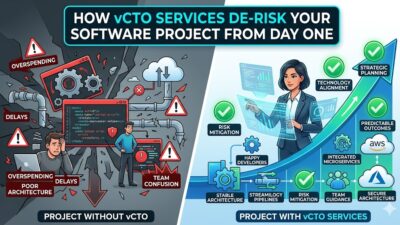
Software projects fail all the time. In fact, research from the Standish Group shows that roughly 66% of technology projects fail or get significantly delayed. Bad architecture, unclear requirements, wrong tech choices — these are the most common culprits. However, there is a powerful solution that many businesses overlook: vCTO services.

A virtual CTO (vCTO) gives your project the strategic technology leadership it needs — without the cost of a full-time C-suite hire. Moreover, they step in at exactly the right moment: day one.

What Are vCTO Services?

A vCTO is an experienced technology leader who works with your business on a fractional or contract basis. They bring CTO-level expertise to guide your software architecture, team structure, vendor selection, and technology strategy.

Unlike a full-time CTO, a vCTO can start in days, not months. Furthermore, you only pay for the expertise you need, when you need it. This flexibility makes vCTO services ideal for startups, scale-ups, and established businesses launching new tech products.

vCTO services typically cover technical due diligence, architecture reviews, team building, technology roadmapping, and agile delivery oversight. Additionally, many vCTOs bring deep industry experience in specific sectors like fintech, healthtech, or ecommerce.

How vCTO Services De-Risk Your Software Project From Day One

Why Software Projects Fail Without Expert Tech Leadership

The biggest risk in any software project is making the wrong decisions early. For example, choosing the wrong database architecture might be invisible for months — but eventually costs enormous time and money to fix.

Without senior tech leadership, development teams often build what they are told rather than what the business actually needs. Consequently, features get built that users never use, while critical functionality gets missed.

Furthermore, without proper oversight, technical debt accumulates fast. Code quality drops. Security vulnerabilities creep in. Before long, the system becomes difficult to maintain and impossible to scale. A vCTO prevents all of this from happening in the first place.

Day One Impact: What a vCTO Does Immediately

The first 30 days of a software project set the tone for everything that follows. Therefore, having a vCTO engaged from the very start is transformative. Here is what typically happens on day one.

First, the vCTO conducts a technical discovery session. They ask hard questions about business goals, user needs, and technical constraints. As a result, the team gets clarity that prevents weeks of wasted work later on.

Second, the vCTO reviews any existing architecture plans or codebases. They flag risks immediately — before a single line of new code is written. Additionally, they define the technology stack and infrastructure approach based on your specific needs, not generic best practices.

Third, they establish engineering standards, workflows, and quality gates. Consequently, every developer on the team knows exactly what good looks like — from the very first sprint.

Architecture and Technology Decisions

One of the most valuable contributions a vCTO makes is in architecture decisions. These choices — monolith vs microservices, cloud provider, database type, API design — define the long-term cost and scalability of your product.

A vCTO brings pattern recognition that only comes from building many systems over many years. They know which shortcuts cause problems later. Moreover, they know which emerging technologies are genuinely useful and which are just hype.

For example, a startup building a customer-facing app might be tempted to build microservices from day one. However, an experienced vCTO would likely recommend starting with a well-structured monolith and refactoring later. That decision alone can save months of unnecessary complexity.

Vendor and Partner Selection

Most software projects rely on third-party vendors, SaaS tools, and development partners. Choosing the wrong ones is costly. A vCTO applies rigorous due diligence to every vendor selection decision.

They know what questions to ask, what red flags to look for, and what contracts to avoid. Additionally, they have often worked with — or heard of — the vendors you are considering. This lived experience is invaluable when evaluating proposals.

Furthermore, he can help you structure development partnerships to protect your IP, maintain code quality, and avoid lock-in. These protections are hard to put in place after a vendor relationship has started.

Team Building and Engineering Culture

Building the right engineering team is one of the hardest parts of any tech project. A vCTO helps you define the roles you actually need — not the roles that sound impressive on paper.

They can lead technical interviews, set coding standards, and onboard new developers effectively. Moreover, they help establish an engineering culture built on collaboration, quality, and continuous improvement.

For non-technical founders, this guidance is especially valuable. It removes the uncertainty that comes from not knowing whether your engineers are doing good work. Consequently, you can focus on the business while trusting the tech is in good hands.

Ongoing Risk Management

A vCTO does not just reduce risk on day one — they manage it continuously throughout the project. Regular architecture reviews, code quality audits, and sprint retrospectives all contribute to a healthier delivery process.

Additionally, he acts as an early warning system. They spot problems before they become crises. Whether it is a performance bottleneck, a security gap, or a team communication issue, they address it quickly and decisively.

Furthermore, they keep the technical roadmap aligned with the business strategy. As priorities shift — which they always do — he ensures the tech direction adjusts accordingly without causing chaos.

The Cost Comparison: vCTO vs Full-Time CTO

A full-time CTO in a major market costs between $200,000 and $400,000 per year in salary alone. Add benefits, equity, and recruiting costs, and the total rises substantially. Moreover, hiring the wrong CTO is one of the most expensive mistakes a startup can make.

By contrast, his services typically cost between $5,000 and $20,000 per month — depending on scope and engagement level. You get senior expertise on demand. Additionally, you avoid the risk of a bad full-time hire.

For early-stage companies, this flexibility is essential. As your needs grow, your vCTO engagement can scale with them. Consequently, you always have the right level of tech leadership for your current stage.

When to Bring in a vCTO

The best time to engage a vCTO is before you start building. However, it is never too late. Many businesses bring him to rescue a struggling project, audit an existing codebase, or prepare for a major new feature build.

In conclusion, vCTO services offer one of the highest-ROI investments a technology business can make. They bring clarity, quality, and confidence to software projects that would otherwise be riddled with risk. From day one, a great vCTO makes your project smarter, safer, and far more likely to succeed.

Read More:

Why Virtual CTO Services Myths Are Costing You Big

Virtual CTO: The Missing Link in Your Tech Team

Can a Virtual CTO Replace a Full-Time One: Full Guide

Can a Virtual CTO Replace a Full-Time One: Full Guide

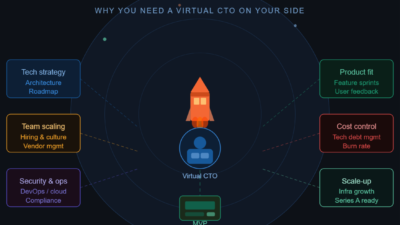
You built your MVP. Congrats — that’s genuinely hard work. But now, a bigger challenge appears. How do you take that early-stage product and turn it into something truly scalable? How do you make the right tech decisions without burning your runway? And how do you do all of this without a full-time CTO eating up half your salary budget? The answer, for a growing number of startups, is simple. They hire a Virtual CTO.

In this post, we’ll break down exactly what a Virtual CTO does, why they matter at the MVP stage, and how they help you scale without the chaos.


First, What Exactly Is a Virtual CTO?

Let’s clear this up right away.

A Virtual CTO — also called a CTO-as-a-Service or fractional CTO — is an experienced tech leader who works with your company on a part-time or contract basis. They’re not a full-time hire. Instead, they bring senior-level expertise exactly when and where you need it.

Think of them as your on-demand technology co-founder. They guide your tech strategy, review your architecture, manage your dev team, and help you make critical decisions — all without the overhead of a permanent C-suite hire.

For early-stage startups, this model is incredibly powerful. And here’s why.


The Problem With Scaling an MVP Alone

Building an MVP is one thing. Scaling it is a completely different game.

When you’re in the MVP phase, speed is everything. You cut corners, ship fast and validate quickly. That approach is exactly right for early-stage testing.

But then, something shifts. Users come in. Traffic grows. Features stack up. And suddenly, the quick fixes and shortcuts you relied on early on start breaking things. Your tech debt grows and system slows down. Your team struggles to keep up.

At this point, most founders face a tough choice. Do they hire a full-time CTO and spend $150,000–$250,000 a year on salary alone? Or do they muddle through, making costly tech decisions without the right expertise?

Neither option is ideal. And that’s exactly the gap a Virtual CTO fills.


What a Virtual CTO Actually Does for Your Startup

So, concretely, what does a Virtual CTO bring to the table? Quite a lot, actually.

They build a clear tech roadmap.

First and foremost, a Virtual CTO creates structure. They assess where your product is today. Then, they map out where it needs to go. Moreover, they help you prioritize features based on user needs, market demands, and technical feasibility — not just gut feel.

Without this roadmap, startups tend to drift. They build what feels urgent, not what’s actually important. As a result, they waste months and money on the wrong things.

They fix your architecture before it breaks you.

Early MVPs are rarely built to scale. That’s fine — they’re not supposed to be. However, as you grow, poor architecture becomes a serious liability.

A Virtual CTO audits your tech stack and spots the weak points. They redesign systems for scalability. They help you migrate from monolithic structures to microservices if needed. And they do all of this proactively — before things break in production.

They manage and mentor your dev team.

Great developers don’t always make great leaders. And as your team grows, leadership becomes just as important as code quality.

A Virtual CTO steps in to fill that gap. They run technical reviews and set coding standards. They help resolve conflicts within the team. Furthermore, they mentor junior developers, which means your overall team quality improves over time.

They help you choose the right tools and vendors.

Every startup faces a flood of technology choices. Which cloud provider should you use? Should you build or buy? Which third-party APIs make sense for your stack? These decisions seem small, but they compound significantly over time.

A Virtual CTO has seen these decisions play out dozens of times. Therefore, they guide you toward choices that are cost-effective, scalable, and aligned with your long-term goals.

They handle investor and board-level tech conversations.

If you’re raising a Series A or preparing for due diligence, your tech story matters enormously. Investors want to know that your architecture can handle growth. They want to understand your security posture. They want confidence in your engineering team.

A Virtual CTO can speak that language fluently. They prepare tech documentation, answer investor questions, and give your startup serious credibility in the room.


Virtual CTO vs Full-Time CTO: Which Is Right for You?

This is the question most founders eventually ask. So, let’s tackle it directly.

A full-time CTO makes sense when your product is live and growing fast, your engineering team exceeds 15–20 people, and you need daily, hands-on tech leadership. Additionally, it makes sense when you have the budget and the need for a dedicated leader in the C-suite.

On the other hand, a Virtual CTO is the better fit when you’re still validating your product or scaling from MVP. It also makes sense when your engineering team is small — typically under 10 people. Moreover, it’s ideal when you need strategic guidance but not daily management, or when you want to preserve budget for product and hiring.

For most startups between pre-seed and Series A, a Virtual CTO offers dramatically better ROI. You get the expertise without the full-time cost. And you can scale the engagement up or down as your needs change.


Key Signs You Need a Virtual CTO Right Now

Still not sure if it’s the right time? Look for these signals.

Your dev team is making architecture decisions you don’t fully understand. Your product is slowing down under growing user load. You’re about to raise funding and need to sharpen your tech narrative. You’re hiring developers but have no senior leader to set standards. Your MVP has launched but you’re not sure what to build next.

If any of these sound familiar, it’s time to bring in a Virtual CTO. Waiting too long is one of the costliest mistakes a startup can make.


The Real Cost of Not Having Tech Leadership

Let’s talk numbers for a moment.

Technical debt is expensive. According to industry research, poor tech decisions made early can cost 3–5x more to fix later. Furthermore, a single bad architecture choice — like choosing the wrong database or building a non-scalable microservice structure — can delay your product roadmap by months.

On top of that, hiring the wrong developers without proper oversight costs startups an average of 1.5x their annual salary in lost productivity and rehiring. And a security breach caused by poor oversight? That can end a startup entirely.

The math is straightforward. A Virtual CTO typically costs a fraction of a full-time hire. Yet, they prevent mistakes that cost multiples of that amount. It’s not a cost — it’s a return on investment.


How to Find the Right Virtual CTO for Your Startup

Not all Virtual CTOs are created equal. So, it’s worth knowing what to look for.

First, look for domain experience. A Virtual CTO who has worked in fintech, for example, will understand your compliance landscape better than a generalist.

Second, check for startup experience specifically. Building and scaling startups is very different from enterprise IT. You need someone who thinks fast and moves lean.

Third, ask for references. Talk to founders they’ve worked with before. Find out how they handled conflict, pressure, and rapid change.

Finally, ensure cultural fit. A Virtual CTO is a leadership partner. They need to mesh with your team, your values, and your pace.


Final Thoughts

Going from MVP to scalable product is one of the hardest transitions in the startup journey. There are so many decisions to make. So many ways to go wrong. And so much at stake.

That’s exactly why you shouldn’t do it alone.

A Virtual CTO brings the experience, structure, and clarity you need to move fast — without breaking things. They help you build smarter, scale faster, and grow with confidence.

Because the best startups don’t just build great products. They build great tech foundations. And that starts with having the right leader in the room.

Ready to scale? It might be time to make your first virtual hire.


Found this useful? Share it with a founder who’s still figuring out their tech strategy.

Read More:

Why Vcto is the Key to Early Stage Tech Stability Full Guide

Common Vcto Myths and the Strategic Truths Behind Them

The Ultimate 90 Day vcto Checklist for Every Founder

Common Vcto Myths and the Strategic Truths Behind Them

Myth One: A Vcto Is Just a Coder

Many people think a vcto is just a lead dev with a new title. This is a big myth that can hurt your firm. A vcto does not just write code for your app. Instead, they lead your whole tech plan and your team. You need him to think about the big picture and your growth. They look at how tech fits into your real business goals. For this reason, they are more like a boss than a worker. Therefore, you get high level leadership that a coder cannot give.

The truth is that he builds a bridge between your ideas and your tech. Specifically, they help you make smart choices that save you cash. They do not just fix bugs in your script. Consequently, they make sure your firm is ready for the long term. In addition, they talk to your board and your investors for you. This means they act as a true partner in your success. Thus, a vcto is a strategic asset for any startup head.

Common vcto Myths and the Strategic Truths Behind Them

Myth Two: Remote Means Out of Touch

Some bosses fear that a vcto will not know what is going on. They think being virtual means they are out of the loop. However, this is not true in our digital world today. He uses great tools to stay close to your team at all times. They join your daily calls and check your work frequently. Because of this, they often know more than a boss who is in the office. They see the data and the results with total clarity.

Transition words help us see how ahe stays connected to you. For example, they use video and chat to lead your devs every day. They also set up clear tracks for every task in your firm. This makes the work easy to see and easy to manage from anywhere. As a result, your team feels more supported and more focused. Furthermore, he brings a global view to your small startup. They know what the best firms in the world are doing right now. You get the best of both worlds with a vcto.

Myth Three: Only Tech Firms Need a Vcto

Another common myth is that only app firms need a vcto. This is a mistake that many non tech bosses make. In fact, every modern firm runs on tech today. If you have a site or a shop, you need him to stay safe. They ensure your data stays out of the hands of hackers. Therefore, they protect your brand and your customer trust. He also helps you pick the right tools to sell your goods online.

A vcto looks for ways to make your work much faster and easier. For instance, they might find a tool that does your chores for you. This frees up your time to focus on your real passion. In addition, they help you scale your systems as you get more fame. This prevents a crash when you have a big sale or a new launch. So, he is vital for any firm that wants to grow in a smart way. Truly, ahe is the best guard for your digital life.

Myth Four: A Vcto Is Too High in Cost

Cost is a major concern for many early stage startups. Some think a vcto is only for firms with a lot of gold. But the truth is that he is a very lean choice. You only pay for the time you actually need from them. This is much cheaper than hiring a full time head of tech. For this reason, you get elite skills at a price you can afford. You save on tax and health fees and office space too.

A vcto also helps you save money by stopping bad tech buys. They ensure you do not waste cash on tools that do not work. Because of this, he often pays for their own cost in a few months. They also help you raise more money by proving your tech is strong. Investors love to see him on your team list. Similarly, they help you plan your budget with total precision and care. Thus, a vcto is a smart financial move for your startup journey.


Frequently Asked Questions

1 Is a vcto as good as a full time CTO?

Yes, for most startups, he gives you the same level of skill. They provide the same strategy and leadership but with more flexibility for you.

2 Can a vcto help with my cloud security?

Absolutely, he makes sure your cloud is locked tight. They implement the best tools to guard your data from any digital threats or hacks.

3 How does a vcto manage a team they cannot see?

They use tools like Jira and Slack to track every task. He focuses on the results and the data to ensure the team is fast.

4 Does a vcto work for many firms at once?

Yes, he often helps a few firms at the same time. This is how they keep their skills sharp and their costs low for you.

5 Will a vcto stay with me for a long time?

You can keep him for as long as you need their help. Many firms keep them for years as a trusted part of their core team.

Read More:

The Ultimate 90 Day vcto Checklist for Every Founder

How to Use VCTO Insights for Software Ownership

How a vcto Prevents Costly Technical Mistakes: Full Guide

The Ultimate 90 Day vcto Checklist for Every Founder

Setting the Stage in the First Month

The first month for a vcto is all about a deep dive into your firm. They start by looking at every part of your tech stack and your team. You should expect a full tech audit as the first big task. This audit shows what works well and what needs a fast fix. For this reason, he talks to your devs to find their pain points. They also check your code for any hidden risks or old tools. Therefore, you get a clear view of your current health in a very short time.

A vcto also looks at your business goals to align them with your tech. Specifically, they want to know where you want to be in one year. If your tech does not match your vision, they will tell you right away. Consequently, you save time by not building the wrong features for your users. In addition, they check your cloud bills to find ways to save cash. This quick win proves the value of a vcto to your board. Thus, the first 30 days build a strong base for all your future growth.

The Ultimate 90 Day vcto Checklist for Every Founder

Building the Roadmap in the Second Month

Once the audit is done, he starts to build your long term map. This roadmap is a core task that shows every step of your tech journey. It lists the new tools you need and the old ones to drop. For instance, they might plan a move to a faster database to handle more users. This plan helps your team stay focused on the most vital tasks. Similarly, it gives you a clear budget for the next two quarters of work. You stay on track and on budget with a vcto.

Transition words help us see how he links the past to the future. For example, they take the gaps from the audit and turn them into goals. They also set up better ways for your team to work and communicate. This might include new rules for code reviews or faster daily meetings. As a result, your dev speed will start to go up in this second month. Furthermore, a vcto helps you pick the right staff to hire next. They know exactly which skills your team lacks to reach the next big milestone.

Scaling and Security in the Third Month

By the third month, he focuses on making your startup safe and strong. They implement a full security plan to guard your data from any hacks. This plan includes things like better passwords and regular data backups for the firm. Therefore, you can tell your users and investors that their data is totally safe. Also, he prepares your systems for a lot more traffic and load. They ensure that your site stays up even if you get a big surge of users. So, you are ready for a major marketing push.

He also starts to mentor your lead devs to help them grow as leaders. They share their deep knowledge to make your internal team much more capable. Because of this, your firm becomes less reliant on him for every small choice. Instead, they focus on the high level strategy that drives your brand forward. In addition, they help you prepare for any technical due diligence for future funding. They make sure all your docs and code are in top shape for any expert review. Truly, they turns your tech into a professional asset in just 90 days.


Frequently Asked Questions

1 What is the most vital task for a vcto in week one?

The first task is a deep audit of your current tech and team. This helps a vcto see the risks and the wins in your current setup right away.

2 How often should a vcto update the tech roadmap?

A vcto should check and update the map at least once every month. This ensures your tech always matches your changing business goals and market needs.

3 Can a vcto help with hiring new devs in the first 90 days?

Yes, a vcto often takes over the vetting and testing of new talent. They make sure you only hire people who fit your culture and your tech stack.

4 Does a vcto provide a report on cloud costs?

Yes, finding ways to lower your cloud bill is a key part of the first 90 days. A vcto can often save you enough cash to pay for their own fee.

5 When will I see a change in dev speed with a vcto?

You should see a clear lift in speed by the second month of work. This happens as a vcto removes the blocks that slow your team down every day.

Read More:

How to Use VCTO Insights for Software Ownership

How a vcto Prevents Costly Technical Mistakes: Full Guide

The Right Time to Hire a vcto for Your Technology Roadmap

The Right Time to Hire a vcto for Your Technology Roadmap

Deciding when to upgrade your technical leadership is a major milestone for any growing company. Many founders start by managing their own development teams or relying on a lead engineer. However, there comes a point where technical debt and strategic gaps begin to hinder growth. This is exactly when a business should consider hiring a vcto to provide high-level guidance. A vcto offers the expertise of a seasoned executive without the massive financial commitment of a permanent hire.

Identifying the specific triggers for this transition is essential for your success. If your current team is struggling to meet deadlines or if your technology stack feels outdated, you are likely ready for professional oversight. A vcto brings a fresh perspective to your existing processes and helps align your tools with your long-term goals. The following sections will detail the clear signs that your business is ready for this strategic move.

The Right Time to Hire a vcto for Your Technology Roadmap

Navigating Rapid Growth and Scalability Challenges

One of the most common reasons to hire a vcto is during a period of rapid expansion. When your user base grows quickly, your underlying infrastructure must be able to handle the increased load. If you notice frequent system crashes or slow performance, a vcto can step in to architect a more scalable solution. They ensure that your technology grows alongside your business rather than becoming a bottleneck.

Furthermore, a vcto helps you plan for future capacity needs before they become emergencies. They analyze your current system architecture and identify potential points of failure. By implementing automated scaling and robust cloud solutions, a vcto provides the stability your customers expect. This proactive approach prevents costly downtime and keeps your reputation intact during critical growth phases.

Bridging the Gap Between Business and Technology

Many entrepreneurs find themselves struggling to translate their business vision into technical requirements. If you feel like your developers and your management team are speaking different languages, a vcto is the perfect bridge. They possess the unique ability to understand market needs and turn them into actionable development roadmaps. This alignment ensures that every dollar spent on technology contributes directly to your bottom line.

A vcto also assists in high-level decision-making regarding software and vendor selection. Instead of choosing tools based on popularity, a vcto selects them based on your specific business objectives. They evaluate the return on investment for every new feature or platform you consider. This strategic oversight prevents wasteful spending on unnecessary technology and keeps your team focused on what truly matters for your brand.

Managing Technical Debt and Security Risks

As a company evolves, it often accumulates technical debt from quick fixes and outdated code. If your development team spends more time patching old bugs than building new features, you need a vcto. They create a plan to refactor critical systems and modernize your codebase. This investment in code quality reduces long-term maintenance costs and speeds up your overall development cycle.

Security is another area where a vcto provides invaluable protection. Smaller businesses are often targets for cyberattacks because they lack sophisticated security protocols. A vcto implements industry-standard security frameworks and ensures your data is encrypted and backed up. They also handle compliance requirements, which is vital if you are handling sensitive customer information or expanding into regulated industries.

Preparing for Fundraising or Mergers

If you are planning to seek investment or prepare for an acquisition, your technical foundation will be under intense scrutiny. Investors perform deep technical due diligence to ensure your product is built on a solid foundation. Hiring a vcto before you start the fundraising process allows you to clean up your documentation and prove your scalability. They act as a credible technical voice during meetings with potential stakeholders or buyers.

A vcto can also help you create a long-term technology vision that excites investors. They demonstrate that your company has a clear path forward and the leadership necessary to execute it. By having a vcto on your team, you signal to the market that you take your technical infrastructure seriously. This increased confidence often leads to better valuations and more successful funding rounds for your business.


Frequently Asked Questions

1 Is a vcto different from a regular consultant?

Yes, a vcto is a leadership role focused on long-term strategy and team management. A consultant is usually hired for a specific, short-term project or a single technical problem.

2 How does a vcto improve development speed?

By removing technical bottlenecks and implementing better agile processes, a vcto helps your team work more efficiently. They ensure that developers are focused on high-impact tasks rather than constant fire-fighting.

3 Can a startup afford a vcto?

Startups are actually the primary users of the vcto model. Because it is a part-time or contract-based role, it fits perfectly within the limited budgets of early-stage companies.

4 Will a vcto manage my existing developers?

Yes, a key responsibility of a vcto is to provide mentorship and oversight to your current engineering team. they help set coding standards and perform regular performance reviews.

5 Does a vcto work on-site or remotely?

The “v” in vcto stands for virtual, meaning they primarily work remotely. This allows you to hire the best talent from around the world regardless of your physical location.

Read More:

The vcto Hiring Checklist: Finding the Right Tech Partner

How Virtual CTO Navigate Technical Debt for New Founders?


Why Your Virtual CTO Prioritizes Quality Over Cost?

In 2026, many founders feel the temptation to build a product as cheaply as possible as a smart shortcut. However, this mindset is actually the most expensive tech strategy a business can adopt. Consequently, the initial savings you gain are quickly overshadowed by the compounding interest of technical debt. Therefore, hiring a Virtual CTO ensures you understand the true cost of cutting corners before you write your first line of code.

The Hidden Price of Technical Debt

First, you should recognize that low-cost development often results in a fragile foundation. Because cheap code is rarely documented or optimized, making even small changes becomes a massive undertaking later. For instance, adding a simple new feature might take weeks instead of days because the existing architecture is too messy to handle it. Additionally, you may find that your system cannot handle a sudden increase in users. As a result, you lose customers and revenue while your team scrambles to fix preventable bugs.

A Virtual CTO helps you avoid this downward spiral by setting high standards from day one. Moreover, they ensure that your developers follow a roadmap that keeps the system flexible. For example, they advocate for modular design and automated testing. Thus, your long-term maintenance costs remain predictable and low. In addition, they help you invest your budget into high-quality code that serves as a permanent asset rather than a temporary patch.

Why Your Virtual CTO Prioritizes Quality Over Cost?


Damage to Brand Reputation and User Trust

Next, you must consider the impact of a buggy product on your target audience. Specifically, if your application crashes frequently or has slow load times, users will move to a competitor immediately. Because trust is hard to build but very easy to break, a poor initial experience can permanently damage your brand. Furthermore, fixing a public-facing error is far more expensive than preventing it during the early development phase. Similarly, security vulnerabilities found in cheap code can lead to data breaches that carry heavy legal fines.

The Opportunity Cost of Constant Fixing

Furthermore, you should evaluate where your team’s time is actually going. Since a fix-later approach usually means your developers spend 80% of their time repairing old mistakes, they have no time to build new value. This is known as the opportunity cost of bad tech strategy. Moreover, your competitors who built a solid foundation will eventually outpace you because they can ship new features faster. Consequently, your business becomes stagnant because you are trapped in a cycle of maintenance rather than innovation.

Finally, when you eventually decide to fix the system, you often discover that a total rewrite is the only option. Specifically, trying to patch a fundamentally broken architecture is like trying to renovate a house with a crumbling foundation. Because a full rewrite requires you to pay for the same product twice, your cheap strategy becomes your biggest liability. Therefore, a Virtual CTO focuses on building right the first time to protect your future profit margins.

Why Quality Wins Every Time

To summarize, investing in high-quality leadership and code provides these essential benefits:

  • Faster Scaling: A solid architecture allows you to add thousands of users without the system breaking down.

  • Lower Long-Term Costs: High-quality code requires fewer developers to maintain, which saves you thousands in salary over time.

  • Better Developer Morale: Top-tier engineers want to work on clean, efficient systems rather than constantly fixing messy code.

  • Investor Confidence: Venture capitalists look for technical excellence during due diligence; cheap code is a major red flag.

  • Market Agility: When your foundation is strong, you can pivot your business model or add new services in record time.

Conclusion

In conclusion, the build-cheap-fix-later strategy is a dangerous trap that leads to wasted capital and missed opportunities. By prioritizing quality and strategic oversight from the beginning, you ensure that your technology is a catalyst for growth rather than a burden. Moreover, a Virtual CTO provides the expert guidance needed to balance speed with technical integrity. Therefore, invest in a strong foundation today to avoid the massive repair bills of tomorrow.

Frequently Asked Questions

1 What is the technical debt people talk about?

Technical debt is the future cost of choosing an easy, low-quality solution today instead of using a better approach that takes slightly longer.

2 How can a Virtual CTO identify technical debt?

They perform regular code audits and system reviews to find areas where the architecture is becoming fragile or inefficient.

3 Is it ever okay to build a quick and dirty MVP?

Yes, but only if you have a clear plan to refactor the code once you prove the concept to your users.

4 How do I explain the need for quality to stakeholders?

Show them the financial impact by comparing the cost of a one-time build versus the ongoing costs of constant bug fixes.

5 What is the most expensive part of a fix-later strategy?

Usually, it is the total rewrite of the platform, which effectively doubles your development costs and halts your growth for months.


Read More:

How Virtual CTO Navigate Technical Debt for New Founders?

How to choose the right Virtual CTO service provider?

How to choose the right Virtual CTO service provider?

Choosing the right Virtual CTO (vCTO) service provider is a pivotal decision that directly influences your long-term success. Consequently, you must approach this selection process with a high level of strategic thinking to ensure your technology scales at the same pace as your business. Furthermore, selecting the wrong partner can lead to expensive technical debt that eventually slows your growth. Therefore, this comprehensive guide will help you identify the best leadership for your technical team.

Understand Your Specific Technology Needs

First, you should identify the exact type of help your company requires at this current stage. Because every business is unique, vCTO providers often specialize in very different areas of organizational growth. For instance, some focus exclusively on early-stage startups that need a basic prototype. Meanwhile, other providers help mature companies that need to scale their existing infrastructure. Additionally, you might need someone to fix a messy codebase or someone to build a new product from scratch. As a result, knowing your specific goals will help you filter through many options quickly and efficiently.

Choosing the right Virtual CTO service provider involves looking for deep technical expertise and leadership. Moreover, a great provider must understand your specific industry and its unique regulatory challenges. For example, a fintech company has very different security needs than a simple retail shop or a lifestyle blog. Thus, you should ask for specific examples of how they have solved similar problems in the past. In addition, ensure they are comfortable with the latest AI tools, cloud platforms, and cybersecurity protocols.

How to choose the right Virtual CTO service provider?

Evaluate Communication and Strategic Alignment

Next, you must test how well the provider communicates complex ideas to non-technical stakeholders. Specifically, a Virtual CTO acts as a vital bridge between your business goals and your engineering team. Because of this role, they must be able to explain technical risks and opportunities in plain English. For example, if they only use technical jargon, you might struggle to make informed decisions about your budget. Similarly, they should be proactive in suggesting new ways to save money or increase operational efficiency.

Furthermore, you should check their availability and how they fit into your unique company culture. Since they will be a part of your executive leadership team, they need to be available when big decisions happen. However, most vCTOs work with multiple clients simultaneously, so you must define clear expectations for their time and focus. Consequently, a 30-day trial period is often the best way to see if the partnership actually works. Finally, always check their professional references to see how they handled high-pressure situations in previous roles.

Developing a Robust Technical Roadmap

A primary benefit of hiring a Virtual CTO is the creation of a clear and actionable technical roadmap. Specifically, this roadmap should align with your business milestones for the next twelve to twenty-four months. Because technology changes rapidly, your roadmap must be flexible enough to adapt to new market trends. For instance, your vCTO should help you decide when to migrate to a new server or when to integrate new software. Additionally, they should provide cost estimates for every major phase of development. Consequently, you will have a much clearer picture of your future financial requirements.

Furthermore, a great vCTO will help you build a culture of technical excellence within your internal team. Since they are seasoned leaders, they can mentor your junior developers and help them improve their coding standards. Moreover, they can establish better workflows, such as automated testing and continuous integration. As a result, your team will become more productive and produce higher-quality work over time. Therefore, the right provider does not just give advice but also elevates the skills of everyone around them.

Checklist for Selecting Your Virtual CTO

To make the process easier, you can use a simple checklist to compare different providers side by side. Each provider should meet these basic standards before you consider signing a long-term contract.

Selection Step What to Check? Why it Matters?
Industry Experience Do they understand your market? Prevents industry-specific errors.
Technical Skills Are they experts in your stack? Ensures high-quality code and architecture.
Communication Can they explain tech simply? Keeps stakeholders informed and aligned.
Availability Will they be there when needed? Prevents delays in critical decision-making.
Strategy Do they care about your growth? Aligns technology with business profit.

Conclusion and Best Practices

In conclusion, finding the right Virtual CTO service provider requires careful research and clear communication. By following these steps, you can find a partner who helps you build a strong and scalable technical foundation. Moreover, a great vCTO will save you significant time and money in the long run by avoiding common mistakes. Therefore, do not rush the process and always prioritize strategic alignment over flashy technical buzzwords. A successful partnership will turn your technology from a source of stress into a powerful engine for business growth.

Frequently Asked Questions

1 What does a Virtual CTO actually do for my business?

A Virtual CTO provides high-level technical leadership without the high cost of a full-time executive. Specifically, they handle long-term strategy, technical hiring, and complex technology roadmaps.

2 Is a Virtual CTO better than hiring a full-time CTO?

It depends on your current stage of growth and your available budget. For example, early-stage startups often prefer vCTOs because they are more cost-effective and offer greater flexibility.

3 How do I know if I truly need a Virtual CTO?

You likely need one if your developers lack clear direction or if you are struggling to make big technical decisions. Consequently, they provide the missing senior-level guidance your team needs.

4 What is the typical length of a Virtual CTO contract?

Many contracts are month-to-month to allow for flexibility, but most successful partnerships last for at least six months. Thus, it gives them enough time to make a real impact on your infrastructure.

5 Can a Virtual CTO help with my annual security audits?

Yes, they often oversee all security protocols and ensure your company stays compliant with modern industry standards. This reduces your risk of data breaches and legal issues.


Read More:

How to pick between a Virtual CTO and an In-House partner?

How a Virtual CTO stops your tech from failing today?

Does your new vcto keep Version 1 from breaking?