Refresh loader

Archive : Startup Technology

Home > Posts tagged Startup Technology

How vCTO Build Roadmaps for Business Growth

Growing a business without a clear tech strategy is risky. Many startups build products quickly, then struggle to scale them later. This is where a vCTO becomes incredibly valuable.

A vCTO, or virtual Chief Technology Officer, provides strategic technology leadership. Unlike a full-time executive, a vCTO works part-time or on contract. This makes expert guidance accessible to growing businesses.

Many founders focus heavily on product development early on. Long-term technology planning often gets overlooked in the process. Businesses face costly setbacks once they start scaling as a result.

Picture a company that grows from a hundred users to a hundred thousand within a year. Systems built for early traction often buckle under that pressure. They helps prevent this kind of sudden, painful failure.

This guide explains how they create scalable roadmaps that support growth. You will learn what these roadmaps include and why timing matters. By the end, you will understand how they help businesses avoid common scaling mistakes.

How vCTO Build Roadmaps for Business Growth_Ouriken

What Is a vCTO and Why Businesses Need One

A vCTO is an experienced technology leader who works remotely or part-time. They guide technical decisions without requiring a full-time salary. This model suits startups and small businesses well.

Hiring a full-time CTO can be expensive for early-stage companies. He offers similar expertise at a fraction of the cost. This makes high-level strategy accessible to businesses of nearly any size.

Many founders are skilled at building products but lack deep technical strategy experience. He fills this gap effectively. They bring years of experience from scaling other companies successfully.

This experience often spans multiple industries and company stages. A vCTO who has guided several startups through growth understands common pitfalls. They recognize warning signs long before they become serious problems.

Beyond cost savings, they offer flexibility too. Businesses can scale their involvement up or down as needed. This adaptability suits companies with changing technical demands.

A vCTO also brings an outside perspective. Internal teams sometimes struggle to see blind spots in their own systems. Fresh eyes often catch problems that insiders overlook entirely.

Without strategic technology leadership, businesses often build systems that cannot scale. Quick fixes pile up over time. Eventually, these shortcuts create expensive technical debt that slows growth significantly.

Technical debt rarely announces itself loudly at first. It shows up quietly, as slower releases and frustrated engineers. By the time leadership notices, the cost of fixing it has often multiplied.

Founders sometimes assume strategic technology planning can wait until the company is larger. In practice, the opposite is usually true. The earlier a scalable roadmap is built, the less expensive it is to follow.

How vCTOs Build Roadmaps Aligned With Business Growth

A scalable roadmap outlines how technology will support business goals over time. vCTOs create these roadmaps by analyzing current systems and future needs. This process ensures technology grows alongside the business itself.

vCTOs typically begin with a thorough technical audit, for example. They review existing infrastructure, software, and processes. This audit reveals weaknesses that could limit future growth.

This early audit often surprises founders. Systems that felt stable can hide serious gaps once examined closely. Identifying these gaps early prevents far more expensive fixes later.

vCTOs align technology plans with business goals directly next. If a company plans rapid expansion, the roadmap must support increased demand. This alignment prevents technology from becoming a bottleneck later.

Scalability also includes choosing the right tools and platforms. vCTOs evaluate whether current systems can handle future growth. Sometimes, this means recommending new platforms early, before problems arise.

Choosing the right platform is rarely about chasing the newest technology. A vCTO weighs cost, team familiarity, and long-term support together. The goal is sustainable scaling, not constant reinvention.

Security and compliance are also built into these roadmaps. As businesses grow, they often face stricter regulations. A vCTO ensures systems remain compliant while continuing to scale smoothly.

Roadmaps created by vCTOs are rarely static documents. Markets shift, and customer needs change continuously. Skilled vCTOs review and adjust roadmaps regularly to stay aligned with real conditions.

Budget planning forms a key part of this process as well. Technology investments need to match available resources realistically. A vCTO helps prioritize spending where it creates the most long-term value.

Key Components of a Scalable Technology Roadmap

Scalable roadmaps include several essential components. Each one plays a specific role in supporting long-term growth. Understanding these components helps businesses evaluate their own technology plans.

Infrastructure planning comes first. This includes servers, cloud services, and system architecture. A scalable infrastructure can handle growing user numbers without major disruptions.

Software architecture is equally important. Poorly structured code can slow development as a company grows. vCTOs often recommend modular, flexible architecture to support future changes easily.

Data management also plays a critical role. As businesses grow, they collect more data than ever before. A scalable roadmap includes plans for storing, securing, and using this data effectively.

Team structure matters too, even though it seems less technical. Scaling technology requires the right people in the right roles. vCTOs often advise on when and how to grow technical teams.

Risk management rounds out a strong roadmap. This includes cybersecurity, system reliability, and disaster recovery planning. Identifying risks early helps prevent costly failures down the road.

Integration planning deserves attention as well. Growing businesses often add new tools and platforms over time. A scalable roadmap ensures these systems work together smoothly, rather than creating chaos.

Together, these components create a roadmap that supports sustainable growth. Missing even one piece can create vulnerabilities later. This is why experienced vCTOs take a comprehensive approach.

A roadmap missing risk management, for instance, might look complete on paper. Reality often proves otherwise once an unexpected outage or breach occurs. Comprehensive planning protects the business long before any crisis begins.

Best Practices for Working With a vCTO

Successfully working with a vCTO requires clear communication and defined goals. Businesses should approach this relationship strategically. Following best practices ensures the partnership delivers real value.

Start by clearly defining your business goals first. He needs context to build an effective roadmap. Vague goals often lead to misaligned technology strategies.

Involve key stakeholders early in the planning process. Input from different departments ensures the roadmap reflects real business needs. This collaboration leads to stronger, more practical outcomes.

Marketing, sales, and operations teams often see different parts of the same problem. He who hears from all of them builds a more complete roadmap. Isolated planning tends to miss important details.

Set realistic timelines for implementation. Scalable roadmaps often involve gradual changes, not overnight transformations. Patience allows for thoughtful, sustainable progress.

Maintain regular check-ins with your vCTO. Technology needs evolve as businesses grow. Frequent communication keeps the roadmap relevant and effective over time.

Be open to recommendations, even uncomfortable ones. They often identify problems that internal teams may resist addressing. Trusting their expertise leads to better long-term outcomes.

Document decisions and progress throughout the process. Clear records help track what has worked and what has not. This documentation also supports future planning and onboarding of new team members.

Finally, treat this relationship as a partnership, not a one-time project. Ongoing collaboration produces far better results than a single roadmap delivered and forgotten.

Conclusion

They play a vital role in building scalable roadmaps aligned with business growth. From technical audits to long-term planning, their expertise helps businesses avoid costly mistakes. Companies that invest in strategic technology leadership often scale more smoothly and confidently.

Working with a vCTO does not require a massive budget or commitment. Many businesses start small and expand the relationship over time. As technology needs grow, having the right strategic guidance becomes increasingly valuable.

Growth always brings new technical challenges, no matter the industry. Having an experienced guide nearby turns those challenges into manageable steps. That guidance is exactly what a skilled vCTO provides.

Businesses that plan early, with the right support, tend to scale with far less stress. A clear roadmap turns uncertainty into a series of confident, well-timed decisions.

If your business is approaching a growth milestone, now is a good time to start the conversation. A vCTO can help map out the next stage before pressure forces rushed decisions.

The right roadmap, built early, can quietly save a business months of costly rework later on, and far more peace of mind along the way.

Frequently Asked Questions

1. What does a vCTO do?
A vCTO provides part-time or contract-based technology leadership, helping businesses build scalable roadmaps aligned with growth goals.

2. How is a vCTO different from a full-time CTO?
A vCTO offers similar strategic expertise but works flexibly, often part-time, making it more affordable for growing businesses.

3. When should a business hire a vCTO?
Businesses often benefit from a vCTO when scaling technology, facing complex decisions, or lacking in-house technical leadership.

4. What is included in a scalable roadmap?
A scalable roadmap typically includes infrastructure planning, software architecture, data management, team structure, and risk management.

5. Can small businesses afford a vCTO?
Yes. vCTO services are often flexible and scalable, making them accessible to small and growing businesses alike.

Read More:

How a VCTO Helps Startups Choose Technology

Why a vCTO Is Better Than Temporary IT Consulting

How a VCTO Helps Startups Choose Technology

Technology decisions shape the future of every business. Choose the wrong tools and you waste money, slow down teams, and fall behind competitors. Choose the right ones and your business scales faster with less friction. However, not every company can afford a full-time Chief Technology Officer. That is where a virtual CTO comes in. A VCTO gives businesses expert technology leadership without the cost of a permanent hire. This guide explores exactly how that works.

What Is a Virtual CTO?

A virtual CTO, also called a fractional CTO or on-demand CTO, is an experienced technology leader who works with a business on a part-time or contract basis. They bring the same strategic knowledge as a traditional CTO but at a fraction of the cost.

Virtual CTOs work across industries and company sizes. Startups use them to build their first technology roadmap. Growing businesses use them to manage digital transformation. Established companies use them during critical transitions or when evaluating new platforms.

Furthermore, a virtual CTO is not just a consultant who gives advice. They roll up their sleeves and work alongside internal teams. They assess current systems, identify gaps, recommend solutions, and guide implementation. As a result, technology decisions become more informed and more aligned with business goals.

How a VCTO Helps Startups Choose Technology

How a VCTO Evaluates Your Current Technology Stack

Before recommending new tools, a virtual CTO takes a deep look at what a business already uses. This evaluation is called a technology audit or tech stack assessment.

During this process, the virtual CTO maps out every tool, platform, and system in use. They assess how well each one performs, how much it costs, and whether it integrates with other systems. Additionally, they identify redundancies, where businesses are paying for multiple tools that do the same thing.

This audit also uncovers hidden risks. Outdated software, unsupported platforms, and poor security configurations are common findings. Knowing where these risks exist allows businesses to address them before they cause serious problems.

Moreover, a virtual CTO looks at how teams actually use the technology. Powerful tools only add value when people use them correctly. Adoption gaps are a common problem that a skilled virtual CTO identifies and addresses early.

The Technology Selection Process

Choosing the right technology is not about picking the most popular or most expensive option. It is about finding the best fit for the business’s specific needs, budget, and goals. A virtual CTO brings a structured approach to this decision.

First, they define the requirements. What problem needs to be solved and What does the ideal outcome look like? What constraints exist around budget, timeline, and integration? These questions form the foundation of the selection process.

Second, they research available options. The technology market changes quickly. A seasoned virtual CTO stays current with new tools, platforms, and emerging trends. They know which vendors are reliable and which ones overpromise. Consequently, businesses avoid costly mistakes from choosing immature or poorly supported solutions.

Third, they evaluate options against the defined criteria. This involves demos, proof-of-concept tests, and security assessments. Additionally, the virtual CTO checks vendor references and reviews support quality before making a recommendation.

Finally, they present a clear recommendation with reasoning. Business leaders receive a concise explanation of why one option is better than another. This makes it easier to align stakeholders and move forward with confidence.

Technology Integration: Where Most Businesses Struggle

Selecting the right technology is only half the battle. Integration is where many businesses lose time and money. Poorly integrated systems create data silos, workflow bottlenecks, and frustrated employees.

A virtual CTO leads the integration process with a clear plan. They define how new tools will connect with existing systems. They work with vendors, developers, and internal teams to ensure everything functions as expected. Furthermore, they set realistic timelines and milestones to keep the project on track.

Data migration is often the most challenging part of technology integration. Moving data from an old system to a new one carries risk. A VCTO ensures this process is handled carefully. They set up testing environments, run trial migrations, and verify data integrity before going live.

Change management is another critical factor. New technology only delivers results when people use it effectively. A VCTO develops adoption plans, organizes training sessions, and communicates changes clearly. Similarly, they address resistance from team members who are comfortable with old systems.

Aligning Technology With Business Strategy

Technology should always serve the business strategy, not the other way around. This is one of the most important contributions a virtual CTO makes. They ensure that every technology decision connects to a business objective.

For example, if a company wants to grow its customer base, the virtual CTO identifies tools that support sales automation, customer engagement, and data analytics. If the goal is to reduce operational costs, they look at automation platforms and process optimization tools.

Additionally, a VCTO helps build a technology roadmap. This is a long-term plan that maps out which technologies will be adopted, when, and why. It gives leadership a clear view of where the business is headed technologically. As a result, teams can plan resources and budgets more effectively.

The roadmap also prevents reactive technology decisions. Without a plan, businesses often buy tools in response to immediate problems without considering long-term fit. A virtual CTO helps avoid this trap by encouraging proactive, strategic thinking.

The Cost Advantage of a VCTO

Hiring a full-time CTO is expensive. Salaries for senior technology leaders often exceed six figures annually. Startups and small businesses rarely have that budget. However, they still need expert technology guidance to grow and compete.

A virtual CTO offers the same expertise at a much lower cost. Businesses pay only for the time and engagement they need. This flexibility is valuable, especially during periods of rapid change or specific technology projects.

Moreover, the return on investment from a virtual CTO is measurable. Better technology decisions reduce wasted spending. Faster integration means teams reach full productivity sooner. Furthermore, stronger security and more reliable systems reduce costly disruptions.

For growing businesses, the VCTO model scales naturally. As needs grow, the level of engagement can increase. When a company reaches the point where a full-time CTO is justified, the VCTO has often already built the foundation for a strong hire.

Conclusion

Technology decisions are too important to make without expert guidance. A virtual CTO brings the experience, objectivity, and strategic thinking that businesses need. They evaluate current systems, select the right tools, and lead successful integrations. Most importantly, they align technology with business goals so every investment drives real results. For any business looking to grow smarter and move faster, a virtual CTO is one of the most valuable assets available.

Frequently Asked Questions

1. What does a virtual CTO do exactly?
A virtual CTO provides part-time or contract-based technology leadership. They evaluate existing systems, recommend new tools, manage technology integrations, and align tech strategy with business goals.

2. How is a virtual CTO different from an IT consultant?
A virtual CTO takes a strategic leadership role, not just a technical advisory one. They make decisions, manage teams, and own outcomes. An IT consultant typically advises on specific technical problems without taking ongoing leadership responsibility.

3. What types of businesses benefit most from a virtual CTO?
Startups, small and mid-size businesses, and companies undergoing digital transformation benefit most. They need expert tech leadership but cannot yet justify the cost of a full-time CTO hire.

4. How much does a virtual CTO typically cost?
Costs vary based on engagement level and experience. Many virtual CTOs work on a retainer or project basis. Rates are significantly lower than a full-time executive salary while still providing high-level expertise.

5. How do I know if my business needs a virtual CTO?
If your business is making major technology decisions without expert leadership, struggling with system integration, or spending money on tools that do not deliver results, a virtual CTO can provide immediate value.

Read More:

Why a vCTO Is Better Than Temporary IT Consulting

How vCTO Makes Tech Strategy a Business Asset

Can a Virtual CTO Replace a Full-Time One: Full Guide

You built your MVP. Congrats — that’s genuinely hard work. But now, a bigger challenge appears. How do you take that early-stage product and turn it into something truly scalable? How do you make the right tech decisions without burning your runway? And how do you do all of this without a full-time CTO eating up half your salary budget? The answer, for a growing number of startups, is simple. They hire a Virtual CTO.

In this post, we’ll break down exactly what a Virtual CTO does, why they matter at the MVP stage, and how they help you scale without the chaos.


First, What Exactly Is a Virtual CTO?

Let’s clear this up right away.

A Virtual CTO — also called a CTO-as-a-Service or fractional CTO — is an experienced tech leader who works with your company on a part-time or contract basis. They’re not a full-time hire. Instead, they bring senior-level expertise exactly when and where you need it.

Think of them as your on-demand technology co-founder. They guide your tech strategy, review your architecture, manage your dev team, and help you make critical decisions — all without the overhead of a permanent C-suite hire.

For early-stage startups, this model is incredibly powerful. And here’s why.


The Problem With Scaling an MVP Alone

Building an MVP is one thing. Scaling it is a completely different game.

When you’re in the MVP phase, speed is everything. You cut corners, ship fast and validate quickly. That approach is exactly right for early-stage testing.

But then, something shifts. Users come in. Traffic grows. Features stack up. And suddenly, the quick fixes and shortcuts you relied on early on start breaking things. Your tech debt grows and system slows down. Your team struggles to keep up.

At this point, most founders face a tough choice. Do they hire a full-time CTO and spend $150,000–$250,000 a year on salary alone? Or do they muddle through, making costly tech decisions without the right expertise?

Neither option is ideal. And that’s exactly the gap a Virtual CTO fills.


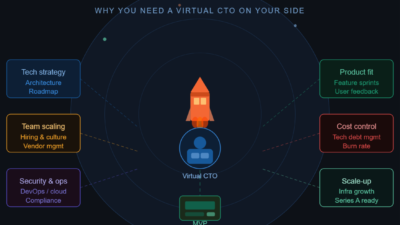
What a Virtual CTO Actually Does for Your Startup

So, concretely, what does a Virtual CTO bring to the table? Quite a lot, actually.

They build a clear tech roadmap.

First and foremost, a Virtual CTO creates structure. They assess where your product is today. Then, they map out where it needs to go. Moreover, they help you prioritize features based on user needs, market demands, and technical feasibility — not just gut feel.

Without this roadmap, startups tend to drift. They build what feels urgent, not what’s actually important. As a result, they waste months and money on the wrong things.

They fix your architecture before it breaks you.

Early MVPs are rarely built to scale. That’s fine — they’re not supposed to be. However, as you grow, poor architecture becomes a serious liability.

A Virtual CTO audits your tech stack and spots the weak points. They redesign systems for scalability. They help you migrate from monolithic structures to microservices if needed. And they do all of this proactively — before things break in production.

They manage and mentor your dev team.

Great developers don’t always make great leaders. And as your team grows, leadership becomes just as important as code quality.

A Virtual CTO steps in to fill that gap. They run technical reviews and set coding standards. They help resolve conflicts within the team. Furthermore, they mentor junior developers, which means your overall team quality improves over time.

They help you choose the right tools and vendors.

Every startup faces a flood of technology choices. Which cloud provider should you use? Should you build or buy? Which third-party APIs make sense for your stack? These decisions seem small, but they compound significantly over time.

A Virtual CTO has seen these decisions play out dozens of times. Therefore, they guide you toward choices that are cost-effective, scalable, and aligned with your long-term goals.

They handle investor and board-level tech conversations.

If you’re raising a Series A or preparing for due diligence, your tech story matters enormously. Investors want to know that your architecture can handle growth. They want to understand your security posture. They want confidence in your engineering team.

A Virtual CTO can speak that language fluently. They prepare tech documentation, answer investor questions, and give your startup serious credibility in the room.


Virtual CTO vs Full-Time CTO: Which Is Right for You?

This is the question most founders eventually ask. So, let’s tackle it directly.

A full-time CTO makes sense when your product is live and growing fast, your engineering team exceeds 15–20 people, and you need daily, hands-on tech leadership. Additionally, it makes sense when you have the budget and the need for a dedicated leader in the C-suite.

On the other hand, a Virtual CTO is the better fit when you’re still validating your product or scaling from MVP. It also makes sense when your engineering team is small — typically under 10 people. Moreover, it’s ideal when you need strategic guidance but not daily management, or when you want to preserve budget for product and hiring.

For most startups between pre-seed and Series A, a Virtual CTO offers dramatically better ROI. You get the expertise without the full-time cost. And you can scale the engagement up or down as your needs change.


Key Signs You Need a Virtual CTO Right Now

Still not sure if it’s the right time? Look for these signals.

Your dev team is making architecture decisions you don’t fully understand. Your product is slowing down under growing user load. You’re about to raise funding and need to sharpen your tech narrative. You’re hiring developers but have no senior leader to set standards. Your MVP has launched but you’re not sure what to build next.

If any of these sound familiar, it’s time to bring in a Virtual CTO. Waiting too long is one of the costliest mistakes a startup can make.


The Real Cost of Not Having Tech Leadership

Let’s talk numbers for a moment.

Technical debt is expensive. According to industry research, poor tech decisions made early can cost 3–5x more to fix later. Furthermore, a single bad architecture choice — like choosing the wrong database or building a non-scalable microservice structure — can delay your product roadmap by months.

On top of that, hiring the wrong developers without proper oversight costs startups an average of 1.5x their annual salary in lost productivity and rehiring. And a security breach caused by poor oversight? That can end a startup entirely.

The math is straightforward. A Virtual CTO typically costs a fraction of a full-time hire. Yet, they prevent mistakes that cost multiples of that amount. It’s not a cost — it’s a return on investment.


How to Find the Right Virtual CTO for Your Startup

Not all Virtual CTOs are created equal. So, it’s worth knowing what to look for.

First, look for domain experience. A Virtual CTO who has worked in fintech, for example, will understand your compliance landscape better than a generalist.

Second, check for startup experience specifically. Building and scaling startups is very different from enterprise IT. You need someone who thinks fast and moves lean.

Third, ask for references. Talk to founders they’ve worked with before. Find out how they handled conflict, pressure, and rapid change.

Finally, ensure cultural fit. A Virtual CTO is a leadership partner. They need to mesh with your team, your values, and your pace.


Final Thoughts

Going from MVP to scalable product is one of the hardest transitions in the startup journey. There are so many decisions to make. So many ways to go wrong. And so much at stake.

That’s exactly why you shouldn’t do it alone.

A Virtual CTO brings the experience, structure, and clarity you need to move fast — without breaking things. They help you build smarter, scale faster, and grow with confidence.

Because the best startups don’t just build great products. They build great tech foundations. And that starts with having the right leader in the room.

Ready to scale? It might be time to make your first virtual hire.


Found this useful? Share it with a founder who’s still figuring out their tech strategy.

Read More:

Why Vcto is the Key to Early Stage Tech Stability Full Guide

Common Vcto Myths and the Strategic Truths Behind Them

The Ultimate 90 Day vcto Checklist for Every Founder