

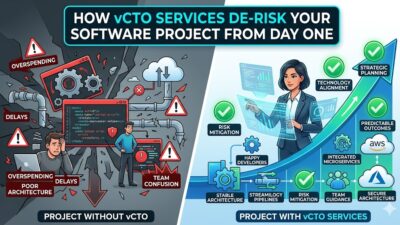
Software projects fail all the time. In fact, research from the Standish Group shows that roughly 66% of technology projects fail or get significantly delayed. Bad architecture, unclear requirements, wrong tech choices — these are the most common culprits. However, there is a powerful solution that many businesses overlook: vCTO services.
A virtual CTO (vCTO) gives your project the strategic technology leadership it needs — without the cost of a full-time C-suite hire. Moreover, they step in at exactly the right moment: day one.
What Are vCTO Services?
A vCTO is an experienced technology leader who works with your business on a fractional or contract basis. They bring CTO-level expertise to guide your software architecture, team structure, vendor selection, and technology strategy.
Unlike a full-time CTO, a vCTO can start in days, not months. Furthermore, you only pay for the expertise you need, when you need it. This flexibility makes vCTO services ideal for startups, scale-ups, and established businesses launching new tech products.
vCTO services typically cover technical due diligence, architecture reviews, team building, technology roadmapping, and agile delivery oversight. Additionally, many vCTOs bring deep industry experience in specific sectors like fintech, healthtech, or ecommerce.

Why Software Projects Fail Without Expert Tech Leadership
The biggest risk in any software project is making the wrong decisions early. For example, choosing the wrong database architecture might be invisible for months — but eventually costs enormous time and money to fix.
Without senior tech leadership, development teams often build what they are told rather than what the business actually needs. Consequently, features get built that users never use, while critical functionality gets missed.
Furthermore, without proper oversight, technical debt accumulates fast. Code quality drops. Security vulnerabilities creep in. Before long, the system becomes difficult to maintain and impossible to scale. A vCTO prevents all of this from happening in the first place.
Day One Impact: What a vCTO Does Immediately
The first 30 days of a software project set the tone for everything that follows. Therefore, having a vCTO engaged from the very start is transformative. Here is what typically happens on day one.
First, the vCTO conducts a technical discovery session. They ask hard questions about business goals, user needs, and technical constraints. As a result, the team gets clarity that prevents weeks of wasted work later on.
Second, the vCTO reviews any existing architecture plans or codebases. They flag risks immediately — before a single line of new code is written. Additionally, they define the technology stack and infrastructure approach based on your specific needs, not generic best practices.
Third, they establish engineering standards, workflows, and quality gates. Consequently, every developer on the team knows exactly what good looks like — from the very first sprint.
Architecture and Technology Decisions
One of the most valuable contributions a vCTO makes is in architecture decisions. These choices — monolith vs microservices, cloud provider, database type, API design — define the long-term cost and scalability of your product.
A vCTO brings pattern recognition that only comes from building many systems over many years. They know which shortcuts cause problems later. Moreover, they know which emerging technologies are genuinely useful and which are just hype.
For example, a startup building a customer-facing app might be tempted to build microservices from day one. However, an experienced vCTO would likely recommend starting with a well-structured monolith and refactoring later. That decision alone can save months of unnecessary complexity.
Vendor and Partner Selection
Most software projects rely on third-party vendors, SaaS tools, and development partners. Choosing the wrong ones is costly. A vCTO applies rigorous due diligence to every vendor selection decision.
They know what questions to ask, what red flags to look for, and what contracts to avoid. Additionally, they have often worked with — or heard of — the vendors you are considering. This lived experience is invaluable when evaluating proposals.
Furthermore, he can help you structure development partnerships to protect your IP, maintain code quality, and avoid lock-in. These protections are hard to put in place after a vendor relationship has started.
Team Building and Engineering Culture
Building the right engineering team is one of the hardest parts of any tech project. A vCTO helps you define the roles you actually need — not the roles that sound impressive on paper.
They can lead technical interviews, set coding standards, and onboard new developers effectively. Moreover, they help establish an engineering culture built on collaboration, quality, and continuous improvement.
For non-technical founders, this guidance is especially valuable. It removes the uncertainty that comes from not knowing whether your engineers are doing good work. Consequently, you can focus on the business while trusting the tech is in good hands.
Ongoing Risk Management
A vCTO does not just reduce risk on day one — they manage it continuously throughout the project. Regular architecture reviews, code quality audits, and sprint retrospectives all contribute to a healthier delivery process.
Additionally, he acts as an early warning system. They spot problems before they become crises. Whether it is a performance bottleneck, a security gap, or a team communication issue, they address it quickly and decisively.
Furthermore, they keep the technical roadmap aligned with the business strategy. As priorities shift — which they always do — he ensures the tech direction adjusts accordingly without causing chaos.
The Cost Comparison: vCTO vs Full-Time CTO
A full-time CTO in a major market costs between $200,000 and $400,000 per year in salary alone. Add benefits, equity, and recruiting costs, and the total rises substantially. Moreover, hiring the wrong CTO is one of the most expensive mistakes a startup can make.
By contrast, his services typically cost between $5,000 and $20,000 per month — depending on scope and engagement level. You get senior expertise on demand. Additionally, you avoid the risk of a bad full-time hire.
For early-stage companies, this flexibility is essential. As your needs grow, your vCTO engagement can scale with them. Consequently, you always have the right level of tech leadership for your current stage.
When to Bring in a vCTO
The best time to engage a vCTO is before you start building. However, it is never too late. Many businesses bring him to rescue a struggling project, audit an existing codebase, or prepare for a major new feature build.
In conclusion, vCTO services offer one of the highest-ROI investments a technology business can make. They bring clarity, quality, and confidence to software projects that would otherwise be riddled with risk. From day one, a great vCTO makes your project smarter, safer, and far more likely to succeed.
Read More:
Why Virtual CTO Services Myths Are Costing You Big