Refresh loader

Category : Application Development

Home > Archive for Application Development (Page 2)

Microsoft Loop Explained: A Game-Changer for Collaboration

Microsoft Loop: A Collaboration Revolution

Modern work, indeed, demands seamless teamwork. However, traditional tools often create silos. Documents sit in one place, chat in another. This fragmentation, consequently, slows everyone down. Conversely, Microsoft Loop offers a fresh approach. It is, therefore, a truly game-changing platform. This new tool redefines how teams work together.

What exactly is Microsoft Loop, then? Essentially, it is a flexible canvas. It combines components, pages, and workspaces. Therefore, it brings content and people into one space. These “Loop components” are key. They are live, portable pieces of content. For instance, a checklist or a table. Furthermore, they sync everywhere instantly. Thus, collaboration becomes fluid and dynamic. This makes teamwork much more efficient.


Understanding Loop Components: The Core Innovation

Loop components are, by and large, the heart of Loop. They are small, interactive elements. You can share them easily across apps. For example, use them in Teams or Outlook. A component might be a paragraph of text. Similarly, it could be a task list for your team. Even a dynamic table can be a component. The magic, however, is their live nature.

Whenever someone edits a component, it updates. This update happens everywhere it exists. Therefore, everyone always sees the latest version. This prevents version control headaches. Furthermore, it eliminates endless email threads. You no longer need to send updated attachments. Instead, changes appear automatically. This makes real-time collaboration truly effortless. Moreover, these components are highly portable. You can copy and paste them freely. They maintain their live sync wherever they go. This allows for incredibly flexible work.
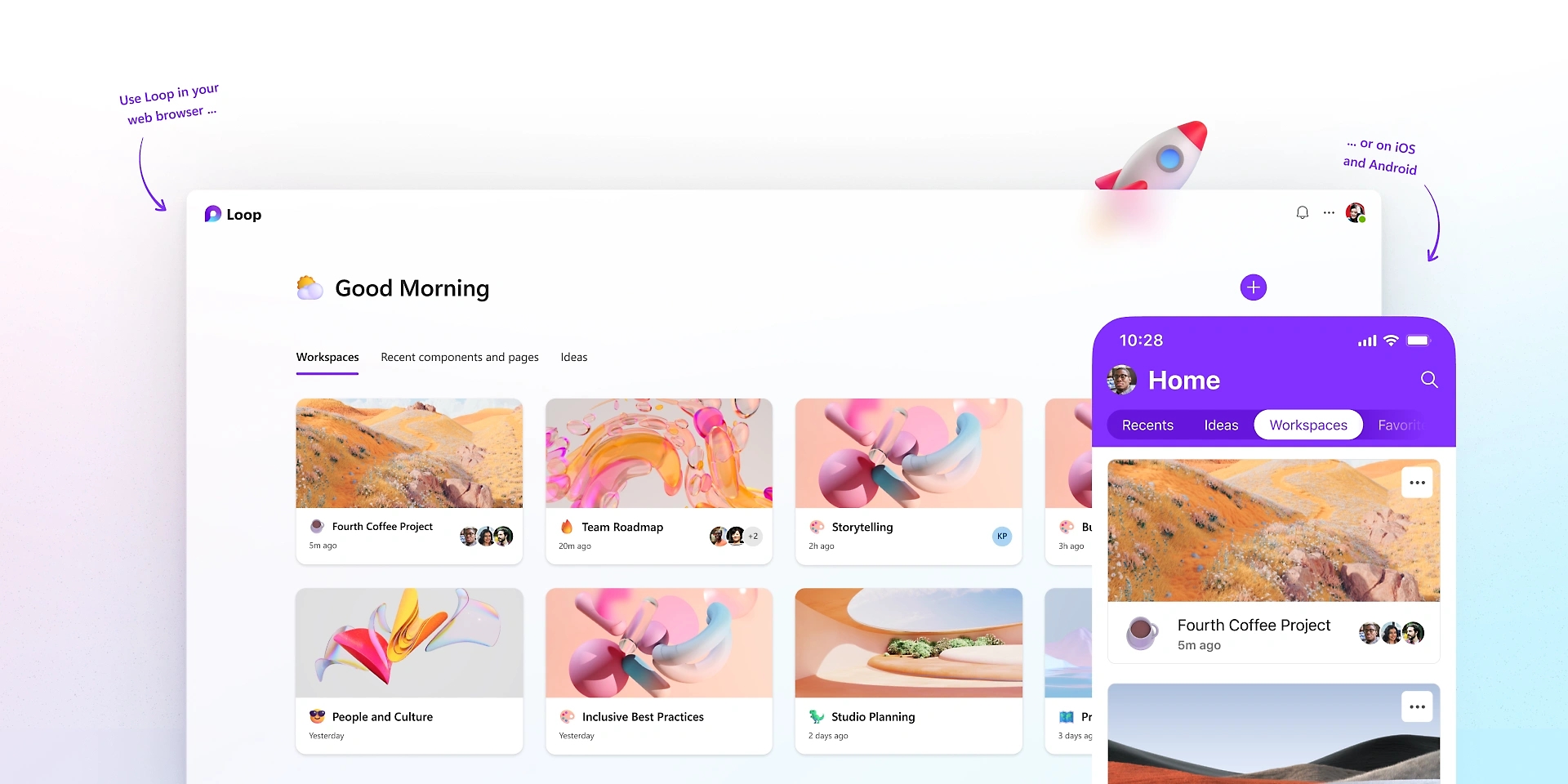

Image of Microsoft Loop

Loop Pages: The Flexible Canvas

Loop pages, consequently, serve as flexible canvases. They are dedicated spaces for thinking. Here, teams can organize all components. A page is, therefore, a place for collective ideas. You can start with a blank page easily. Then, you add various components as needed. For instance, drop in a task list component. Similarly, add a paragraph for notes. You can even include a progress tracker.

These pages are, in fact, highly adaptive. They grow with your project’s needs. You can easily drag and drop elements. Rearranging content is simple and quick. Furthermore, pages support rich media content. Include images, links, or even videos. The goal is to capture all relevant information. This ensures everything stays in one logical place. Therefore, Loop pages create a centralized hub. It consolidates all project assets effectively. This greatly enhances project visibility. Consequently, your team remains perfectly aligned.


Loop Workspaces: Your Project’s Home

Loop workspaces, by the same token, are project homes. They are shared online environments. Here, teams organize all their pages. A workspace, therefore, holds related project content. For example, a marketing campaign needs its own workspace. Similarly, a product development project gets one too. Workspaces bring together all relevant pages. They help group interconnected information together.

Each workspace has its own unique structure. You can customize it for your team. Access control is also managed easily. Decide who can view or edit content. This ensures data security and privacy. Furthermore, workspaces facilitate team oversight. Leaders can quickly see all ongoing projects. They monitor progress across different pages. Therefore, Loop workspaces provide a clear overview. They simplify project management greatly. Consequently, they foster structured, efficient collaboration.


Integrating Loop with Microsoft 365

Microsoft Loop, in fact, integrates deeply. It works seamlessly within Microsoft 365. This integration is a major advantage. Components function across different applications. For instance, use them in Microsoft Teams. You can share a task list in a chat. Your team updates it right there. The changes reflect everywhere instantly. This includes the original Loop page.

Similarly, use components in Outlook emails. Embed a live voting table in a message. Recipients vote directly within the email. Moreover, the results update automatically. This eliminates constant email chains. Furthermore, it streamlines decision-making processes. Loop also connects with Word and OneNote. This ensures content consistency across tools. Therefore, Loop extends the power of 365. It makes all your apps more interactive. Consequently, it creates a truly connected work ecosystem.


Real-Time Co-creation and Feedback

Loop greatly enhances real-time collaboration. It allows multiple users to edit simultaneously. Everyone sees changes as they happen, therefore. This fosters a highly interactive environment. For example, brainstorm ideas together instantly. Each team member contributes their thoughts. The page updates for everyone right away. This accelerates the creative process greatly.

Furthermore, feedback loops become much faster. You can get instant input on content. Colleagues highlight sections for review. They add comments directly to components. These comments are also live and trackable. Therefore, revisions are quick and efficient. This reduces project timelines significantly. Moreover, it ensures all voices are heard. Microsoft Loop makes collaboration truly responsive. It transforms feedback into a fluid conversation. Consequently, it promotes faster project completion.


Use Cases: Where Loop Shines Brightly

Microsoft Loop shines in many work scenarios. Consider project management first. Teams track tasks and progress efficiently. A shared checklist updates for everyone. Deadlines are clearly visible to all. Similarly, it excels in meeting management. Create a live agenda for every meeting. Attendees add notes and action items directly. These updates are accessible afterwards.

Furthermore, brainstorming sessions benefit immensely. Teams co-create ideas on a shared page. Each person contributes to the canvas. No ideas are lost or forgotten. Moreover, content creation becomes truly collaborative. Draft documents or presentations together. Live components ensure everyone works on the same version. Therefore, Loop boosts productivity everywhere. It provides a unified workspace for diverse tasks. Consequently, it solves many common collaboration challenges.


The Future of Hybrid Work with Loop

Hybrid work is the new standard, clearly. Teams work from various locations. They often have different time zones, too. This setup presents unique communication challenges. Microsoft Loop, however, bridges these gaps easily. It creates a persistent, shared workspace. Remote and in-site workers access the same content. They contribute whenever it suits them best.

Live components ensure consistent information. Everyone stays updated, regardless of location. This minimizes misunderstandings and delays. Furthermore, it fosters a sense of inclusion. All team members contribute equally to the project. Their input is visible and valued. Therefore, Loop supports a flexible work culture. It adapts to different schedules seamlessly. Consequently, it strengthens teamwork in any environment.


How Loop Differs from Existing Tools

You might wonder about other tools. How does Loop stand apart, then? It is more than just a document editor. Also, it is more than just a chat platform. Loop combines features from many places. It draws from wikis, documents, and messaging. The key difference is the “live component.” This element is unique to Loop.

Other tools offer real-time editing, certainly. However, their content is often static. It is fixed within one document or app. Loop components are truly portable. They maintain their live state everywhere. This fluidity is a game-changer. Furthermore, the workspace concept is distinct. It organizes pages and components logically. Therefore, Microsoft Loop offers a novel approach. It creates a truly dynamic, interconnected system. Consequently, it provides a unique collaboration experience.


Getting Started with Microsoft Loop

Beginning with Loop is quite straightforward. First, look for Loop in your Microsoft 365. It might be accessible through Teams or Outlook. You can also visit https://www.google.com/search?q=loop.microsoft.com directly. Then, create your very first workspace. Give it a meaningful and clear name. Next, start adding new pages to your workspace. Each page can serve a different purpose.

Finally, begin populating pages with components. Try a simple task list component first. Share it with your team members easily. See how it updates in real time for everyone. Experiment with different component types. Explore the various templates available to you. Therefore, starting small is a great strategy. Gradually integrate Loop into your daily workflow. Consequently, you will discover its true power.


Benefits for Different Roles

Microsoft Loop offers benefits across many roles. Project managers track progress better. They visualize tasks and deadlines clearly. Team leads can foster better engagement. They create spaces for open collaboration. Individual contributors, likewise, gain efficiency. They access all needed information in one place. Developers use it for shared code snippets. Marketers create campaigns with live updates.

Sales teams track client interactions effectively. HR departments manage onboarding processes. Even educators can use it for group projects. Students collaborate on shared assignments easily. Therefore, Loop enhances productivity for everyone. It adapts to specific departmental needs. Consequently, it streamlines workflows for diverse professionals.


The Path Ahead for Microsoft Loop

Microsoft Loop is still evolving, naturally. Microsoft continues to add new features. They listen to user feedback actively. Expect more integrations in the future. It will likely connect with more third-party apps. This will further extend its overall reach. Performance enhancements are also expected. The user experience will only improve over time.

Therefore, Loop represents a significant investment. It shows Microsoft’s commitment to collaboration. The goal is to simplify complex teamwork. It aims to empower hybrid and remote teams. Consequently, Loop will become a cornerstone. It will shape the future of modern work. Thus, it truly is a game-changer for digital collaboration.

Frequently Asked Questions (FAQs)

1. What is the fundamental difference between Loop and OneNote?

OneNote, indeed, is primarily for personal notes. Conversely, Loop is built for dynamic teamwork. Loop’s content is portable and live. For example, a Loop component updates everywhere. OneNote content, however, stays fixed within its own page. Thus, Microsoft Loop offers true cross-app fluidity.

2. Does Loop replace existing Microsoft 365 apps like Teams or Word?

No, not at all, quite the opposite. Loop enhances these other apps. For instance, you use Loop components inside Teams. It brings live content into those conversations. Microsoft Loop is, therefore, a complementary tool. It makes the entire 365 ecosystem more dynamic.

3. Where can I use Loop components currently?

Currently, you can use components in several places. This includes Microsoft Teams chat messages. You can also use them in Outlook emails. Furthermore, you can find them within the main Loop app. Microsoft is constantly adding more locations, however.

4. Are Loop components secure, especially when shared externally?

Yes, Loop components are secure, absolutely. They inherit security settings automatically. This is based on where the component is hosted. Furthermore, sharing is managed through your organization’s settings. Access control is always clearly defined. Therefore, Microsoft Loop maintains robust enterprise security.

5. Can I use Loop if my team members are not on Microsoft 365?

Generally speaking, all editors need a Microsoft account. They need one to access and edit components. However, you can share components with guests. This depends on your specific tenant settings. Microsoft Loop works best within the 365 ecosystem, therefore.

Also Read: The Future of Docs: Google’s Emoji Reactions Explained

Google Drive Smart Search: How AI Finds Your Files

Do you ever feel like Google Drive just knows what you’re looking for? Actually, it’s not a coincidence; instead, it’s the result of some incredibly smart technology. Essentially, this system uses artificial intelligence (AI) to find files before you even start looking for them. This smart search feature has certainly changed how we find our documents, shifting from simple keyword searches to something truly intelligent. For instance, the AI acts like a personal assistant, always working to make your life easier. This amazing capability is a major part of its success.

This advanced technology saves us lots of time, of course. For example, it helps eliminate the frustrating process of manually searching through folders. Likewise, the AI works in the background, consistently learning your habits and predicting your needs. As a result, it analyzes not just the file names, but also the actual content inside. This ultimately provides a personalized and surprisingly intelligent search experience. Truly, this AI-powered function makes finding what you need on Google Drive simpler and faster than ever.


The Brains Behind the Operation: How AI Works

The core of Google Drive’s smart search, undoubtedly, is its powerful AI. In fact, it uses a mix of machine learning, natural language processing (NLP), and deep learning models. Instead of simply looking for exact keyword matches, the AI interprets your search queries. For instance, it understands the context. For example, if you type “project alpha notes from last week,” the AI does not just look for those specific words in a file name; rather, it understands that you want a file related to “Project Alpha,” a specific type of document (“notes”), and a particular time (“last week”). Consequently, this is a massive improvement over traditional search methods.

Furthermore, the AI learns from your past actions and habits. Therefore, it remembers which files you access often, who you collaborate with, and what documents you use for specific tasks. Similarly, it analyzes the content of your files—whether it’s a contract, a presentation, or a report—to better categorize and show you the most relevant results. This continuous learning process, in fact, ensures the search results get more accurate and more personal over time. In conclusion, the system truly works for you.


Image of Google Drive Smart Search

Beyond Keywords: The Benefits of AI-Powered Search

The benefits of Google Drive smart search go far beyond just a simple keyword match. For many people, the most obvious benefit is the huge amount of time saved. After all, when you find a file in seconds instead of minutes, you can stay focused on your work. The AI’s ability to understand context means you do not have to remember the exact file name. Thus, you can use natural language, making the search feel more like talking to a helpful assistant.

This intelligent system also improves teamwork. For instance, when you are working in a shared drive, the AI can suggest files based on what your coworkers are doing, which makes collaboration much smoother. Additionally, it can automatically classify and label sensitive content, offering an extra layer of security. Of course, this smart classification helps you maintain an organized and efficient digital workspace without lots of manual effort. Because of its proactive nature, the system often shows you relevant files before you even begin a search, anticipating your needs and helping you stay on top of everything.


Making the Most of Smart Search: Practical Tips

To fully use the power of Google Drive’s AI-powered search, a few simple habits can help. While the AI is very smart, a consistent approach to file organization makes its job even easier. To begin, use clear and descriptive file names. For example, “Meeting Notes” is okay; however, “Q4 Marketing Strategy Meeting Notes – 09.2025” is much better. Therefore, this provides the AI with more useful information for its algorithms.

Another useful tip is to use file descriptions and starring. In addition, adding a short description or important keywords to a file gives the AI more context. Consequently, you should also “star” important or frequently used files to signal their priority. The more information and context you provide, the better the AI can learn and deliver accurate, useful results. By combining these simple organizational habits with the platform’s advanced AI, you can create a highly efficient and personalized digital workspace.


FAQs

1. How does AI-powered search in Google Drive differ from a traditional search? Traditional search relies on keyword matching. By contrast, AI-powered search uses machine learning and NLP to understand the context of your query. This, as a result, provides more accurate and personalized results based on your digital habits.

2. Does Google Drive’s AI search use my personal data? Yes, it analyzes your activity, such as the files you access and your collaboration patterns. For this reason, the data helps to personalize your search experience and offer more relevant file suggestions. Google, however, has privacy controls that allow you to manage how this data is used.

3. Can AI find files if I do not remember their name? Absolutely. Given that the AI understands context and content, you can search using natural language. For example, you can search for “presentation from last month about the client report” and the AI will probably find the right file without you needing its exact name.

4. How can I improve my search results on Google Drive? You can improve your search results by using consistent and descriptive file names. Additionally, you should add descriptions to your documents and star important files. The more context you provide, the better the AI becomes at finding the right files for you.

5. Is the smart search feature available to all users? Yes, the smart search functionality is a main feature of Google Drive and is available to all users with a Google account.

Also Read: The Future of Docs: Google’s Emoji Reactions Explained
The Future of Docs: Google’s Emoji Reactions Explained

Have you ever found yourself in a Google Doc, wanting to show you agree or disagree, but a full comment just feels like too much? In fact, everyone has. Now, Google Docs has an answer for that common feeling. This is a game-changer for digital collaboration. Indeed, it is changing how teams work together. The new feature, therefore, is Google Docs’ real-time emoji reactions. You can now react instantly to text with a thumbs-up, a laughing face, or any other emoji. This simple addition, in a sense, is a big step forward for collaboration. Consequently, this change has major implications for how we work together.

Image of Google's emoji Reactions

Emojis: More Than Just Fun

You might wonder, naturally, if emoji reactions are just for fun. However, they serve a deeper purpose in today’s work environment. To begin with, they offer a quick way to give feedback. For example, you can give a thumbs-up to a section you like. This signals your support without a long comment. As a result, your colleague knows you have seen their input. Ultimately, this speeds up the review process.

Additionally, emojis add nuance. This is important. For instance, a simple sentence can be hard to read. A sentence like “This is a good idea” can be interpreted in different ways. Conversely, adding a 🙏 or a ✨ emoji makes the positive meaning clear. In contrast, a 🤔 emoji can gently suggest that you need more information. Therefore, emojis help with tone.

Furthermore, they streamline the review process. Consequently, this makes it easier for everyone. For example, instead of writing out long feedback, you can highlight text. You can then add a ❤️ or a ❓ emoji. This makes feedback visual. Likewise, it is less wordy.

More importantly, emojis build a better work culture. Since many people work remotely, this is very important. Therefore, emoji reactions add a human touch. A well-placed 😂 or 🎉 emoji can, in fact, celebrate a team win. Similarly, it can lighten the mood. Therefore, it helps with team morale. It is like having a silent cheerleading squad in your document. Finally, emojis help identify consensus. You can quickly see which parts of a document everyone likes (lots of 👍) or which parts need more discussion (a bunch of 🧐). As a result, this helps the document owner to see team sentiment.


How It Works: Super Easy!

Therefore, how does the feature work? In the first place, it’s quite simple. First, highlight the text you want to react to. After that, a small emoji icon appears. This icon is next to the text. It looks like the comment icon. Next, click the emoji icon. A selection of emojis will pop up. Then, choose your emoji. It will then appear next to the text. Of course, you can also see who reacted. In short, it’s a quick and easy process.


The Future of Collaboration

The new emoji reaction feature is a big step for Google Docs. Consequently, it is a big step for digital collaboration. For this reason, it makes our work more human. As our work changes, tools that help us communicate better will become very important. Therefore, this feature is very useful. It will, in fact, make online collaboration more expressive. This is because it is a very natural way to communicate. So, do not just comment. React. This will make your collaborative experience more engaging.

What do you think of this new feature?


FAQs

1. How do you add an emoji reaction in Google Docs?

To add a reaction, you must highlight the text. After that, you will see a small emoji icon. Then you can select your emoji.

2. Is this feature available to everyone?

This feature is available to most Google Docs users. In short, it is being rolled out to personal and business accounts.

3. Can I use any emoji?

Yes, you can use any emoji from the selection. This includes common emojis like 👍, ❤️, and 😂.

4. Can I see who added a reaction?

Yes, you can. You can see who added each emoji. This is very useful. It provides extra context.

5. How does this improve teamwork?

This feature helps teams in many ways. For example, it gives instant feedback. It also makes communication more expressive. Additionally, it helps build team morale. All things considered, it improves collaboration.

Also Read: Google Meet’s New AI Noise Cancellation: A Game-Changer

AI-Powered Writing in Gmail & Docs

In the fast-paced digital world, writing is a constant task. We write emails, create documents, and draft reports every single day. Therefore, any tool that can make this process faster and more efficient is a game-changer. For years, Google’s Smart Compose has offered simple sentence completions. In contrast, today’s AI-powered writing tools in Gmail and Docs, now powered by the Gemini model, are in a different league entirely. This new evolution moves far beyond simple suggestions. In fact, it provides a truly collaborative writing experience. This is a huge shift, consequently changing how we interact with our digital documents.

Image of AI-Powered Writing in Gmail & Docs

From Autocomplete to a True Co-Author

Smart Compose, originally a clever machine-learning feature, was a great start. It provided predictive text and helped correct grammar. However, it was, at its core, a reactive tool. It simply responded to what you typed. Today’s AI-powered writing is proactive. It can understand the context, purpose, and even the tone of your content. For instance, you can simply write a short prompt like, “Write an email to my team about the upcoming project deadline.” Immediately, the AI will generate a complete, professional draft. This is a significant improvement. It saves you time, of course. It also helps you overcome writer’s block.


Writing with AI in Google Docs: A Seamless Experience

The integration of Gemini into Google Docs offers a powerful new way to write. First, the “Help me write” feature acts as a blank canvas. You just give it a simple command, and it will generate a first draft. Furthermore, it can refine your work with remarkable ease. For example, you can select a paragraph. You can then prompt the AI to “shorten it,” “elaborate on this idea,” or “make it more formal.” This allows you to sculpt your text with a few simple clicks.

In addition, you can use the AI to generate bullet points from a dense paragraph, summarize a long article, or even brainstorm new ideas. Consequently, this makes the writing process more fluid. The AI-powered writing tool is always there, waiting to help you.


AI in Gmail: Mastering Your Inbox

The new AI-powered writing features in Gmail make managing your inbox far more efficient. In fact, it’s a huge time-saver. Consider this: you receive an email. You can now use the AI to draft an entire reply based on the original message. You can, for instance, ask it to “write a reply accepting the meeting invitation” or “draft a polite decline.” The AI understands the context. It can even extract details like names and dates. It then generates a personalized, context-aware response. Furthermore, it can summarize long email threads. This lets you quickly grasp the key points without reading every single message. Therefore, this helps you clear your inbox faster. It also helps you respond more thoughtfully and efficiently.


The Future of Writing is Collaborative

Ultimately, the goal of this AI-powered writing is not to replace human creativity. Instead, it is to enhance it. The AI acts as a smart co-pilot. It handles the mundane parts of writing. This frees you to focus on the more creative aspects. It helps you articulate your thoughts more clearly. It also helps you communicate more effectively. As these tools continue to evolve, they will become more personalized. They will learn your unique style and tone. Consequently, the collaboration will become even more seamless. We are, therefore, moving toward a future where writing is a partnership between human intelligence and AI, creating content that is both faster and better than ever before.


FAQs

1. What is the difference between Smart Compose and the new AI writing features?

Smart Compose provided simple word and sentence predictions. In contrast, the new AI-powered writing features, now based on the Gemini model, can generate entire drafts, rewrite selected text, and summarize content based on a detailed understanding of context.

2. How do I access these new AI features in Gmail and Docs?

These features are now being rolled out to Google Workspace users. You can find them through the “Help me write” button in Docs and through new prompts and options when drafting an email in Gmail.

3. Will these AI tools change my personal writing style?

The AI tools are designed to assist you, not replace you. They can, however, learn from your style. You should always review and edit the suggestions to ensure they align with your voice and intent.

4. Can the AI write about any topic?

The AI can write about a wide range of topics. However, you should use it responsibly. Always verify any facts or information it provides. In addition, avoid using it for sensitive or confidential material.

5. Is my data safe when using these AI writing tools?

Google states that it handles user data with care. It applies its standard data protection and privacy measures to these new AI features.

Also Read: Microsoft 365 Copilot: Complete Guide (2025)

Know More

Updates in Google Workspace: September 2025

The digital world changes fast. Staying updated with the latest tools is a must. Google Workspace, a leader in productivity and collaboration, is always innovating. This September 2025, a wave of new Workspace updates is here. These changes are exciting. They show Google’s commitment to a smarter, more intuitive work environment. Most of the new features use Gemini AI. They help you work better and faster. These improvements cover Gmail, Drive, Meet, and Sheets. Get ready to explore the key updates you shouldn’t miss.

Gemini AI: The Brain Behind the Brilliance

google workspace
Artificial intelligence is changing how we work. In Google Workspace, AI is no longer a separate tool. It’s now a part of everything you do. Gemini AI has become a proactive partner. It anticipates your needs and offers quick solutions. This deeper integration is a major step. It moves from simple automation to sophisticated intelligence. The goal is to make your work easier. Gemini helps you get rid of boring tasks. Consequently, you can focus on more important things. Google wants every user to feel like they have a personal assistant.

A Smarter Google Drive: Gemini Summaries

Looking for a specific document can be a hassle. You might have to open many files just to find the right one. This process is often time-consuming. However, a new update makes things much easier. Gemini summaries now appear on suggested files. This is a huge change. Before you open a file, Gemini gives you a quick summary. This includes Docs, Sheets, Slides, and PDFs. It helps you quickly see what a document is about. As a result, you can save valuable time. You can also prioritize your work more effectively. This makes your Drive home page an intelligent information hub.

Creating Perfect Presentations in Google Slides

Making a great presentation takes work. You spend hours writing the perfect text. Still, poor wording can ruin your message. Fortunately, the new Refine Text feature, powered by Gemini, is here to help. You no longer have to struggle to find the right words. Gemini helps you edit text boxes in Slides. It offers smart suggestions. For example, you can shorten a long paragraph. You can also rephrase an idea for better clarity. You can even formalize the tone. Additionally, you can use a custom prompt. This lets you get a very specific result. This feature helps you be more impactful and save time.

Enhanced Document Scanning on Android

Many of us work on the go. This means we often need to scan physical documents with our phones. But scans can be blurry or have shadows. This makes them look unprofessional. Google Drive on Android has a new and improved scanning tool. This update gives you professional-grade scanning. You can now crop and rotate documents easily. You can also apply filters to make the text clearer. Most importantly, you can now erase shadows. This makes your scans clean and professional-looking. Now, digitizing receipts or notes is both easy and reliable.

Smarter Tools for Education

AI is also transforming education. Google is helping both students and teachers. There is a new subscription called Google AI Pro for Education. It offers many powerful features. These new tools are in NotebookLM. Students can now use them to study better. For instance, NotebookLM can turn documents into flashcards and quizzes. You simply upload your notes. Then, the AI creates study aids for you. This helps with active recall, which improves memory. For teachers, it means more engaging lessons. For students, it’s like having a personal tutor.

Better Collaboration and Communication

Teams need to communicate well to succeed. Google Workspace is always improving its tools to help teams connect. September’s updates help you stay in the loop and work together smoothly.

Stay Notified in Google Chat

Sometimes, you miss small but important reactions to your messages. This can be frustrating. Now, Google Chat sends real-time push notifications for reactions. This helps you stay on top of conversations. You won’t miss any feedback. Therefore, communication with your team becomes more fluid and responsive.

Find Changes Easily in Google Sheets

Tracking changes in a shared spreadsheet can be hard. The version history often shows everything, making it confusing. Now, Sheets has a new condensed version history view. This view shows only the rows with changes. This helps you quickly see what’s been updated. It saves time and prevents you from missing important edits.

Smooth Meetings in Google Calendar

Scheduling meetings with people on different calendar apps can be tricky. They may not get the Meet link automatically. When you invite an Outlook user to a Google Meet, the link is now added to the location field. This simple change makes joining meetings much easier. It ensures your meetings start on time.

Protecting Your Privacy

Privacy is crucial. When you copy a Calendar event, you don’t want to share private notes. Now, when you copy or duplicate an event, the Meet conference and its notes are not copied over. This protects your information. It ensures that meeting access and details stay secure.

The Future of Your Workflow

These September 2025 updates show Google’s clear strategy. They are building an intelligent ecosystem. Gemini AI is a core part of this. It helps automate repetitive tasks. It also improves your creative potential. These updates are about more than just new features. It is  about smarter ways to work. They help you manage information better. It also improve how you collaborate. By using these new tools, you are future-proofing your workflow. You will produce higher-quality work and be more productive.

Frequently Asked Questions (FAQs)

1. What is the main focus of the Google Workspace September 2025 updates? The updates focus on deeper Gemini AI integration. This improves productivity in apps like Drive, Slides, and for educational tools. 2. How do Gemini summaries in Google Drive work? They give you quick, AI-generated summaries of documents on your Drive homepage. This helps you understand a file’s content without opening it. 3. What can Gemini AI do for Google Slides? Gemini’s new “Refine Text” feature helps you edit text in Slides. It can shorten text, rephrase sentences, or format them into bullet points. 4. Are there improvements for mobile users? Yes. The Google Drive app for Android has a new scanning tool. It helps you easily crop, filter, and remove shadows from scanned documents. 5. How do these updates improve collaboration? New features help in many ways. For instance, in Sheets, you can see a condensed version history. In Chat, you get notifications for message reactions. Also, Meet links are now automatically added to invitations for external users.  

What Are The 4 Types Of Chatbots That Businesses Can Use?

Chatbots are computer programs that use natural language processing (NLP) and machine learning (ML) algorithms to interact with users via chat interfaces. They have become a popular tool for businesses to automate customer service, sales, and marketing tasks. There are four main types of chatbots that businesses can use, each with its unique features and capabilities. In this article, we will explore each type of chatbot and provide examples of how they can be used.

Rule-Based Chatbots

Rule-based chatbots are the most basic type of chatbot, and they operate on a simple set of rules defined by their creators. These bots follow a predefined script, which means they can only provide answers to questions or perform tasks that are programmed into their system. Rule-based chatbots are often used for customer service tasks such as answering FAQs and providing basic product information.

For example, a rule-based chatbot could be created to help customers book a hotel room. The bot would ask the user questions about their check-in and check-out dates, preferred room type, and other relevant details. Based on the user’s responses, the bot would provide a list of available rooms and prices.

The limitations of rule-based chatbots are that they can only respond to questions that they are programmed to understand. They cannot learn from new interactions and improve their responses over time. Rule-based chatbots can also struggle to understand complex queries and may provide irrelevant or incorrect answers.

Retrieval-Based Chatbots

Retrieval-based chatbots use machine learning algorithms to identify the intent of a user’s message and then retrieve an appropriate response from a database of pre-existing responses. These chatbots use Natural Language Processing (NLP) to understand the context of a user’s message and then match it to the most relevant pre-defined response.

Retrieval-based chatbots are more sophisticated than rule-based chatbots, as they can provide more personalized responses. They are commonly used in customer service applications, such as responding to support tickets or answering FAQs. They can also be used in sales and marketing to provide personalized product recommendations or to help users navigate through a complex website.

To know how to reduce the complexity of a website click here.

For example, a retrieval-based chatbot could be used by a retailer to help customers find the right product. The bot would ask the user questions about their preferences, budget, and other relevant details. Based on the user’s responses, the bot would provide a list of recommended products.

The limitations of retrieval-based chatbots are that they are limited to the pre-defined responses in their database. They cannot learn from new interactions and improve their responses over time. They can also struggle to understand complex queries that do not match any pre-existing response in their database.

Generative Chatbots

Generative chatbots use machine learning algorithms to generate new responses based on the user’s input. They can learn from new interactions and improve their responses over time. They are commonly used in applications such as customer service, sales, and marketing, where they can provide personalized responses to users.

Generative chatbots are more sophisticated than rule-based and retrieval-based chatbots because they can generate new responses based on the user’s input. They can understand complex queries and provide more accurate and relevant responses. Generative chatbots can also be trained to understand and respond to multiple languages.

For example, a generative chatbot could be used by a bank to provide financial advice to its customers. The bot would ask the user questions about their financial goals and current situation, and then generate a personalized financial plan based on their input.

The limitations of generative chatbots are that they require a large amount of data to train and can be expensive to develop. They can also generate irrelevant or inappropriate responses if not trained properly.

Hybrid Chatbots

Hybrid chatbots combine the capabilities of rule-based, retrieval-based,

and generative chatbots to provide a more advanced and versatile conversational experience. These chatbots can switch between different approaches depending on the context and the user’s needs. They can use pre-defined rules to handle basic queries and then switch to more advanced machine learning algorithms to handle more complex queries.

Hybrid chatbots are the most sophisticated type of chatbot and can provide the most personalized and accurate responses. They can learn from new interactions and improve their responses over time, while still providing a consistent user experience. Hybrid chatbots are commonly used in customer service, sales, and marketing applications.

For example, a hybrid chatbot could be used by a retailer to help customers with their purchases. The bot would use pre-defined rules to handle basic queries such as product availability and shipping information. It could then switch to machine learning algorithms to provide personalized product recommendations based on the user’s browsing history and purchase history.

The limitations of hybrid chatbots are that they can be expensive to develop and require a large amount of data to train. They also require regular maintenance and updating to ensure that they provide accurate and relevant responses.

Conclusion

In conclusion, there are four main types of chatbots that businesses can use to automate customer service, sales, and marketing tasks. Rule-based chatbots are the most basic type of chatbot, while retrieval-based chatbots use machine learning algorithms to retrieve pre-existing responses. Generative chatbots can generate new responses based on the user’s input, while hybrid chatbots combine the capabilities of all three to provide a more advanced and versatile conversational experience. Each type of chatbot has its unique features and capabilities, and businesses should choose the one that best fits their needs and budget.

To know which website uses chatbots click here.

Importance Of Tracking User Behavior – Google Analytics

The success of any website depends on its ability to attract, engage and retain users. It is therefore important for website owners to understand user behavior on their website in order to optimize their website and improve user experience. Google Analytics is one of the most powerful tools for tracking user behavior on your website. In this article, we will discuss the importance of tracking user behavior on your website using Google Analytics.

Understand User Behavior
One of the primary benefits of using Google Analytics is that it allows you to understand user behavior on your website. By tracking metrics such as bounce rate, time on site, pages per session, and conversion rate, you can gain insights into how users interact with your website. For example, if you notice a high bounce rate on a particular page, it could be an indication that the page is not meeting user expectations or needs. You can use this information to make changes to the page to improve user engagement and reduce bounce rates.

Identify Popular Content
Another benefit of using Google Analytics is that it allows you to identify popular content on your website. By tracking page views, you can see which pages are getting the most traffic. This information can help you to understand what content resonates with your audience and create more of it. For example, if you notice that blog posts on a particular topic are getting a lot of views, you can create more content on that topic to attract more visitors to your website.

Optimize User Experience
Google Analytics also allows you to optimize the user experience on your website. By tracking user behavior, you can identify areas where users are getting stuck or experiencing friction. For example, if you notice that users are abandoning a form on your website, you can make changes to the form to make it more user-friendly and reduce friction.

Track Conversions
Tracking conversions is another important benefit of using Google Analytics. By setting up conversion goals, you can track when users complete a desired action on your website, such as filling out a form or making a purchase. This information can help you to understand how effective your website is at converting visitors into customers. You can use this information to make changes to your website to improve conversion rates.

Measure Advertising Effectiveness
Google Analytics also allows you to measure the effectiveness of your advertising campaigns. By tracking metrics such as click-through rate, cost per click, and conversion rate, you can see how well your ads are performing. This information can help you to optimize your ads and improve their effectiveness.

Track Mobile Users
With the increasing use of mobile devices, it is important for website owners to track user behavior on mobile devices. Google Analytics allows you to track user behavior on both desktop and mobile devices. By tracking metrics such as bounce rate, time on site, and pages per session for mobile users, you can gain insights into how users interact with your website on mobile devices. This information can help you to optimize your website for mobile users and improve their user experience.

Improve SEO
Google Analytics can also help you to improve your search engine optimization (SEO). By tracking metrics such as bounce rate, time on site, and pages per session, you can gain insights into how users interact with your website from search engine results pages (SERPs). This information can help you to optimize your website for search engines and improve your rankings.

Identify Technical Issues
Google Analytics can also help you to identify technical issues on your website. By tracking metrics such as page load time and server response time, you can identify areas where your website is slow or experiencing technical issues. This information can help you to make changes to your website to improve performance and user experience.

Monitor Social Media Traffic
Finally, Google Analytics allows you to monitor traffic from social media platforms. By tracking metrics such as referral traffic from social media, you can gain insights into how social media platforms are driving traffic to your website. This information can help you to optimize your social media strategy and improve your social media presence.

Overall, the importance of tracking user behavior on your website using Google Analytics cannot be overstated. By understanding user behavior, identifying popular content, optimizing user experience, tracking conversions, measuring advertising effectiveness, tracking mobile users, improving SEO, identifying technical issues, and monitoring social media traffic, you can make data-driven decisions to improve your website and increase your online success.

To get the most out of Google Analytics, it is important to set up the tool correctly and configure it to track the metrics that matter most to your business. This may involve setting up conversion goals, tracking custom events, and creating custom reports. It is also important to regularly review and analyze the data collected in Google Analytics to identify areas for improvement and make changes to your website accordingly.

In conclusion, tracking user behavior on your website using Google Analytics is essential for website owners who want to optimize their website and improve user experience. By tracking metrics such as bounce rate, time on site, pages per session, and conversion rate, you can gain insights into how users interact with your website and make data-driven decisions to improve your website and increase your online success.

Which website uses a chatbot?

In recent years, chatbots have become increasingly popular and are being used on many websites. A chatbot is a computer program that simulates human-to-human conversation over the internet. It can be used for a variety of purposes, such as customer service, marketing, and lead generation. In this article, we will explore which websites use chatbots, how they are used, and the benefits they offer.

E-commerce Websites

One of the most common types of websites that use chatbots is an e-commerce website. These websites use chatbots to improve customer service, increase sales, and reduce cart abandonment rates. For example, a chatbot can assist customers in finding the right product, answer questions about product features, provide support for order tracking and shipping, and offer personalized recommendations based on the customer’s purchase history.

Amazon is one of the largest e-commerce websites that use chatbots. Amazon’s chatbot, Alexa, is integrated into its website and can be accessed by customers through their Alexa-enabled devices. Alexa can help customers find products, track their orders, and provide support for various issues related to Amazon’s services.

Social Media Websites

Social media websites are another type of website that uses chatbots. Chatbots on social media websites can be used for various purposes, such as customer service, marketing, and lead generation. For example, a chatbot can help businesses automate their customer service by answering common questions and providing support for common issues.

Facebook Messenger is one of the most popular social media websites that use chatbots. Facebook Messenger’s chatbots can be used for various purposes, such as customer service, marketing, and lead generation. For example, a business can use a chatbot to automate its customer service by answering common questions and providing support for common issues. A chatbot can also be used for marketing by sending promotional messages and personalized product recommendations based on the customer’s interests and preferences.

Healthcare Websites

Healthcare websites are another type of website that uses chatbots. Chatbots on healthcare websites can be used for various purposes, such as patient support, symptom diagnosis, and appointment scheduling. For example, a chatbot can help patients book appointments, answer questions about their health, and provide personalized support based on their medical history.

Financial Services Websites

Financial services websites are another type of website that uses chatbots. Chatbots on financial services websites can be used for various purposes, such as customer service, account management, and investment advice. For example, a chatbot can help customers manage their accounts, answer questions about their financial transactions, and provide personalized investment recommendations based on their financial goals and risk tolerance.

Benefits of Using Chatbots on Websites

There are several benefits of using chatbots on websites.

First, chatbots can improve customer service by providing quick and accurate responses to customer inquiries. This can help businesses improve customer satisfaction and loyalty.

Second, chatbots can save businesses time and money by automating repetitive tasks, such as answering common questions and providing support for common issues. This can help businesses reduce their customer service costs and improve their operational efficiency.

Third, chatbots can increase sales and revenue by providing personalized product recommendations and promotional messages based on the customer’s interests and preferences. This can help businesses improve their conversion rates and generate more revenue from their website.

Fourth, chatbots can provide businesses with valuable data and insights about their customers, such as their interests, preferences, and purchase history. This can help businesses improve their marketing strategies and product offerings to better meet their customer’s needs and preferences.

Finally, chatbots can provide businesses with a competitive advantage by offering a unique and innovative customer experience. This can help businesses differentiate themselves from their competitors and improve their brand reputation and customer loyalty.

Conclusion

In conclusion, many websites use chatbots for various purposes, such as customer service, marketing, and lead generation. E-commerce websites, social media websites, healthcare websites, and financial services websites are just a few examples of websites that use chatbots. Chatbots offer several benefits, such as improving customer service, saving time and money, increasing sales and revenue, providing valuable data and insights, and offering a unique and innovative customer experience. As the use of chatbots continues to grow, we can expect to see more websites incorporating chatbots into their online strategies to improve their customer engagement and business performance.

The Relationship Between Logo Design And Brand Identity

When it comes to building a successful brand, there are many factors to consider, but one of the most important is logo design. Your logo is the visual representation of your brand and it plays a crucial role in creating a memorable and recognizable brand identity. In this article, we will discuss the relationship between logo design and brand identity, and how a well-designed logo can help build a strong brand.

What is a Logo?

A logo is a design or symbol that represents a brand, organization, or individual. It is a visual representation of the brand that communicates its values, personality, and essence. A logo can be in the form of a wordmark, symbol, or combination mark, and it can be simple or complex, depending on the needs of the brand.

What is Brand Identity?

Brand identity is the collection of all the elements that a brand uses to portray its image to the public. This includes the logo, typography, color palette, imagery, messaging, and tone of voice. The goal of brand identity is to create a consistent and cohesive image that reflects the brand’s values, personality, and mission.

The Relationship between Logo Design and Brand Identity:

Logo design and brand identity are closely related because the logo is the centerpiece of a brand’s identity. The logo is the first thing that people see when they encounter a brand, and it sets the tone for the rest of the brand identity.

A well-designed logo can help establish a brand’s personality, differentiate it from competitors, and make it memorable to customers. The logo is often the most recognizable aspect of a brand, and it is used on all of the brand’s marketing materials, from business cards to billboards.

However, a logo is only one component of a brand’s identity. To create a strong brand, the logo must be integrated with other elements of the brand identity, such as typography, color palette, and messaging. When all of these elements work together seamlessly, they create a cohesive and memorable brand identity that resonates with customers.

How Logo Design Contributes to Brand Identity:

Establishes Brand Personality:

A well-designed logo can help establish a brand’s personality and tone of voice. For example, a bold and modern logo communicates a brand that is innovative and forward-thinking, while a more traditional logo suggests a brand that values heritage and history. The logo is the first impression that customers have of a brand, and it sets the tone for the rest of the brand identity.

Differentiates from Competitors:

In a crowded marketplace, a well-designed logo can help a brand stand out from its competitors. A unique and memorable logo can help customers differentiate between brands and remember them more easily. A logo that is too similar to a competitor’s can lead to confusion and dilute the brand’s identity.

Builds Brand Recognition:

A logo is often the most recognizable aspect of a brand, and it plays a crucial role in building brand recognition. When customers see a brand’s logo repeatedly, they begin to associate it with the brand’s values, personality, and products or services. This association creates a strong emotional connection between the brand and its customers, and it can lead to brand loyalty and advocacy.

Supports Brand Consistency:

A well-designed logo is an essential element of a brand’s visual identity, and it supports brand consistency across all marketing materials. When a logo is used consistently on all materials, from business cards to billboards, it reinforces the brand’s identity and helps customers recognize the brand more easily. This consistency also creates a sense of professionalism and reliability, which can enhance a brand’s reputation.

The Dos And Don’ts Of CRM Software In Your Business

Customer Relationship Management (CRM) software has become an essential tool for businesses looking to manage their customer relationships effectively. The software can help businesses streamline their sales and marketing processes, improve customer satisfaction, and drive revenue growth. However, implementing CRM software is not always straightforward, and businesses need to be aware of the dos and don’ts of the process to ensure success. In this article, we will explore the dos and don’ts of implementing CRM software in your business.

The Dos

Define Your Business Needs and Goals

The first step in implementing CRM software is to define your business needs and goals. This will help you select the right software that meets your specific requirements. Take the time to identify the areas of your business that need improvement and create a list of goals you hope to achieve with the CRM software. With a clear understanding of your needs and goals, you will be able to choose the right CRM software that fits your business model.

Involve Key Stakeholders in the Decision-Making Process

The implementation of CRM software affects different departments within your organization. Therefore, it is crucial to involve key stakeholders in the decision-making process. These stakeholders may include department heads, managers, and end-users who will be using the CRM software daily. Involve these stakeholders in the selection and implementation process to ensure that the software meets the needs of the organization and is user-friendly.

Train Your Staff

CRM software can only be effective if your staff knows how to use it. Therefore, it is essential to provide adequate training to your staff to ensure that they are proficient in using the software. A well-trained workforce will improve the efficiency of your business processes and boost productivity. Also, consider appointing a super-user or an internal expert who can help staff members who are struggling with the software.

Integrate CRM Software with Other Business Systems

Integration of your CRM software with other business systems can significantly enhance its functionality. For instance, you can integrate the software with your accounting system to ensure that you have a complete view of customer financial data. Integration of your CRM with other business systems will improve your overall business efficiency and provide a comprehensive view of your customer relationships.

Develop a Data Management Strategy

The success of your CRM software implementation depends on the quality of your data. Therefore, it is essential to develop a data management strategy that includes data storage, backup, and security protocols. Ensure that your data management strategy complies with relevant regulations and that all data is accessible to authorized personnel only.

The Don’ts

Don’t Select a CRM Software Based on Price Alone

When selecting CRM software, price should not be the only factor to consider. While a cheaper software option may seem appealing, it may not meet your business needs and could end up costing you more in the long run. The selection process should be based on a combination of factors, including functionality, user-friendliness, scalability, and the vendor’s reputation.

Don’t Overcomplicate the Implementation Process

Implementing CRM software does not have to be complicated. Many businesses fall into the trap of overcomplicating the process, resulting in unnecessary delays and costs. Keep the implementation process simple and focus on the areas that require the most attention. Work with your CRM vendor to create an implementation plan that suits your business needs and ensures a smooth transition to the new system.

Don’t Ignore End-User Feedback

Your end-users will be the ones using the CRM software daily. Therefore, it is crucial to listen to their feedback during the implementation process. Their feedback can help you identify areas of the software that require improvement and ensure that the software meets their needs. Additionally, involving end-users in the implementation process can improve user adoption and reduce resistance to change.