Refresh loader

Archive : Startup Growth

Home > Posts tagged Startup Growth

Can a Virtual CTO Replace a Full-Time One: Full Guide

You built your MVP. Congrats — that’s genuinely hard work. But now, a bigger challenge appears. How do you take that early-stage product and turn it into something truly scalable? How do you make the right tech decisions without burning your runway? And how do you do all of this without a full-time CTO eating up half your salary budget? The answer, for a growing number of startups, is simple. They hire a Virtual CTO.

In this post, we’ll break down exactly what a Virtual CTO does, why they matter at the MVP stage, and how they help you scale without the chaos.


First, What Exactly Is a Virtual CTO?

Let’s clear this up right away.

A Virtual CTO — also called a CTO-as-a-Service or fractional CTO — is an experienced tech leader who works with your company on a part-time or contract basis. They’re not a full-time hire. Instead, they bring senior-level expertise exactly when and where you need it.

Think of them as your on-demand technology co-founder. They guide your tech strategy, review your architecture, manage your dev team, and help you make critical decisions — all without the overhead of a permanent C-suite hire.

For early-stage startups, this model is incredibly powerful. And here’s why.


The Problem With Scaling an MVP Alone

Building an MVP is one thing. Scaling it is a completely different game.

When you’re in the MVP phase, speed is everything. You cut corners, ship fast and validate quickly. That approach is exactly right for early-stage testing.

But then, something shifts. Users come in. Traffic grows. Features stack up. And suddenly, the quick fixes and shortcuts you relied on early on start breaking things. Your tech debt grows and system slows down. Your team struggles to keep up.

At this point, most founders face a tough choice. Do they hire a full-time CTO and spend $150,000–$250,000 a year on salary alone? Or do they muddle through, making costly tech decisions without the right expertise?

Neither option is ideal. And that’s exactly the gap a Virtual CTO fills.


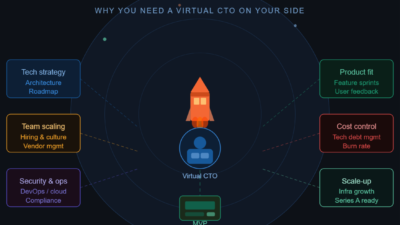
What a Virtual CTO Actually Does for Your Startup

So, concretely, what does a Virtual CTO bring to the table? Quite a lot, actually.

They build a clear tech roadmap.

First and foremost, a Virtual CTO creates structure. They assess where your product is today. Then, they map out where it needs to go. Moreover, they help you prioritize features based on user needs, market demands, and technical feasibility — not just gut feel.

Without this roadmap, startups tend to drift. They build what feels urgent, not what’s actually important. As a result, they waste months and money on the wrong things.

They fix your architecture before it breaks you.

Early MVPs are rarely built to scale. That’s fine — they’re not supposed to be. However, as you grow, poor architecture becomes a serious liability.

A Virtual CTO audits your tech stack and spots the weak points. They redesign systems for scalability. They help you migrate from monolithic structures to microservices if needed. And they do all of this proactively — before things break in production.

They manage and mentor your dev team.

Great developers don’t always make great leaders. And as your team grows, leadership becomes just as important as code quality.

A Virtual CTO steps in to fill that gap. They run technical reviews and set coding standards. They help resolve conflicts within the team. Furthermore, they mentor junior developers, which means your overall team quality improves over time.

They help you choose the right tools and vendors.

Every startup faces a flood of technology choices. Which cloud provider should you use? Should you build or buy? Which third-party APIs make sense for your stack? These decisions seem small, but they compound significantly over time.

A Virtual CTO has seen these decisions play out dozens of times. Therefore, they guide you toward choices that are cost-effective, scalable, and aligned with your long-term goals.

They handle investor and board-level tech conversations.

If you’re raising a Series A or preparing for due diligence, your tech story matters enormously. Investors want to know that your architecture can handle growth. They want to understand your security posture. They want confidence in your engineering team.

A Virtual CTO can speak that language fluently. They prepare tech documentation, answer investor questions, and give your startup serious credibility in the room.


Virtual CTO vs Full-Time CTO: Which Is Right for You?

This is the question most founders eventually ask. So, let’s tackle it directly.

A full-time CTO makes sense when your product is live and growing fast, your engineering team exceeds 15–20 people, and you need daily, hands-on tech leadership. Additionally, it makes sense when you have the budget and the need for a dedicated leader in the C-suite.

On the other hand, a Virtual CTO is the better fit when you’re still validating your product or scaling from MVP. It also makes sense when your engineering team is small — typically under 10 people. Moreover, it’s ideal when you need strategic guidance but not daily management, or when you want to preserve budget for product and hiring.

For most startups between pre-seed and Series A, a Virtual CTO offers dramatically better ROI. You get the expertise without the full-time cost. And you can scale the engagement up or down as your needs change.


Key Signs You Need a Virtual CTO Right Now

Still not sure if it’s the right time? Look for these signals.

Your dev team is making architecture decisions you don’t fully understand. Your product is slowing down under growing user load. You’re about to raise funding and need to sharpen your tech narrative. You’re hiring developers but have no senior leader to set standards. Your MVP has launched but you’re not sure what to build next.

If any of these sound familiar, it’s time to bring in a Virtual CTO. Waiting too long is one of the costliest mistakes a startup can make.


The Real Cost of Not Having Tech Leadership

Let’s talk numbers for a moment.

Technical debt is expensive. According to industry research, poor tech decisions made early can cost 3–5x more to fix later. Furthermore, a single bad architecture choice — like choosing the wrong database or building a non-scalable microservice structure — can delay your product roadmap by months.

On top of that, hiring the wrong developers without proper oversight costs startups an average of 1.5x their annual salary in lost productivity and rehiring. And a security breach caused by poor oversight? That can end a startup entirely.

The math is straightforward. A Virtual CTO typically costs a fraction of a full-time hire. Yet, they prevent mistakes that cost multiples of that amount. It’s not a cost — it’s a return on investment.


How to Find the Right Virtual CTO for Your Startup

Not all Virtual CTOs are created equal. So, it’s worth knowing what to look for.

First, look for domain experience. A Virtual CTO who has worked in fintech, for example, will understand your compliance landscape better than a generalist.

Second, check for startup experience specifically. Building and scaling startups is very different from enterprise IT. You need someone who thinks fast and moves lean.

Third, ask for references. Talk to founders they’ve worked with before. Find out how they handled conflict, pressure, and rapid change.

Finally, ensure cultural fit. A Virtual CTO is a leadership partner. They need to mesh with your team, your values, and your pace.


Final Thoughts

Going from MVP to scalable product is one of the hardest transitions in the startup journey. There are so many decisions to make. So many ways to go wrong. And so much at stake.

That’s exactly why you shouldn’t do it alone.

A Virtual CTO brings the experience, structure, and clarity you need to move fast — without breaking things. They help you build smarter, scale faster, and grow with confidence.

Because the best startups don’t just build great products. They build great tech foundations. And that starts with having the right leader in the room.

Ready to scale? It might be time to make your first virtual hire.


Found this useful? Share it with a founder who’s still figuring out their tech strategy.

Read More:

Why Vcto is the Key to Early Stage Tech Stability Full Guide

Common Vcto Myths and the Strategic Truths Behind Them

The Ultimate 90 Day vcto Checklist for Every Founder

The Right Time to Hire a vcto for Your Technology Roadmap

Deciding when to upgrade your technical leadership is a major milestone for any growing company. Many founders start by managing their own development teams or relying on a lead engineer. However, there comes a point where technical debt and strategic gaps begin to hinder growth. This is exactly when a business should consider hiring a vcto to provide high-level guidance. A vcto offers the expertise of a seasoned executive without the massive financial commitment of a permanent hire.

Identifying the specific triggers for this transition is essential for your success. If your current team is struggling to meet deadlines or if your technology stack feels outdated, you are likely ready for professional oversight. A vcto brings a fresh perspective to your existing processes and helps align your tools with your long-term goals. The following sections will detail the clear signs that your business is ready for this strategic move.

The Right Time to Hire a vcto for Your Technology Roadmap

Navigating Rapid Growth and Scalability Challenges

One of the most common reasons to hire a vcto is during a period of rapid expansion. When your user base grows quickly, your underlying infrastructure must be able to handle the increased load. If you notice frequent system crashes or slow performance, a vcto can step in to architect a more scalable solution. They ensure that your technology grows alongside your business rather than becoming a bottleneck.

Furthermore, a vcto helps you plan for future capacity needs before they become emergencies. They analyze your current system architecture and identify potential points of failure. By implementing automated scaling and robust cloud solutions, a vcto provides the stability your customers expect. This proactive approach prevents costly downtime and keeps your reputation intact during critical growth phases.

Bridging the Gap Between Business and Technology

Many entrepreneurs find themselves struggling to translate their business vision into technical requirements. If you feel like your developers and your management team are speaking different languages, a vcto is the perfect bridge. They possess the unique ability to understand market needs and turn them into actionable development roadmaps. This alignment ensures that every dollar spent on technology contributes directly to your bottom line.

A vcto also assists in high-level decision-making regarding software and vendor selection. Instead of choosing tools based on popularity, a vcto selects them based on your specific business objectives. They evaluate the return on investment for every new feature or platform you consider. This strategic oversight prevents wasteful spending on unnecessary technology and keeps your team focused on what truly matters for your brand.

Managing Technical Debt and Security Risks

As a company evolves, it often accumulates technical debt from quick fixes and outdated code. If your development team spends more time patching old bugs than building new features, you need a vcto. They create a plan to refactor critical systems and modernize your codebase. This investment in code quality reduces long-term maintenance costs and speeds up your overall development cycle.

Security is another area where a vcto provides invaluable protection. Smaller businesses are often targets for cyberattacks because they lack sophisticated security protocols. A vcto implements industry-standard security frameworks and ensures your data is encrypted and backed up. They also handle compliance requirements, which is vital if you are handling sensitive customer information or expanding into regulated industries.

Preparing for Fundraising or Mergers

If you are planning to seek investment or prepare for an acquisition, your technical foundation will be under intense scrutiny. Investors perform deep technical due diligence to ensure your product is built on a solid foundation. Hiring a vcto before you start the fundraising process allows you to clean up your documentation and prove your scalability. They act as a credible technical voice during meetings with potential stakeholders or buyers.

A vcto can also help you create a long-term technology vision that excites investors. They demonstrate that your company has a clear path forward and the leadership necessary to execute it. By having a vcto on your team, you signal to the market that you take your technical infrastructure seriously. This increased confidence often leads to better valuations and more successful funding rounds for your business.


Frequently Asked Questions

1 Is a vcto different from a regular consultant?

Yes, a vcto is a leadership role focused on long-term strategy and team management. A consultant is usually hired for a specific, short-term project or a single technical problem.

2 How does a vcto improve development speed?

By removing technical bottlenecks and implementing better agile processes, a vcto helps your team work more efficiently. They ensure that developers are focused on high-impact tasks rather than constant fire-fighting.

3 Can a startup afford a vcto?

Startups are actually the primary users of the vcto model. Because it is a part-time or contract-based role, it fits perfectly within the limited budgets of early-stage companies.

4 Will a vcto manage my existing developers?

Yes, a key responsibility of a vcto is to provide mentorship and oversight to your current engineering team. they help set coding standards and perform regular performance reviews.

5 Does a vcto work on-site or remotely?

The “v” in vcto stands for virtual, meaning they primarily work remotely. This allows you to hire the best talent from around the world regardless of your physical location.

Read More:

The vcto Hiring Checklist: Finding the Right Tech Partner

How Virtual CTO Navigate Technical Debt for New Founders?


The vcto Hiring Checklist: Finding the Right Tech Partner

Hiring a vcto is a critical decision that can either accelerate your startup’s growth or trap you in technical debt for years. In 2026, the demand for flexible technical leadership is at an all-time high, but so is the variability in service quality. You must treat this selection process with the same diligence as a full-time executive search. Therefore, you must use precise questioning to uncover their true strategic alignment and technical breadth.

This guide outlines five key questions to ask potential vcto candidates to ensure they are the right fit for your vision.

Interviewing a vcto for Long-Term Product Success


Understanding the Strategic Context

First, you should establish a clear understanding of what you need right now. A great vcto doesn’t just manage code; they align technology with your primary business goals. Because startups go through distinct phases, the leadership you need today might differ from what you require next year.

Therefore, start with a question that tests their ability to prioritize your immediate challenges.

Question 1: How Do You Distinguish “Looks Good” vs “Works Good” in Your Technology Roadmap?

This question directly addresses a common trap for non-technical founders: a pretty product that cannot scale. For instance, a beautifully designed application that crashes frequently can permanently damage your brand trust. Consequently, you need a vcto who can manage the necessary compromises between form and function.

A strong candidate should explain how they prioritize core stability, performance, and security over flashy, but non-essential, UI features during the early development stages.

Question 2: Can You Map Our Immediate Strategic Goals directly to Our Current Tech Stack?

This question forces the candidate to connect technical choices to business outcomes. A vcto must be able to justify why specific languages, frameworks, or architectural designs (such as a serverless or microservices approach) will help you reach profit goals. For example, will this choice allow you to release features faster, or will it keep initial operational costs low while you test the market? Similarly, you should understand how your technology choices will support your planned business scaling over the next two years.


Testing Practical Experience and Problem Solving

Next, you must move beyond high-level strategy and test their specific problem-solving abilities and past successes. Because startups are built under immense pressure, a vcto must have proven experience managing technical risks and making difficult decisions with limited data.

Therefore, ask them to provide a concrete example of their past work in high-pressure environments.

Question 3: Describe a Time When You Inherited Significant Technical Debt. How Did You Manage it Without Halting Business Growth?

Technical debt is almost unavoidable in fast-moving startups. The key is managing it strategically rather than allowing it to paralyze your business. Therefore, this question reveals whether the candidate knows how to navigate the “buy cheap, fix later” mentality that often becomes your most expensive strategy.

A great candidate will describe how they performed an audit, identified immediate risks, and created a phased “refactoring” plan. Moreover, they should explain how they negotiated the budget with stakeholders to prioritize technical health.

Question 4: How Would You Architect Our Product from Day One to Support AI Agent Integration or Secure Modernization?

In 2026, you must plan for advanced technologies like AI agents or deep cloud integration from the start. For example, how will your product interact with internal data sources safely? While you might not implement these features today, your foundational technical decisions must not prevent you from adding them tomorrow. Therefore, this question reveals whether your vcto is thinking proactively about long-term product-market fit.


Managing the Engagement

Finally, you must clarify the working relationship and how they will fit into your unique organizational culture. While a vcto is on-demand, they must function as a core member of your leadership team to be truly effective.

Question 5: How do You Handle Ongoing Communication with Non-Technical Stakeholders and Ensure Their Full Buy-in on Complex Technical Risks?

This question addresses how the vcto handles the critical role of translating technical language into business risk. For example, can they explain a security vulnerability or an expensive scaling bottleneck without using complex jargon? Because non-technical founders often make the final decision, they must have absolute clarity on the financial and operational impact of tech choices.

Additionally, use this time to verify their availability and cultural fit. Specifically, how do they prefer to collaborate—async, Slack, or live strategy sessions? As a result, you will prevent communication breakdown.

Conclusion and Key Takeaways

To make your hiring decision easier, use this structured checklist during your interviews:

Question Focus Key Insight to Gain Why it Matters
Strategy & Balance Ability to balance aesthetics with backend stability. Ensures you don’t build a beautiful but buggy product.
Tech/Business Alignment Proves technology choice supports business growth. Aligns development costs with future revenue.
Problem Solving Proven experience managing debt and technical resets. Confirms they can rescue or stabilize existing platforms.
Modernization & AI Thinking ahead about advanced features like AI agents. Protects your product roadmap from rapid obsolescence.
Communication Skill in translating tech into business risk. Keeps leadership and investors aligned and informed.

By prioritizing strategic alignment, proven problem-solving, and clear communication in your questioning, you can select the right vcto to turn your technical vision into a scalable, high-quality reality. Therefore, do not rush the process; ask the deep questions needed to protect your future growth.

Frequently Asked Questions

1 What is the most important skill for a vcto?

They must be able to align technology with your business revenue goals.

2 Can they help me hire my first developer?

Yes, they often lead the hiring process to ensure you get top talent.

3 How often should I talk to my vcto?

Most founders have weekly strategy sessions to stay aligned on the roadmap.

4 Do they work for a fixed fee or hourly?

It depends on the provider, but many offer flat monthly rates for better planning.

5 Will they sign a non-disclosure agreement (NDA)?

Yes, protecting your intellectual property is a standard part of their job.

Read More:

How Virtual CTO Navigate Technical Debt for New Founders?

How to choose the right Virtual CTO service provider?

How a Virtual CTO stops your tech from failing today?

The world of modern business moves at a very fast pace every single day. Many firms now struggle to keep up with new tech. Specifically, staying ahead means looking toward a smart and flexible leader. Therefore, hiring a Virtual CTO is now a vital step for your firm. This shift offers a clear map for success and a very professional way to work. It is not just a trend for small teams. In fact, it is a smart investment for any brand today. Consequently, a smart choice helps you build a future proof brand name. You will see a clear gain by following this powerful and strategic lead.

How a Virtual CTO stops your tech from failing today?

1. Your Tech Budget is Out of Control

Many firms find that their tech costs are far too high. You might spend too much on apps or fixes. First, traditional ways are far too expensive and slow for most small firms. Specifically, poor tech choices can hide many deep and dark costs of old habits. Furthermore, finding a top tool that stays for the long term is rare. You also miss out on fast moves while your output stays low. Similarly, a Virtual CTO helps control your spending. This puts your growth on a steady path for a long time. In contrast, making a strategic tech hire early on helps you save money.

2. You Lack a Clear Tech Roadmap

The journey to the top begins when you pick a dedicated tech path. At this stage, you might wonder why your firm lacks a clear plan. These new tools must act as your top guide on a steady basis. A Virtual CTO ensures your tech and its true worth match your goals. They are built to spark fast progress in every single project. You should also know that an executive partner offers more than a simple task list. While a solo human just finishes a task, a Virtual CTO guides your whole path. Furthermore, they move firms past the fear of bad tech choices early. This approach starts very strong by setting a gold standard for all.

3. Your Team is Stuck in Technical Debt

After you join the model, the goal shifts to gaining big wins. One of the top wins of expert help is getting dedicated guidance. The reality of a modern Virtual CTO then delivers a very custom plan for your firm. This path matches what you need and how you act every day. Therefore, if a project starts, you get fast and clear focus. You also gain access to a very diverse and deep skillset. This includes design, dev, and very deep digital security through smart systems. Access to these skills keeps all your users very happy and safe. It also shows you know your specific needs in a tough market.

4. You’re Missing Out on New Technologies

As a firm’s tech grows, a strategic lead helps you find new ways. At this stage, the focus on a Virtual CTO builds a very strong architecture. This plan is specific to what the modern user likes and wants. For example, some might get a faster way to find new items. The timing of these moves is very key for your success. Furthermore, the leader handles all your vendors and developers with ease. This ensures your project plan is solid from the very first step. Such smart timing helps firms move toward a big global win. Smart leaders push for more scale every single year for you. Indeed, the right partnership reveals who is truly ready.

5. Your Cybersecurity is a Constant Worry

Data is the backbone of all smart marketing and content success today. The way a Virtual CTO works constantly tracks how every user acts with your tech. This includes how they read and share your posts or apps. These facts help refine the paths for every brand you lead. Therefore, the system learns and grows over time to serve you better. This data driven path ensures the best results for your firm. It also prevents any bad risks from hurting your brand name. Smart leadership relies on real facts to win every single time. Your plan and focus are too important to risk at any step. The core of your strategy is about long term brand health.

6. Your Internal Team Lacks Senior Tech Guidance

For the best results, smart tech joins your team in a seamless way. This link ensures all facts stay in one place for your team. Managers and teams share the same live info to move faster. This stops double work and missed ideas for new products or sales. The system provides a full view of every piece you need. Consequently, it supports personal touches at every single step of the way. Your strategy works best when you see a Virtual CTO joined with intelligent tools. It sets a strong base for your future success in any market. Thus, picking the right tech head is about building a real team.

7. You Struggle to Attract Top Tech Talent

Picking the slow path for scaling is a very big risk. You must look for signs that you need a better Virtual CTO for your brand. If your tech is slow, you might need a new plan now. If your costs are too high, experienced systems can fix the leak. The process makes your work much easier and more clear. It also leads to more sales in the long run for you. Businesses that use this path gain a big edge over rivals. Therefore, they work much smarter and not harder to win today. They turn new tech into a tool for more joy and gain. This standard is the path to your best results in life.

8. Your Products Launch Late or With Too Many Bugs

Technical debt can be very hard to handle for a small team. However, the right Virtual CTO makes this work feel very light and fast. First, the system sorts through billions of facts in a second. Specifically, it finds the gold in a mountain of digital noise. Furthermore, this provides you with clear and simple steps to take. You also avoid the stress of being buried in too many bugs. Similarly, the tech presents the info in a way that is easy. This helps your team make fast choices with very high trust. Indeed, the logic of high-level oversight protects your code base. It ensures you do not pay for the same work twice.

9. Your Company Growth is Stalling Due to Tech Issues

The future of your tech is too important to leave to chance. Today, you can gain a top expert view of a Virtual CTO without the huge cost. This smart move helps you scale faster and much smarter too. It turns your tech into a real win for your brand name. You will see more growth and less stress every single day. Therefore, you should act now to secure your spot in the market. Knowing the truth of quality leadership leads to true success. It is the best way to ensure your success for many years. You will find that the right leader makes all the difference. Take this step and watch your business reach new heights soon.

10. You Need an Objective Eye on Your Tech Strategy

The reality is that an outside expert sees things your team might miss. A Virtual CTO offers this fresh, unbiased view. They assess your tech stack, processes, and goals with no internal politics. This objective perspective reveals true bottlenecks and untapped opportunities. Consequently, they help you refine your strategy and make decisions based on solid, impartial advice. Their guidance is crucial for long-term health.


FAQs

1 What is a Virtual CTO?

It is a virtual leader who handles all your tech needs for a lower cost.

2 How does a Virtual CTO help with scaling?

They build a system that can grow without breaking as you get more users.

3 Does it help save money on tech?

Yes, it stops bad debt and makes sure your team works on the right tasks.

4 Is it hard for a small firm to start?

No, it is very easy to scale and it fits firms of any size today.

5 Why is this more than just a simple tool?

It is about a new way to win in a very crowded and fast market.

Read More:

Does your new vcto keep Version 1 from breaking?

How scaling with vCTO gives a better ROI than a freelancer?

Can scaling with a vCTO build a better brand?

Can scaling with a vCTO build a better brand?

Have you ever felt lost in a sea of complex tech choices? Today, many owners struggle to find the right path for their digital growth. However, a new way to lead your tech team is changing everything. Because of this, staying ahead means looking toward a smart and flexible leader. Specifically, knowing what is a virtual CTO is now a vital step for your firm. This shift offers a clear map for success and a very professional way to work. This move is not just a trend. In fact, it is a very smart investment. Consequently, a vCTO helps you build a future-proof brand. You will see a clear gain by following this powerful lead.

The Rise of Virtual CTO Services

Many firms find that hiring a full-time tech chief is very hard. However, teams still try to hunt for the perfect local leader for months. First, traditional hiring is far too expensive and slow for most small firms. Specifically, a high salary and big benefits can stall your budget. Furthermore, finding a top expert in a tight market takes up too much of your time. You also miss out on fast moves while the seat stays empty.

Similarly, paying for a full-time role you do not yet need is a waste. This puts your business growth at a total halt. In contrast, startups and MSMEs are now adopting the vCTO model to win. Indeed, it is the best step for serious and fast growth.

Can scaling with a vCTO build a better brand?

Virtual CTO Defined

The journey to the top begins when you learn vCTO meaning and how it fits your firm. At this stage, you might wonder what exactly a vCTO does for you. These leaders act as your top tech guide on a part-time basis. They ensure your tech and its true worth match your goals. They are built to spark fast progress in every project.

You should also know the difference between a vCTO, a fractional CTO, and a consultant. While a consultant just gives advice, a vCTO takes charge of your tech path. Furthermore, they move firms past the fear of bad tech debt. This approach starts very strong by setting a gold standard. It truly boosts initial trust for you every day.

Key Benefits of a Virtual CTO

After you join the model, the goal shifts to gaining big wins. One of the top benefits of virtual CTO help is getting expert guidance at a small cost. The smart system then delivers a very custom plan for your firm. This path matches what you need and how you act. Therefore, if a project starts, you get fast and clear focus. You also gain access to a very diverse skillset. This includes design, dev, QA, cloud, and deep security. Access to these skills keeps all your users very happy. It also shows you know your specific needs through virtual CTO services. Your brand and its trust are too vital to risk.

How vCTO Services Scale Businesses

As a firm’s tech grows, a vCTO helps you find new ways to scale. At this stage, they focus on building a very strong architecture. This plan is specific to what the modern user likes and wants. For example, some might get a faster way to pay with a single click. The timing of these moves is very key for your success. Furthermore, the leader handles all your vendors and developers with ease. This ensures your lifecycle plan is solid from design to build. Such smart timing helps firms move toward a big global win. Smart leaders push for more scale every single year. Indeed, well-timed tech truly matters in the business world.

Is a vCTO Right for You?

Picking the right path for scaling is a very big choice. You must look for signs that your business needs a vCTO right now. If your tech is slow, you might need a new plan. If your costs are too high, a vCTO can fix the leak. The process makes your work much easier and more clear. It also leads to more sales in the long run. Businesses that use this path gain a big edge over every rival. Therefore, they work much smarter and not harder to win. They turn new tech into a tool for more joy. This standard is the path to your best results. Use this system today and watch your firm grow fast.

Conclusion

The future of your tech is too important to leave to chance. Today, you can gain a top expert without the huge cost. This smart move helps you scale faster and much smarter. It turns your tech into a real win for your brand. You will see more growth and less stress every single day. Therefore, you should act now to secure your future.

Book a free vCTO consultation and discover how we can help your business scale faster and smarter.


FAQs

1 What is a virtual CTO?

It is a smart system. It gives you a tech chief on a flexible basis.

2 How does a vCTO help with costs?

It uses a part-time model. Therefore, you pay only for the expert time you use.

3 Is it easy for a small firm to start?

Yes, it is very easy to scale and adapt. It fits firms of any size or type.

4 Does a vCTO manage the developers?

Yes, they make the team work better. They handle the boring tasks for your firm.

5 Why are virtual CTO services vital?

They use smart ideas and deep skill. Consequently, each move is based on what you need to grow.

Read More:

Is scaling your brand via Workspace better than free Gmail?

Will New Workspace Rules Help Your Team Scale?

Why Gmail Blocks Your Emails and How to Fix It Easily