Refresh loader

Category : IT Consulting Audit

Home > Archive for IT Consulting Audit

How to reduce Google Drive storage costs in 5 minutes

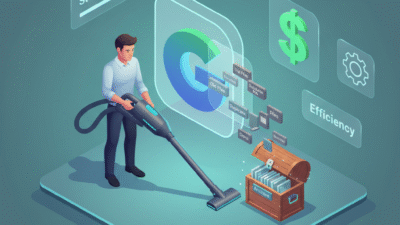
You must act fast to stop wasting money on unused cloud space in the digital world today. Therefore, you should learn how to reduce Google Drive storage costs with smart file management. Truly, a cluttered drive is a direct drain on your company’s monthly budget. Consequently, you can grow your profit by cleaning up your digital files for 2026.

Many people think that buying more storage is the only way to fix a “Drive Full” alert. But, the reality is that better habits can save you hundreds of dollars every year. Always remember, an organized drive is a strong signal for any search engine. This ensures that your brand stays efficient and your team stays very productive. This approach requires you to audit your files for duplicates and old data today. It helps you build a much more sustainable business for the long term. It makes your daily digital operations feel much more secure and very effective.

Google Drive storage


Finding and Removing High-Storage Leaks

First, you must identify which files are taking up the most space right now. Why does your drive feel full even if you do not have many documents? Clearly, large video files and high-res images are the most common culprits in 2026. Therefore, you must use the built-in storage tools to find these leaks today.

Steps to Identify Heavy Files

Here are several ways to spot storage hogs in your Google account:

  • Quota View: Go to drive.google.com/drive/quota to see files sorted by size.

  • Search Operators: Use larger:10M in Gmail to find emails with big attachments.

  • Media Audit: Look for old webinar recordings or raw video footage you no longer need.

  • Hidden App Data: Check your “Manage Apps” settings for data left by third-party tools.

  • Duplicate Detection: Use tools like Filerev to find 100% identical copies of files.

  • Shared With Me: Remember that files shared with you do not count against your limit.

  • Search Engine Value: Faster file access improves your overall brand efficiency score.

Truly, these steps solve the problem of a full drive in just a few minutes. But, you must also remember to empty your “Trash” folder to permanently free up the space. This keeps your billing accurate and prevents any sudden price hikes for your firm. It creates a very high and professional standard for your daily cloud management.


Mastering Pooled Storage in Google Workspace

So, how do you make the most of the storage you already pay for in 2026? Truly, modern Workspace plans use “Pooled Storage” to share space across your whole team. Consequently, you should learn how to balance the load between heavy and light users. It acts as a direct way to avoid upgrading to a more expensive plan.

Using Pooled Storage to Save Money

Here is how you can manage your team’s space to keep costs low right now:

  1. Storage Limits: Set individual quotas for each user to prevent any one person from hogging space.

  2. Shared Drives: Move project files to Shared Drives so they belong to the team, not a person.

  3. Light User Credit: Use the extra space from light users to cover your heavy content creators.

  4. Retention Policies: Set rules to auto-delete old drafts after a certain number of years.

  5. Ownership Transfers: Transfer files from departing employees to a single archive account.

  6. Annual Audits: Review your total storage use once a year to stay under your plan’s cap.

  7. Trust Rankings: A well-managed workspace helps you keep a top search engine rank.

Furthermore, this improves your search engine performance by showing your firm is smart. It makes your company look very professional and ready for 2026 digital shifts. This ensures that you only pay for the storage your team actually needs. It creates a very fast and clear path for your professional digital success.


Moving Data to Lower-Cost Storage Tiers

The third phase involves finding a cheaper home for files you must keep but rarely use. Clearly, keeping “Cold Data” in your active Google Drive is very expensive today. Therefore, you should use “Google Cloud Storage” for your long-term archives in 2026.

Using Archive Classes for Huge Savings

Firstly, identify project folders that have not been touched in over six months. This allows you to move them to “Coldline” or “Archive” storage classes right away. Secondly, use automation tools to move these files based on their “Last Modified” date.

Furthermore, use transition words in your archive guides to help your team find old files. Also, remember that a lean main drive helps your search engine authority and site speed. Lastly, check if your “Cloud Partner” offers a discount for long-term data storage. Truly, a tiered plan is the best tool for saving money on massive data sets. It allows you to keep every important record without paying the high “Drive” price. This is why top IT admins are moving toward “Lifecycle Management” right now.


Measuring Your Digital Cleanup Success

The fourth phase is where you track if your new habits are actually saving you money. Clearly, you must know if your “Storage Bill” is going down or staying flat in 2026. Therefore, you must use the “Google Admin Reports” to see your trends every month.

Metrics for a Cost-Effective Drive

Firstly, track the “Total Storage Used” to ensure you stay within your plan’s free limit. This helps you avoid “Auto-Upgrade” fees that can double your bill today. Secondly, calculate the “Cost Per Terabyte” to see if your archive strategy is working.

Furthermore, look for any “Inactive Users” who are still taking up a paid license and space. Also, use your data to see if a cleaner drive leads to a higher “Team Productivity” score. Lastly, check your search engine ranking to see if better data health helps your traffic. Truly, a lean path is a journey that leads to a much stronger brand. It turns a messy cost into a series of smart, secure wins for your whole team. This ensures your business stays strong while others face high cloud costs.


Maintaining a Lean Workspace

Finalizing your plan requires you to build a culture of “File Minimalism” in your team. It needs you to set clear rules for naming, storing, and deleting files every single day. Clearly, staying under your storage limit is a team effort for your brand in 2026. Therefore, follow these simple tips to keep your workspace safe and very fast.

Simple Tips for Lifelong Storage Success

Firstly, host a “Digital Cleanup Day” once every six months for your whole staff. This helps everyone find and delete old drafts and large video recordings today. Secondly, encourage your team to use “Shortcuts” instead of making copies of files.

Furthermore, use transition words in your tech updates to keep the message very clear. Also, remind your team that a fast drive helps the company earn more search engine trust. Lastly, check your search engine data to see if your stability helps your web traffic grow. Truly, a safe path is a journey that leads to a much better brand in 2026. It builds a path of profit that lets your whole team grow very fast. This secures your future in the digital world for a long time.


Frequently Asked Questions (FAQs)

Q1: Does Google charge for files in the Trash?

Yes, files in the Trash count against your storage until you empty the folder permanently.

Q2: What is the best way to find my largest Google Drive files?

You can visit drive.google.com/drive/quota to see a list of your files sorted by size.

Q3: Do files in “Shared with me” use my storage space?

No, shared files only count against the storage limit of the person who owns them.

Q4: Can I set storage limits for individual users in my team?

Yes, Google Workspace admins can set specific storage quotas for different users or groups.

Q5: Will deleting my old emails free up Google Drive space?

Yes, because Google Drive, Gmail, and Google Photos all share the same pooled storage.

Also read: How to fix Google Workspace billing issues

Microsoft 365 Copilot: Complete Guide (2025)

Microsoft 365 Copilot

AI-Powered Microsoft 365 Copilot: A New Era of Productivity

The world of work is always changing. Consequently, the tools we use must keep up. In a world where efficiency is key, Microsoft has introduced an amazing AI assistant. It’s called Microsoft 365 Copilot. This tool is no longer a futuristic idea. In fact, it’s a real benefit for businesses of all sizes.

So, how does Copilot truly work? What does it mean for your daily work?

What Exactly is Microsoft 365 Copilot?

Basically, Microsoft 365 Copilot is a smart AI tool. It works with you across the Microsoft 365 suite. It is built on a large language model (LLM). Its true power comes from its link to the Microsoft Graph. This unique connection lets it access and understand your personal data. For instance, it can read your emails, calendar events, and chat history. Therefore, it is more than just a general AI. It is an AI that understands your specific work.

Essentially, Microsoft 365 Copilot is a productivity engine. It can create text, summarize info, and make presentations. It also analyzes data. All you need to do is use natural language commands. For example, instead of searching through old documents, you can simply ask Copilot to find a key detail for you. This saves your mental energy. You can then focus on strategic thinking, creative problem-solving, and human connections. After all, these are the unique skills AI can’t copy.

How Microsoft 365 Copilot Works Across Key Applications

The real strength of Microsoft 365 Copilot is its seamless integration. It works across the apps you use every single day. Because it’s not a separate product, it can assist you at every step of your workday.

1. AI Assistance in Microsoft Word

The blank page can be intimidating. However, with Copilot, that feeling is gone. For example, you can give it a simple instruction. “Draft a 10-page business plan for a new marketing campaign,” you might say. Copilot will then create a full first draft. It pulls facts and insights from your documents. Furthermore, it can help you improve your writing. It can summarize long documents or rewrite paragraphs. In addition, it can even translate text into another language.

2. AI Assistance in Microsoft Excel

The days of complex formulas are ending. This is where Microsoft 365 Copilot really stands out. A task that once needed advanced skills is now a simple conversation. For instance, you can ask, “Show me the top products by region in a pivot chart.” Copilot will build it instantly. Likewise, it can find trends and identify unusual data. Ultimately, it can even provide written explanations of your data. This makes complex spreadsheets easy for everyone to understand.

3. AI Assistance in Microsoft Teams

Meetings can waste a lot of time. Luckily, Microsoft 365 Copilot changes this completely. During a meeting, it can summarize the main points. It also lists action items in real-time. If a team member misses a meeting, they can just ask Copilot for a summary. They will get a detailed and accurate report. Consequently, nobody ever has to feel left out of a conversation again.

4. AI Assistance in Microsoft Outlook

Managing your inbox can be a full-time job. With Microsoft 365 Copilot, it becomes much easier. First, it can summarize long email chains. This helps you get the main idea in a few seconds. In addition, it helps you write professional emails. It gives suggestions for tone and content. This saves you from staring at a blank screen for a long time. Therefore, you can focus on the most important messages without feeling overwhelmed.

Real-Life Business Applications for Microsoft 365 Copilot

Beyond the individual user, Microsoft 365 Copilot changes how entire business departments work.

  • For Marketing and Sales: Use it to quickly write blog posts. It can also analyze customer feedback from surveys. It can even summarize long market research reports to find key details. This helps marketing teams be more flexible and data-driven.
  • For Human Resources: You can speed up the creation of training materials. It can also draft new company policies. Furthermore, it can summarize employee surveys to find key trends.
  • For Project Management: With Copilot, you can quickly create project plans. It can also track progress by summarizing team updates. Ultimately, it can generate status reports for stakeholders with one command. This greatly reduces the busywork of managing a project.

The Strategic Edge: Why Microsoft 365 Copilot is a Game-Changer for SMEs

For small and medium-sized businesses (SMEs), Microsoft 365 Copilot is a huge advantage. In the past, large companies had the budget to hire dedicated experts. Now, SMEs can get similar abilities without the high cost.

Microsoft 365 Copilot helps a small team act like a much bigger one. It allows them to achieve the same level of productivity as a large company. Consequently, SMEs can compete more effectively. They can spend more time on customer relationships and innovation. Ultimately, this lets small businesses focus on what they do best. The AI handles the hard work for them.

Microsoft 365 Copilot vs. Traditional Productivity Tools

The main difference between Copilot and old tools is the shift from passive to proactive. A regular word processor is just a tool; you have to do all the work. On the other hand, Copilot gives you a first draft, a summary, or data analysis. This saves you many hours of manual work.

A traditional spell-checker corrects your typos. In contrast, Copilot can rewrite a whole paragraph to make it clearer. You might manually create a chart in Excel. However, Copilot can understand your goal and build the chart for you. It intelligently suggests the best way to show your data.

Ensuring Security and Compliance with Microsoft 365 Copilot

Data security is a major concern with AI. Luckily, Microsoft built Microsoft 365 Copilot with top-level security. It works within your existing Microsoft 365 security system.

Your data remains your property. Copilot does not use your data to train its models for others. Furthermore, Microsoft 365 Copilot respects your data permissions. It can only see the information you have permission to access. This protects sensitive data. You can use the power of AI without risking your company’s security.

Getting Started with Microsoft 365 Copilot Today

The future of work is not far away; it is here now. Microsoft 365 Copilot shows how AI can help people, not replace them. By automating daily tasks and assisting with complex ones, it helps people and businesses unlock new levels of productivity.


Frequently Asked Questions (FAQS) 


1. What is the main difference between Microsoft 365 Copilot and other AI tools?

Copilot is an AI assistant built directly into your Microsoft 365 apps. It uses your own work data to provide personalized help, while other tools like ChatGPT are general-purpose chatbots.

2. Is Microsoft 365 Copilot secure and private?

Yes. It operates within your company’s existing Microsoft 365 security. Your data is not used to train the AI model for others.

3. What specific tasks can Copilot help me with?

It can draft emails in Outlook, summarize documents in Word, analyze data in Excel, and create meeting summaries and action items in Teams.

4. How can my business get started with Microsoft 365 Copilot?

You need to have a qualifying Microsoft 365 subscription. Copilot is then available as an add-on license for each user in your business.

5. How does Copilot get context from my work?

It connects to the Microsoft Graph, which maps the relationships between your documents, emails, and chats. This allows it to understand your work and give relevant answers.

Also Read: Updates in Google Workspace: September 2025

The unique way to IT Consulting & Audit

In terms of technology, several factors can slow down your company. Deconstruction and review of the systems that are concealed within IT projects are important to monitor any issues. For this reason IT assessment and consultant procedures are a great starting point. How is ti that they look in practice? What are the IT audit and consultants’ stages, and why are they playing a vital role in business growth? Let’s work it out. The green light for digitalization has been turned on by serious players from each industry. From banking and finance firms to real estate, healthcare businesses, and travel and hospitality providers (and much more!) – all decision-makers from B2B and B2C have embraced technology to improve their market position.

Even though tech giants spend billions of dollars on Research and Development is completely incredible and overwhelming for the rest of the peloton, managers of smaller firms and start-up founders are not giving up the fight. We continue to invest in web and mobile apps (and more complex IT solutions) to get them excelling.

And you need to develop a technology plan to stay in the game. The very first thing you should be on your radar is to get and IT partner to launch an audit of your technical premises. Why? For What? Because it starts by getting rid of the obstacles that stand in your way to scale up your business.

You’ll need to budget for a qualified IT audit to identify the challenges properly.

Let’s decode piece by piece the IT audit and the IT consulting services.

What is the concept of an IT audit?

Before we disclose the process stages, we need to start with basic – what are the procedures for IT  auditing? And why are they so critical for bringing projects with technology to higher levels?

IT  audit is essentially a comprehensive test, designed to analyze any software products. The best practice at Ouriken from our perspective is to assign a project to our consultants and developers. We take a deep dive deep into a project, carrying a highly detailed review of the customer’s development processes.

Related Post: How To Accelerate Productivity In Modern IT Infrastructure Management

What are the IT audit elements?

Most companies expect such programs to deliver game-changing benefits. Why is it they are working? We may divide an IT audit process into the following components, regardless of the size of a given company:

  • Analyzing stacking technology. In designing a product, we take a closer look at what has already been used. We’re interested in developers of software and frameworks that have decided to work with. The next issue is about the future of product development, centered on those tools and frameworks.
  • Running tests on code. This stage requires practical experience and expertise. This scrutinizes the code already written by tech teams of clients. We need developers specialized in different programming languages to be able to do that.
  • Check the check. This aspect of an It audit focuses on testing procedures, identifying continuous integration errors. We also test the data security status at this point and let our DevOps engineers examine the methodology used in the project.
  • Studying the administration of programs. Every digital project has its own Director of Projects. As a software house, our job is to test the backdrops of a project management workflow and look for any problems there. Optimizing the flow is important, and finding a way to improve efficiency with more agile communication.
  • Looking for team leadership. Locating within a team structure or team management style can be full of problems. We are looking forward to learning about the roles that team members have and how a client is coping up with new employees on board.

Pointing out the issues at each point leads to an audit and its policy formulating frames. In the end, full audit reports and a report will result in a trustworthy, well-conducted IT audit process. The next step is where IT advisory services come up. We need to take care of all the issues outlined in the paper. We lease our consultant as an outsourced Technology Referee to monitor the fixing process.

Why is it so important to audit the IT?

The meaning is straight forward. A software product needs to perform well, and be scalable, to be effective. If those things are incorrect, the technology will stand in the way of making your company prosper. We’re ready to collect data after we nail down problems and identify all the limitations. During team shadowing, we interview the mangers, rub elbows with client employees, and analyze the code and documentation. As soon as we pass that point, we’ll be able to name the solutions and create a roadmap to implement necessary project changes.

Common development issues for enterprises

Just like in film scripts, first, we have to recognize the villain to call for a superhero. What are the usual problems that business owners and C-level execs face when it comes to processing technology? What issues cause them to believe they need an outsider to solve them?

We face technology challenges for our clients in four main areas:

Firstly, Selecting the technologies in terms of reliability and scalability of their implementations. Secondly, forming of the processes of development, testing, and production. Thirdly, software consistency and team management. And fourthly, to come up with the final strategic decisions and point out one course for the technology of the organization.

Scalability and Stability of your software Technology

That is inevitable, if your business grows, you’ll need your website or app ready for a stronger stream of visitors. Whether you’re running an e-commerce site or a SaaS platform focused on browsers, the strategy should also include adding more features to attract more users.

But if the program isn’t robust enough, it will be frustrating for you and the customer of your product to increase the number of functionalities. You wouldn’t want your customers to fall off your website or device, as the page load time is too long. Most importantly, you would not want your product’s features to fail to work properly. If the primary functionalities refuse to perform well, scalability will do not do the trick.

Develop, Test and Manufacture

Each software solution has to have a co-ordinated product development sequence. Though it sounds obvious, it is worth treating each of these environments with the same level of respect. You’ll miss fixing the bugs along the way if you put most of the effort into the development phase and skip to the production. In addition, if development, testing, and manufacturing environments do not match, you will stumble over problems later while upgrading your product.

Our dedicated developers at Ouriken take care of those three elements. They can track and eliminate any bottleneck situations because they have unlimited access to the whole production process. They immerse themselves in the project to discover any issues related to code, tools, test methods, and DevOps activities.

Code Quality and the People Behind it

While roughly two-thirds of respondents are satisfied with their software quality, there has been a general downward trend since 2016.

Only 43% of respondents are satisfied with their current code review process, or very satisfied.

The respondents identified code review as the number way to improve the quality of code for the third straight year.

These insights into software development indicate that code quality is still something that needs to be improved and code analysis is a part that needs to be focused on.

Luckily we got a solution here. Through various, foreign IT ventures, our contractors, lead and senior developers have accumulated their valuable experience. One of their goals is ensuring high-quality code.

Grow Your Company with a custom Tech Strategy

The importance of developing a sound strategy, particularly with a focus on tech, is hard to overestimate. We do what it takes to create one for a consumer – we evaluate the business needs, the value of the company and how it can grow with the help of the latest technology.

We help set the goals and help our clients achieve them. A digital strategy is not a ready-made product put on a shelf, it is a project that is fully customized.

Related Post: Digital Infrastructure: What Is It?

Time to improve your IT Audit & Consultancy Business

It’s a milestone for your business to recognize a technological problem within your organization. To do this, a software house specializing in providing IT consulting services needs to be teamed up with.

Immediately after a startup or a well-established organization decides to put their faith in our expertise we release our troops. We call it a period of Exploration and that is where the beauty lies. Our consultant will take a deep dive into your idea with a Dev team backed up. We are the technological situation and the level of workflow. We are on a roadblock chase. We need to learn what slows the process down, and what the limits are.

Then ultimately, step-by-step, we go through your delivery process. To dod this, we are armed with weapons such as codebase review, delivery process assessment, then workshops conducted with key players in your project.

Performance Boost – it’s not a vague idea or a sales pitch fueled by buzzword. It’s a commitment to deliver technology factors that are responsible for your business’ performance and development.

Optimization of development- opening our consultant’s doors to your software development climate. The outcome of the consultation process with IT? To take the technological productivity to a different level.

Ouriken Consulting excels in co-creation & collaboration activities for the development of creative & innovative products or delivering high-quality services in the field of IT.

[contact-form][contact-field label=”Name” type=”name” required=”true” /][contact-field label=”Email” type=”email” required=”true” /][contact-field label=”Website” type=”url” /][contact-field label=”Message” type=”textarea” /][/contact-form]