Refresh loader

Category : AI Assistant

Home > Archive for AI Assistant

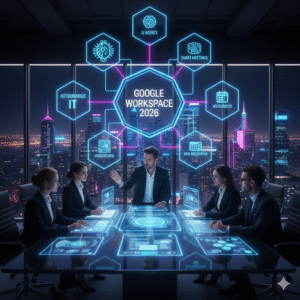
What to Expect from Google Workspace in 2026

Google Workspace is the core tool for modern work. Therefore, any change to it affects millions of people. As we look to 2026, the roadmap is very clear. It is driven by artificial intelligence (AI). Truly, AI is no longer just an extra feature. Instead, it is becoming the very foundation of Docs, Gmail, Meet, and Chat. This means work will feel easier and smarter than ever before.

Many people think the biggest changes have already happened. However, the move toward deep AI integration is just starting. In 2026, the focus will shift. It moves from simple AI helpers to AI agents. These agents will work alongside your team. They will understand your company’s data. They will also manage tasks and projects for you. Always remember, the goal is to make the digital workplace a “living system”. This system connects data, context, and experience. By preparing for this next wave, your team can gain a huge advantage.
What to Expect from Google Workspace in 2026


Pillar 1: AI Evolves from Co-Pilot to Co-Worker (Agents)

First, the most powerful change coming is the evolution of AI. AI is moving past simple tools like “Help me write” in Gmail. Instead, it is turning into specialized role-based agents. These agents are like smart, dedicated digital co-workers. Clearly, this is the next phase of productivity. Therefore, organizations must learn how to manage these agents.

From Simple Assistants to Specialized AI Agents

Google’s Gemini AI is now built into all Workspace subscriptions. This means everyone has access. However, in 2026, these tools will become much more specific.

Here is what to expect from these new AI agents:

  • Domain-Specific Outcomes: Agents will be trained only on your company’s data. Therefore, they will handle tasks specific to your industry or job.

  • Traceable and Compliant: Organizations must manage the lifecycle of these agents. This is like managing any other digital asset. You must ensure every AI is traceable and follows company rules.

  • Context Engineering: How you set up the information around the AI will be key. You must manage the entire context, not just the text you type into the AI.

  • Citizen Developers: Employees will be able to build their own AI agents. These will handle simple, repetitive tasks. This must be done with guardrails and oversight.

Truly, the shift from a general AI helper to a specialized AI agent will redefine how tasks are done. It requires a new focus on AI governance.


Pillar 2: Collaboration Blurs the Lines in Docs and Chat

Collaboration will also undergo a major redesign in 2026. The boundaries between communication, automation, and knowledge sharing will completely blur. Clearly, co-creation will move beyond simple real-time editing in Docs. Therefore, new shared, AI-powered knowledge hubs will become common.

New Ways to Co-Create and Share Knowledge

Firstly, Chat is not just for people anymore. Platforms will embed AI agents directly into chat channels. Users will be able to co-create, summarize, and automate tasks right inside Google Chat. This connects communication and automation perfectly.

Secondly, new generative AI workspaces are changing collaboration. Tools like Google’s NotebookLM are becoming shared, persistent knowledge hubs. Teams can upload their content. Then, they can ask the AI questions about it. They can also co-analyze the data. This means generating new insights from shared files is much easier. Furthermore, Google is already adding features like image generation and editing directly to Slides and other apps.

Furthermore, Smart Canvas continues to grow. This collaboration experience will connect more third-party apps. Simple @-mentions bring in the right people and data to create intelligent workflows. Truly, these changes ensure teams work in living systems where data, context, and experience converge.


Pillar 3: Meetings Become Smarter and More Accessible

Google Meet is focusing on making hybrid work fair and efficient for everyone. Consequently, AI will take on more responsibility for managing the meeting itself. Clearly, the goal is to ensure every voice is heard and every moment is captured. Therefore, new features will focus on making meetings more inclusive and effective.

AI Manages the Meeting, Humans Focus on Discussion

Firstly, AI will continue to take on note-taking. Users can now choose to generate meeting notes that are twice as long as the standard document. This helps capture all the important details. Secondly, AI works on the audio and video quality. Features like Studio Sound and Studio Look ensure quality, even with bad connections or dim lighting.

Furthermore, Calendar automation will increase. Google Calendar will become an automation hub. Workflows will start from a Calendar event. They can automatically add team members, ensure the AI is taking notes, and send follow-up questionnaires. Lastly, video content stored in Drive will become more accessible. New features make video easier to understand for users who are deaf or hard of hearing. They also help those in noisy places or those who speak a different language. Truly, AI is taking over the logistics of the meeting. This lets humans focus on discussion and decision-making.


Pillar 4: Data Integration and Automated IT

The foundation of Google Workspace will also see a major upgrade. This focuses on making data easier to use and automating IT management. Clearly, the goal is to move from IT fixing problems to IT predicting them. Therefore, IT success will be measured by the digital employee experience (DEX).

Smarter Data and Self-Healing Systems

Firstly, data integration will become seamless. Users can already import massive datasets directly to BigQuery from Google Sheets. This makes analyzing huge data sets easier than ever. BigQuery is a data warehouse tool. This means the line between data analysis and simple document creation will vanish.

Secondly, IT will become more proactive. The goal is Autonomous Endpoint Management (AEM). AI will predict device issues before they disrupt work. This automates patching and configuration fixing. Consequently, IT teams can spend less time fixing problems. They can spend more time on strategic work. Furthermore, governance will be key. IT must manage the creation and risk of AI agents like any other digital tool. Truly, the focus shifts to treating the digital workplace as a living system.


Preparing for the 2026 Workspace: The Leader’s Playbook

The roadmap for 2026 is clear: AI integration will be deep and widespread. Therefore, leaders must take specific actions now to prepare their teams. Clearly, success will hinge on three main principles. Truly, organizations must be ready to redesign their digital workplace.

Three Principles for AI Success

Firstly, AI must be grounded in enterprise data. Do not rely on general AI. Instead, use AI that is trained on your specific company’s information. This ensures the agents are accurate and relevant. Secondly, governance must scale with autonomy. As AI agents become more independent, the rules and guardrails overseeing them must become stronger. You must manage agent risk just like any application.

Furthermore, experience is the ultimate KPI. IT success will be measured by how well employees can use the new digital tools. It is about the digital employee experience (DEX). Also, training is critical. Employees need to be ready to work with AI, not just use it. They must know how to use tools like Gemini in Docs and Gmail. Lastly, embrace video and technical health. AI needs perfectly structured content to understand and use it. Truly, by focusing on these principles, leaders can ensure their teams successfully navigate the AI-powered future of Google Workspace.


Frequently Asked Questions (FAQs)

Q1: Is the new AI coming to Google Workspace free?

Yes, Google has decided to include the best of their AI features in standard Workspace Business and Enterprise plans. This means many generative AI features are now available without needing to buy an extra add-on.

Q2: What is an “AI agent” and how is it different from a simple co-pilot?

An AI co-pilot helps you with tasks, like writing an email. An AI agent is more independent. It is a targeted, role-based AI entity which is grounded in your company’s data and trained for specific business tasks. It can manage entire workflows, not just parts of one.

Q3: How will I access the new AI features in Docs and Gmail?

The AI features, called Gemini, are accessed directly within the flow of your work. You will find Gemini in the side panel of Gmail, Docs, Sheets, and Drive. You can quickly draft emails or documents using the “Help me write” feature.

Q4: What is the biggest risk for companies in the 2026 AI environment?

The biggest risk is underinvesting in AI and cloud infrastructure. There is intense competition, and underinvestment can lead to companies falling behind. Another major risk is poor governance of the new AI agents.

Q5: Will I still be able to collaborate in Google Docs and Sheets the old way?

Yes, real-time editing and co-creation remain core features. However, collaboration will be enhanced by Smart Canvas and new knowledge hubs. These hubs allow teams to co-analyze content and generate new insights together.
Also Read: What is Google Meet Companion Mode: Full Guide

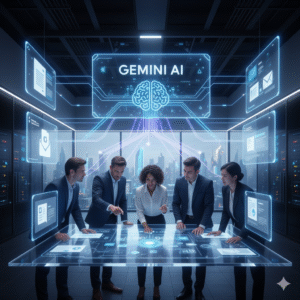
How Gemini AI Changes Your Google Workspace

In an era defined by rapid technological advancement, artificial intelligence (AI) continually reshapes our professional landscape. Specifically, Google’s Gemini AI, a powerful and multimodal AI model, is revolutionizing how we interact with Google Workspace. Clearly, this integration is not just an incremental upgrade; instead, it represents a fundamental shift in productivity, creativity, and collaboration. Truly, Gemini AI aims to become an intelligent assistant embedded directly into the tools we use every single day—Gmail, Docs, Sheets, Slides, and more. Therefore, understanding its capabilities is crucial for anyone looking to maximize their efficiency and output in the modern workplace.

Many people still perceive AI as a futuristic concept, separate from their daily work. However, Gemini AI in Workspace brings this future directly to your fingertips. It moves beyond simple automation, offering sophisticated assistance that understands context, generates original content, and streamlines complex tasks. Furthermore, this integration transforms Google Workspace from a collection of powerful tools into an intelligent, interconnected ecosystem. This means you can spend less time on tedious, repetitive tasks and more time on strategic thinking, creative problem-solving, and meaningful human interaction. Ultimately, Gemini AI empowers us to work smarter, not just harder, redefining what’s possible within our digital workspaces.

How Gemini AI Changes Your Google Workspace


Understanding Gemini AI: The Brain Behind the Workspace Revolution

To fully grasp the impact of Gemini AI on Google Workspace, we must first understand what Gemini AI truly is. Simply put, Gemini is Google’s most advanced and capable AI model, renowned for its multimodal capabilities. This means it can seamlessly understand and operate across various types of information—text, code, audio, image, and video. Consequently, this versatility allows Gemini to perform a wide array of complex tasks that were previously impossible for AI. Furthermore, its ability to process diverse data types makes it exceptionally powerful for integrating into a suite like Google Workspace, where different content formats are handled daily.

The Core Strengths Driving Workspace Innovation

Naturally, several core strengths of Gemini AI make it particularly suited for transforming Google Workspace. Firstly, its multimodality allows it to understand context far better than previous models. For instance, it can look at a spreadsheet, read an email about it, and then generate a summary, all while understanding the underlying data. Secondly, Gemini boasts incredible reasoning capabilities. This means it can go beyond simple pattern recognition to logically deduce, plan, and execute more intricate tasks. Clearly, this is essential for drafting complex documents or analyzing detailed data.

Moreover, Gemini’s advanced coding abilities are significant for developers and non-developers alike, potentially assisting with script generation or debugging within Workspace applications. Its speed and efficiency also mean that AI-powered assistance is almost instantaneous, minimizing interruptions to your workflow. Lastly, its continuous learning and improvement ensure that its capabilities will only grow over time. Truly, these combined strengths make Gemini AI an unprecedented tool, capable of fundamentally altering how individuals and teams operate within the Google Workspace environment, driving unparalleled levels of productivity and innovation.


Enhanced Productivity in Docs and Gmail with Gemini AI

One of the most immediate and impactful areas where Gemini AI is changing work is within Google Docs and Gmail. These applications are central to daily communication and content creation, and Gemini’s integration brings a new level of intelligent assistance. Clearly, the goal is to reduce the time spent on drafting, editing, and summarizing, allowing users to focus more on the substance of their work. Therefore, understanding these enhancements is key to unlocking significant productivity gains.

Transforming Content Creation and Communication

Firstly, in Google Docs, Gemini AI acts as a sophisticated writing assistant. It can generate initial drafts from simple prompts, helping to overcome writer’s block and accelerate content creation. For example, you could ask it to “draft a project proposal for a new marketing campaign targeting Gen Z.” Furthermore, Gemini can summarize lengthy documents, saving valuable time when reviewing reports or catching up on shared files. Its ability to refine tone, suggest grammatical improvements, and even translate content further streamlines the writing process. This means higher quality output in less time.

Secondly, Gmail receives a substantial boost from Gemini AI. It can compose entire email replies based on the context of an incoming message, allowing for quicker responses and more efficient communication. Imagine simply prompting, “reply to this email, agreeing to the meeting and suggesting a follow-up agenda.” Gemini can also summarize long email threads, ensuring you quickly grasp the key points without wading through dozens of messages. Additionally, it can help sort and prioritize emails, ensuring that important communications are not missed. Truly, these features in Docs and Gmail are set to transform everyday tasks, making communication and content creation significantly more efficient and intelligent.


Smarter Data Analysis and Visualization in Sheets and Slides

Beyond text-based applications, Gemini AI extends its powerful capabilities to data-centric tools like Google Sheets and presentation software like Google Slides. These integrations promise to simplify complex data analysis, reveal hidden insights, and automate the creation of compelling visual narratives. Clearly, for anyone who deals with numbers or creates presentations, Gemini offers a significant leap forward in efficiency and analytical depth. Therefore, understanding its role here is vital for data-driven decision-making.

Unlocking Deeper Insights and Streamlining Presentations

Firstly, in Google Sheets, Gemini AI revolutionizes data analysis. It can understand natural language queries, allowing you to ask questions like, “What was our highest-selling product in Q3?” or “Compare sales growth between regions A and B over the last six months.” Gemini can then automatically generate formulas, create charts, and even identify trends or outliers within your datasets. This transforms complex data manipulation into a more intuitive, conversational experience, making advanced analytics accessible to a wider audience. Furthermore, it helps in cleaning and organizing data, reducing manual effort and improving data integrity.

Secondly, Google Slides benefits immensely from Gemini’s generative capabilities. You can prompt Gemini to “create a presentation outlining our Q4 sales performance, highlighting key achievements and challenges” and it will generate slides with relevant layouts, suggested content, and even initial data visualizations based on your linked Sheets data. Moreover, it can help refine existing presentations by suggesting design improvements, rephrasing bullet points, or summarizing lengthy sections. This means less time spent on formatting and more time focused on delivering impact. Truly, Gemini in Sheets and Slides empowers users to extract more value from their data and communicate their findings with unprecedented ease and polish.


Redefining Collaboration and Innovation with Gemini AI

The true power of Gemini AI within Google Workspace extends beyond individual productivity; it profoundly redefines how teams collaborate and innovate. By embedding intelligent assistance directly into shared workflows, Gemini fosters a more interconnected and efficient working environment. Clearly, this shift moves collaboration from simply co-editing documents to actively co-creating with an AI partner, unlocking new potentials for innovation and collective problem-solving. Therefore, understanding its collaborative implications is crucial for modern teams.

Fostering Intelligent Teamwork and Creative Solutions

Firstly, Gemini AI facilitates more effective team communication and knowledge sharing. Imagine a team working on a complex project. Gemini can summarize lengthy discussion threads in Google Chat, distill key decisions from meeting transcripts in Google Meet, and even identify action items, ensuring everyone is on the same page. This reduces miscommunication and ensures that valuable information is easily accessible to all team members, regardless of when they join a project. Furthermore, it can help draft shared project plans or brainstorm ideas collectively, serving as an intelligent facilitator.

Secondly, Gemini boosts collective creativity and problem-solving. When a team is stuck on a challenge, Gemini can generate diverse ideas, suggest alternative approaches, or provide relevant research, acting as a tireless brainstorming partner. For example, in a shared Google Doc, team members could prompt Gemini to “suggest five innovative solutions for improving customer retention,” and then collaboratively build upon those AI-generated ideas. This democratizes access to advanced analytical and creative support, empowering every team member to contribute more effectively. Truly, Gemini AI transforms Google Workspace into an intelligent hub for collaboration, driving teams toward more innovative solutions and streamlined, efficient joint efforts.


Preparing Your Organization for the Gemini AI Era

As Gemini AI increasingly integrates into Google Workspace, organisations must prepare to fully leverage its capabilities. This involves more than just enabling new features; it requires a strategic approach to training, change management, and establishing best practices. Clearly, proactive preparation ensures a smooth transition and maximizes the benefits of this powerful AI integration. Therefore, understanding how to ready your workforce and systems is paramount for successful adoption.

Strategies for Seamless AI Adoption

Firstly, invest in comprehensive training and upskilling. Your employees will need to understand not just how to use Gemini’s features, but when and why to use them effectively. This training should cover practical applications across various Workspace apps and address potential new workflows. Providing examples and hands-on exercises will be crucial. Secondly, develop clear guidelines for AI usage. This includes policies around data privacy, ethical considerations, and responsible content creation. For instance, ensuring that AI-generated content is reviewed for accuracy and bias before public use is vital.

Furthermore, foster a culture of experimentation and continuous learning. Encourage employees to explore Gemini’s capabilities and share their findings and best practices. Establishing internal AI champions can help spread knowledge and excitement. Also, review and adapt existing workflows. Gemini AI will likely automate or streamline many current tasks. Therefore, re-evaluating existing processes and redesigning them to incorporate AI assistance will be necessary to truly unlock efficiency gains. Ultimately, by proactively addressing these areas, organisations can ensure their teams are well-equipped to harness the transformative power of Gemini AI, driving a new era of productivity and innovation within Google Workspace.


Frequently Asked Questions (FAQs)

Q1: Is Gemini AI replacing human jobs in Google Workspace?

No, Gemini AI is designed to augment human capabilities, not replace jobs. It handles repetitive, time-consuming tasks and provides intelligent assistance, allowing users to focus on more strategic, creative, and human-centric aspects of their work. It’s a tool to enhance productivity and creativity, making human workers more effective.

Q2: How does Gemini AI handle data privacy and security in Workspace?

Gemini AI adheres to Google’s robust data privacy and security standards. It processes data within your Workspace environment according to your organization’s existing data governance policies. Google emphasizes that your data is not used to train models accessible by other customers, ensuring your information remains confidential and secure.

Q3: Can Gemini AI generate entirely accurate content, or does it need human review?

While Gemini AI is highly capable, especially with factual information, all AI-generated content should undergo human review for accuracy, context, tone, and any potential biases. AI is a powerful assistant, but human oversight remains crucial to ensure the quality and appropriateness of the final output, particularly for critical communications or data.

Q4: Which Google Workspace apps will Gemini AI be integrated into first?

Gemini AI is being integrated across core Google Workspace applications, including Gmail, Docs, Sheets, Slides, and Meet. The rollout is progressive, with new capabilities and deeper integrations continuously being introduced across the entire suite to enhance various aspects of work.

Q5: How can my organization prepare employees for using Gemini AI effectively?

Preparing employees involves several key steps: providing comprehensive training on how to use Gemini’s features across different Workspace apps, establishing clear guidelines for responsible AI usage, fostering a culture of experimentation and learning, and adapting existing workflows to incorporate AI assistance. Executive sponsorship and internal champions are also vital for successful adoption.

Also Read: Google Drive’s Offline Mode Upgrade: Work Without Internet